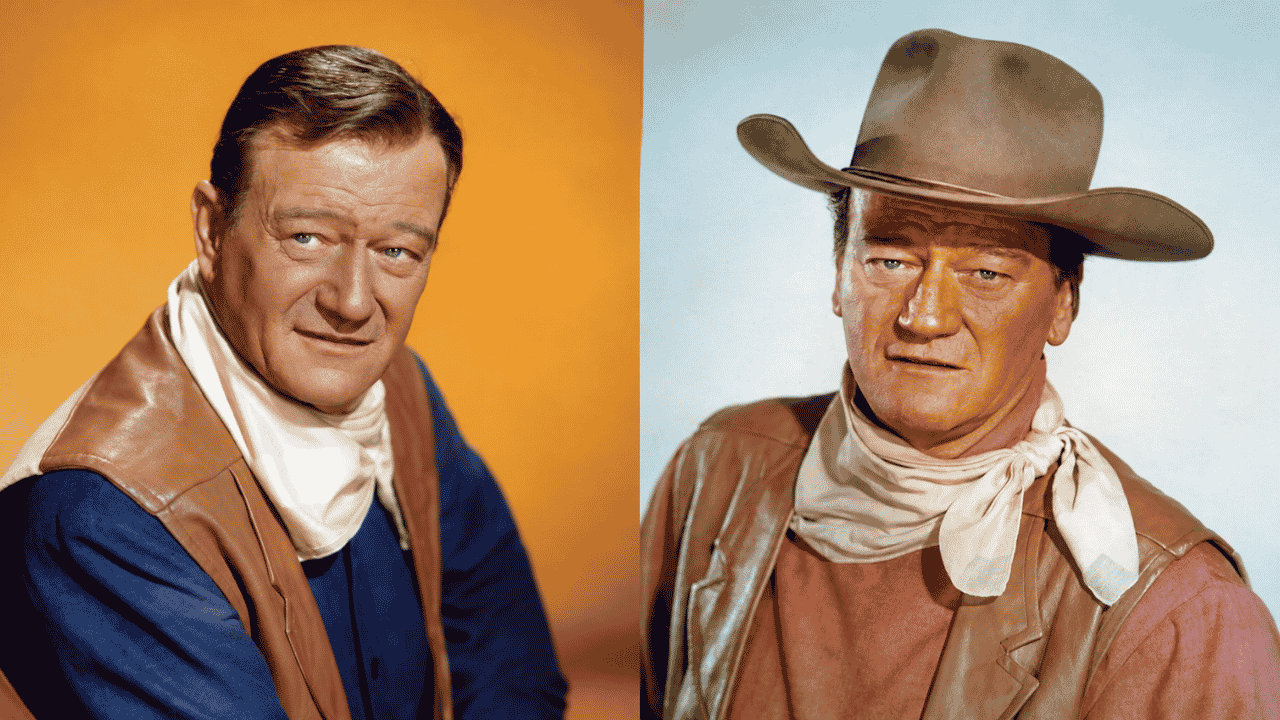
John Wayne was one of the most recognizable actors in Hollywood history, remembered for his powerful screen presence, distinctive voice, and unforgettable performances in Western movies. Known to millions of fans as The Duke, he spent more than five decades building a career that included acting, directing, and producing films. Although audiences mainly associated him with cowboys, soldiers, and fearless lawmen, his personal story was much more complicated than the characters he played. From his childhood in Iowa and unsuccessful early film projects to his Academy Award-winning performance and family life, John Wayne experienced a remarkable journey. His influence on American cinema continued long after his death in 1979, and his movies remain popular among fans of classic Hollywood.
Who Was John Wayne?
John Wayne was an American actor, film producer, and director who became famous for portraying strong and independent characters. He was born Marion Robert Morrison on May 26, 1907, in Winterset, Iowa, United States. His parents were Clyde Leonard Morrison and Mary Alberta Brown, and he grew up alongside his younger brother, Robert. His career included more than 170 film appearances, making him one of the most productive and recognizable leading actors of his generation. His performances in Westerns helped establish a screen personality that audiences continued to associate with American cinema for decades.
Wayne became widely known by his nickname, The Duke, which followed him throughout his professional life. His tall appearance, confident movements, and distinctive speaking voice made him different from many other actors of his era. He frequently played characters who valued loyalty, courage, independence, and responsibility. However, his performances were not limited to Westerns, as he also appeared in war dramas, historical films, romantic stories, and adventure productions. His long career eventually earned him an Academy Award and several other major honours.
John Wayne’s Early Life and Childhood in Iowa
John Wayne spent his earliest years in Winterset, a small town in Iowa, where he was born into a family with ordinary circumstances. His father, Clyde Morrison, worked as a pharmacist, while his mother, Mary Alberta Brown, managed important responsibilities at home. His family later moved to California, where his father looked for better employment opportunities. Growing up in a different environment introduced Wayne to new experiences and eventually brought him closer to the entertainment industry. His childhood in both Iowa and California became an important part of his personal history.
One interesting part of his childhood was the origin of his famous nickname. His family owned an Airedale terrier named Duke, and the young Marion was frequently seen accompanying the dog around the neighbourhood. People began calling the dog Little Duke and referring to the boy as Big Duke. The nickname eventually became a permanent part of his identity, even after he adopted a different name for his acting career. Years later, audiences around the world recognized him simply as The Duke.
Education and Football Career at the University of Southern California
During his school years, Wayne attended Glendale High School in California, where he participated in football and other activities. He developed a strong interest in sports and became a talented football player. His athletic ability helped him receive a football scholarship to the University of Southern California. He hoped to continue playing the sport while completing his education, but his plans changed after an injury. A shoulder injury suffered during a bodysurfing accident affected his ability to continue playing football at the university level.
Losing his football opportunity was a major turning point in his life. Without the scholarship and his expected sporting career, Wayne had to look for other ways to support himself. He began working around Hollywood film productions, where he became familiar with the entertainment business. These early experiences introduced him to directors, actors, studio workers, and the practical responsibilities involved in making movies. What initially appeared to be a disappointing setback eventually opened the door to a career that made him internationally famous.
How John Wayne Started His Hollywood Career
John Wayne did not enter Hollywood as an established leading actor. During his early years in the film industry, he worked as a prop assistant and performed other tasks around studio productions. He also appeared in small roles and as an extra in several movies. His experience behind the scenes helped him understand how film sets operated and how different departments worked together. These opportunities allowed him to build relationships with people who later influenced his professional development.
One of the important people he met during this period was director John Ford. Their professional relationship eventually became one of the most recognized actor-director partnerships in Hollywood. Wayne received opportunities to appear in larger productions, although becoming a successful leading actor took several years. His early work included small parts in films that did not receive significant attention. Despite these difficulties, he continued accepting opportunities and gradually developed the acting experience needed for bigger roles.
Why Marion Morrison Became John Wayne
Although he was born Marion Robert Morrison, audiences eventually knew him by the professional name John Wayne. The name was selected during his early Hollywood career when he received the leading role in The Big Trail. Director Raoul Walsh is commonly credited with suggesting the name, which the studio believed would suit a Western leading actor. Wayne did not personally choose the name, and he later discussed how unusual it initially felt when people called him John instead of Duke. Over time, however, the professional name became inseparable from his identity.
His transformation from Marion Morrison into John Wayne also reflected the way Hollywood developed public identities for its actors. Studios often selected names that they believed would be memorable and suitable for particular roles. In Wayne’s case, the new name became associated with confidence, strength, and the traditional Western hero. His childhood nickname remained popular among friends and family, while his professional name became famous among movie audiences. Both names eventually became important parts of his personal and professional history.
The Big Trail and His Difficult Years Before Fame
The Big Trail, released in 1930, gave John Wayne his first major opportunity as a leading actor. Directed by Raoul Walsh, the production was an ambitious Western that used large-scale outdoor filming and early widescreen technology. Wayne played Breck Coleman, a frontiersman who joined a wagon train travelling westward. The film provided him with an opportunity to demonstrate his screen presence and carry a major production. However, it did not achieve the commercial success expected by the studio.
Following the disappointing performance of The Big Trail, Wayne spent much of the 1930s appearing in lower-budget Western movies. He accepted roles in productions that did not always offer the same level of attention or recognition as major Hollywood films. During this period, he also appeared as a singing cowboy under the character name Sandy Saunders. Wayne was uncomfortable with this particular image because singing was not one of his strengths. These years were challenging, but they helped him gain experience and prepare for the opportunity that eventually changed his career.
Stagecoach and the Breakthrough That Made Him Famous
Stagecoach, released in 1939, became the film that transformed John Wayne’s professional life. Directed by John Ford, the movie featured Wayne as the Ringo Kid, a wanted man travelling with a group of passengers through dangerous territory. His performance attracted considerable attention because of his confident appearance and natural screen presence. The film became a major success and established him as a leading actor in Hollywood. After years of appearing in smaller productions, Wayne finally received the recognition he had been working toward.
The success of Stagecoach also strengthened his professional relationship with John Ford. The director recognized Wayne’s ability to portray characters who combined determination, courage, and emotional depth. Their partnership continued through several important films, including Fort Apache, She Wore a Yellow Ribbon, and The Searchers. Ford frequently used Wayne in stories about loyalty, conflict, family, and life on the American frontier. Their work together became an important part of classic Western cinema.
John Wayne Movies That Defined His Career
John Wayne appeared in films across several genres, but Westerns remained the most important part of his public image. His filmography included stories about cowboys, military personnel, historical figures, lawmen, and ordinary people facing difficult circumstances. Some of his movies became major commercial successes, while others received lasting recognition from film critics and historians. His ability to attract audiences made him one of Hollywood’s most dependable leading actors. Several productions from his career continue to be watched by fans of classic cinema.
Some of his most famous movies include:
- The Big Trail (1930)
- Stagecoach (1939)
- The Long Voyage Home (1940)
- They Were Expendable (1945)
- Red River (1948)
- Sands of Iwo Jima (1949)
- Rio Grande (1950)
- The Quiet Man (1952)
- The Searchers (1956)
- Rio Bravo (1959)
- The Alamo (1960)
- The Man Who Shot Liberty Valance (1962)
- The Longest Day (1962)
- McLintock! (1963)
- The Green Berets (1968)
- True Grit (1969)
- Big Jake (1971)
- The Cowboys (1972)
- The Shootist (1976)
These movies demonstrate how his career developed beyond a single type of character. While Westerns remained his strongest genre, his performances in war films and historical productions also attracted large audiences. His work with directors such as John Ford and Howard Hawks helped him explore different characters and storytelling styles. The combination of popular entertainment and memorable performances made his filmography an important part of Hollywood history.
Red River and His More Complicated Acting Roles
Red River, released in 1948, showed another side of John Wayne’s acting ability. Directed by Howard Hawks, the film told the story of Thomas Dunson, a rancher who organized a difficult cattle drive from Texas to Missouri. Wayne portrayed Dunson as a determined but stubborn man whose decisions created serious conflict with his adopted son. The character was not a completely traditional hero because his pride and anger frequently affected the people around him. His performance demonstrated that he could portray difficult personalities rather than relying only on his familiar confident Western image.
The movie also helped establish his professional relationship with Howard Hawks. The director understood how to use Wayne’s screen presence while allowing him to explore more complicated characters. Their collaboration later produced Rio Bravo, another important Western featuring Wayne in a leading role. These films helped strengthen his reputation as an actor who could carry both action-driven stories and character-focused dramas. Red River remains an important title for understanding the development of his career.
John Wayne and Maureen O’Hara’s On-Screen Partnership
John Wayne shared a memorable screen partnership with Irish actress Maureen O’Hara. Their performances together became popular because of their natural chemistry, strong personalities, and ability to create entertaining relationships on screen. They appeared together in five films, including Rio Grande, The Quiet Man, The Wings of Eagles, McLintock!, and Big Jake. Their work covered different stories, from romantic dramas to Western comedies. The partnership became one of the recognizable actor pairings of classic Hollywood.
The Quiet Man, released in 1952, remains one of their most celebrated collaborations. Wayne played Sean Thornton, an American boxer who returned to Ireland and became involved in a complicated romantic relationship. O’Hara portrayed Mary Kate Danaher, whose strong personality created both humorous and emotional moments throughout the film. Their performances helped make the production a favourite among classic movie fans. Their friendship also continued beyond their professional collaborations.
John Wayne as a Film Producer and Director
Although audiences mainly remember him as an actor, John Wayne also developed an important career as a film producer and director. He wanted greater involvement in selecting stories and controlling the productions in which he appeared. His production company, Batjac Productions, allowed him to become more involved in the business side of filmmaking. Through this company, he worked on projects that reflected his personal interests and preferred storytelling style. His work behind the camera demonstrated that his ambitions extended beyond performing in front of audiences.
One of his biggest projects was The Alamo, released in 1960. Wayne produced, directed, and starred in the historical film, which focused on the 1836 Battle of the Alamo in Texas. The production required a major investment of time, money, and effort, making it one of the most ambitious projects of his career. It received seven Academy Award nominations, including a nomination for Best Picture. The movie remains an important example of his determination to create large-scale historical productions.
He also directed and starred in The Green Berets, released in 1968. The movie focused on American military involvement in the Vietnam War and reflected Wayne’s strong political views. It was different from many of his earlier Western productions because it dealt with a contemporary military subject. The film attracted attention and became part of wider discussions about American cinema during the Vietnam War. It also showed how Wayne used filmmaking to express subjects that mattered to him personally.
John Wayne’s Three Marriages and Seven Children
John Wayne married three times during his life. His first marriage was to Josephine Alicia Saenz in 1933, and the couple had four children together. Their marriage ended in divorce in 1945, after which he married Mexican actress Esperanza Baur in 1946. His second marriage also ended in divorce. In 1954, Wayne married Peruvian actress Pilar Pallete, and they had three children together.
His seven children were Michael, Mary Antonia, Patrick, Melinda, Aissa, Ethan, and Marisa. Some of his children became connected to the entertainment industry, while others maintained more private lives. Michael Wayne worked as a film producer and became involved in his father’s production company. Patrick Wayne followed a different path by developing an acting career and appearing in several movies and television productions. Ethan Wayne later became involved in preserving and managing his father’s legacy.
John Wayne’s Children and Their Background
| Child | Mother | Known connection |
|---|---|---|
| Michael Wayne | Josephine Saenz | Film producer |
| Mary Antonia Wayne | Josephine Saenz | Member of the Wayne family |
| Patrick Wayne | Josephine Saenz | Actor |
| Melinda Wayne | Josephine Saenz | Member of the Wayne family |
| Aissa Wayne | Pilar Pallete | Author |
| Ethan Wayne | Pilar Pallete | Actor and family representative |
| Marisa Wayne | Pilar Pallete | Member of the Wayne family |
Patrick Wayne is especially interesting because he followed his father’s profession and appeared in several productions associated with the Wayne family. Their shared film appearances included Rio Grande, The Searchers, The Alamo, McLintock!, and Big Jake. Patrick also developed his own identity as an actor rather than depending entirely on his father’s reputation. Their family connection remains a popular subject among readers interested in John Wayne’s personal life.
John Wayne’s Oscar-Winning Performance in True Grit
True Grit, released in 1969, became one of the biggest achievements of John Wayne’s acting career. He played Rooster Cogburn, an older and rough-mannered U.S. marshal who helps a young girl pursue justice after her father’s murder. Unlike some of his earlier characters, Cogburn was not a perfectly disciplined or traditional hero. He was stubborn, humorous, and frequently unpredictable, which gave Wayne an opportunity to show a different side of his acting ability. The performance connected strongly with audiences and became one of his most memorable roles.
Wayne received the Academy Award for Best Actor for his performance at the 1970 ceremony. It was his only competitive acting Oscar, despite his long career and many successful films. The award recognized his ability to bring humour and personality to a character who was both difficult and entertaining. True Grit became a major milestone in his professional life and strengthened his reputation as one of Hollywood’s leading actors. Rooster Cogburn remains one of the characters most closely associated with his name.
John Wayne’s Support for American Military Personnel
John Wayne frequently portrayed soldiers and military leaders in his movies, but his connection with the American armed forces extended beyond acting. He supported military personnel through public appearances and visits arranged through the United Service Organizations. These visits allowed him to meet service members and offer encouragement during periods of military conflict. His public image became strongly associated with patriotism and support for American troops. His military-themed films also contributed to this connection.
Despite frequently playing soldiers on screen, Wayne did not serve as an active-duty member of the United States armed forces. His involvement was through entertainment, public support, and visits to military personnel. This distinction is important because his movie roles sometimes create confusion about his actual military history. Productions such as Sands of Iwo Jima, The Longest Day, and The Green Berets strengthened his association with military stories. His support for service members became another recognizable part of his public life.
John Wayne’s Battle With Cancer
John Wayne faced a serious health challenge in 1964 when doctors diagnosed him with lung cancer. He underwent surgery that resulted in the removal of his left lung. Following treatment, he returned to filmmaking and continued working despite the difficulties associated with his illness. He also spoke publicly about his cancer experience and encouraged people to take the disease seriously. His willingness to discuss his condition helped bring attention to cancer awareness.
In 1978, Wayne was diagnosed with stomach cancer, which eventually led to his death. His health gradually deteriorated, and he spent his final months receiving medical care. His family remained close to him during this difficult period. His experience with cancer later became an important reason behind the charitable work established in his memory. The health challenges he faced also added another emotional dimension to his final movie.
The Shootist: John Wayne’s Final Movie
The Shootist, released in 1976, was John Wayne’s final film. He portrayed J.B. Books, an aging gunfighter who discovers that he has a terminal illness and wants to spend his remaining days peacefully. The movie also featured Lauren Bacall, Ron Howard, and James Stewart. Its story was particularly meaningful because Wayne himself was dealing with serious health problems during this period. The similarities between his real-life circumstances and the character’s situation gave the performance an emotional quality.
The movie allowed Wayne to return to the Western genre that had defined much of his career. However, his character was older and more vulnerable than the confident heroes audiences had watched for decades. Rather than presenting a traditional story about a fearless gunfighter, the film explored ageing, mortality, and the difficulty of accepting an approaching end. His performance became a fitting final appearance in a career built around Western storytelling. The Shootist remains an important film for understanding his final years.
John Wayne’s Death and Funeral
John Wayne died on June 11, 1979, at UCLA Medical Center in Los Angeles, California. He was 72 years old, and his death followed his battle with stomach cancer. His passing received widespread attention because he had been one of the most recognizable actors in American cinema for decades. Fans, fellow actors, and people from the entertainment industry remembered his contributions to filmmaking. His death marked the end of a remarkable Hollywood career.
His funeral and burial arrangements were private, according to his family’s wishes. However, his passing led to tributes from audiences and people who had worked with him throughout his career. His memory continued through his films, family activities, and charitable organizations. Shortly after his death, Orange County Airport in California was renamed John Wayne Airport in his honour. The airport’s name became another lasting public recognition of his influence and popularity.
John Wayne Airport and His Public Recognition
John Wayne Airport is located in Orange County, California, and carries the name of the famous actor. The airport was originally known as Eddie Martin Airport before becoming Orange County Airport in 1939. Following Wayne’s death in 1979, the airport was renamed in his honour. The decision reflected his connection with the region and his popularity among local residents. Today, the airport continues to carry his name and serves as a reminder of his place in American popular culture.
A bronze statue of John Wayne was installed at the airport in 1982. The recognition gave travellers an opportunity to see a public tribute to the actor outside the traditional entertainment industry. His name also remained connected to other honours, including the Presidential Medal of Freedom, which was awarded posthumously in 1980. These recognitions demonstrated that his influence extended beyond individual film performances. His legacy became part of American cultural and public history.
John Wayne Birthplace Museum and His Family Legacy
John Wayne’s birthplace in Winterset, Iowa, remains an important location for people interested in his personal history. The modest four-room house where he was born has been restored to reflect its appearance in 1907. The nearby John Wayne Birthplace and Museum preserves photographs, movie posters, costumes, original scripts, contracts, letters, and other personal items connected to his career. Visitors can learn about his childhood and follow his journey from a small Iowa town to international Hollywood fame. The museum provides a personal connection to the actor that cannot be found by watching his movies alone.
His family also worked to preserve his legacy through charitable activities. Following his death, his children established the John Wayne Cancer Foundation in 1985 to support cancer-related initiatives. The foundation reflected his personal experience with the disease and his family’s wish to help others. His children also remained involved in activities connected to his name, career, and charitable interests. These efforts helped ensure that his influence continued beyond the entertainment industry.
John Wayne’s Lasting Influence on Hollywood
John Wayne’s influence on Hollywood came from his ability to create characters that audiences could recognize immediately. His performances helped establish the image of the confident Western hero, particularly through movies such as Stagecoach, The Searchers, Rio Bravo, and True Grit. His screen presence and distinctive voice made him different from many actors of his generation. He also demonstrated that a successful acting career could extend into film production and directing. His work became an important part of the history of American cinema.
His movies continue to attract audiences through television, streaming platforms, and classic film collections. New generations of viewers can discover his performances and understand why he became such an influential figure in Hollywood. His collaborations with John Ford, Howard Hawks, and Maureen O’Hara remain important parts of his professional story. His family has also continued to preserve his memory through charitable activities and the John Wayne Birthplace Museum. Decades after his death, The Duke remains one of the most recognizable names in classic Hollywood.
Conclusion
John Wayne’s life was a journey from a small town in Iowa to international recognition as one of Hollywood’s greatest stars. His early struggles, football injury, first unsuccessful film projects, and eventual breakthrough in Stagecoach shaped a career that lasted more than five decades. He became famous for his Western movies, but his achievements as a producer, director, and public figure also contributed to his legacy. His seven children, especially Patrick Wayne, remain an important part of his family story, while the John Wayne Cancer Foundation continues work connected to his personal experience. His films, birthplace museum, and public honours keep his memory alive for audiences who appreciate the history of classic American cinema.
Frequently Asked Questions About John Wayne
1. What was John Wayne’s real name?
John Wayne’s birth name was Marion Robert Morrison. He adopted the professional name John Wayne during his early Hollywood career when he received the leading role in The Big Trail in 1930. Director Raoul Walsh is commonly credited with suggesting the name. His childhood nickname, Duke, remained popular throughout his life.
2. How many children did John Wayne have?
John Wayne had seven children from his first and third marriages. Their names were Michael, Mary Antonia, Patrick, Melinda, Aissa, Ethan, and Marisa. Several of his children became connected to the entertainment industry or their father’s legacy. Patrick Wayne is particularly recognized for following his father’s acting career.
3. What was John Wayne’s most famous movie?
John Wayne appeared in many successful movies, including Stagecoach, The Searchers, Rio Bravo, and True Grit. True Grit is especially important because his performance as Rooster Cogburn earned him the Academy Award for Best Actor. The Searchers is also frequently recognized as one of the most influential Western films in cinema history.
4. How many times was John Wayne married?
John Wayne was married three times. His first wife was Josephine Alicia Saenz, his second wife was Esperanza Baur, and his third wife was Pilar Pallete. He had four children with Josephine and three with Pilar. His second marriage did not produce any children.
5. When did John Wayne die, and how old was he?
John Wayne died on June 11, 1979, in Los Angeles, California. He was 72 years old and died following a battle with stomach cancer. His final movie was The Shootist, released in 1976. His contributions to Hollywood continue to be remembered through his films, family, charitable foundation, and the John Wayne Birthplace Museum.