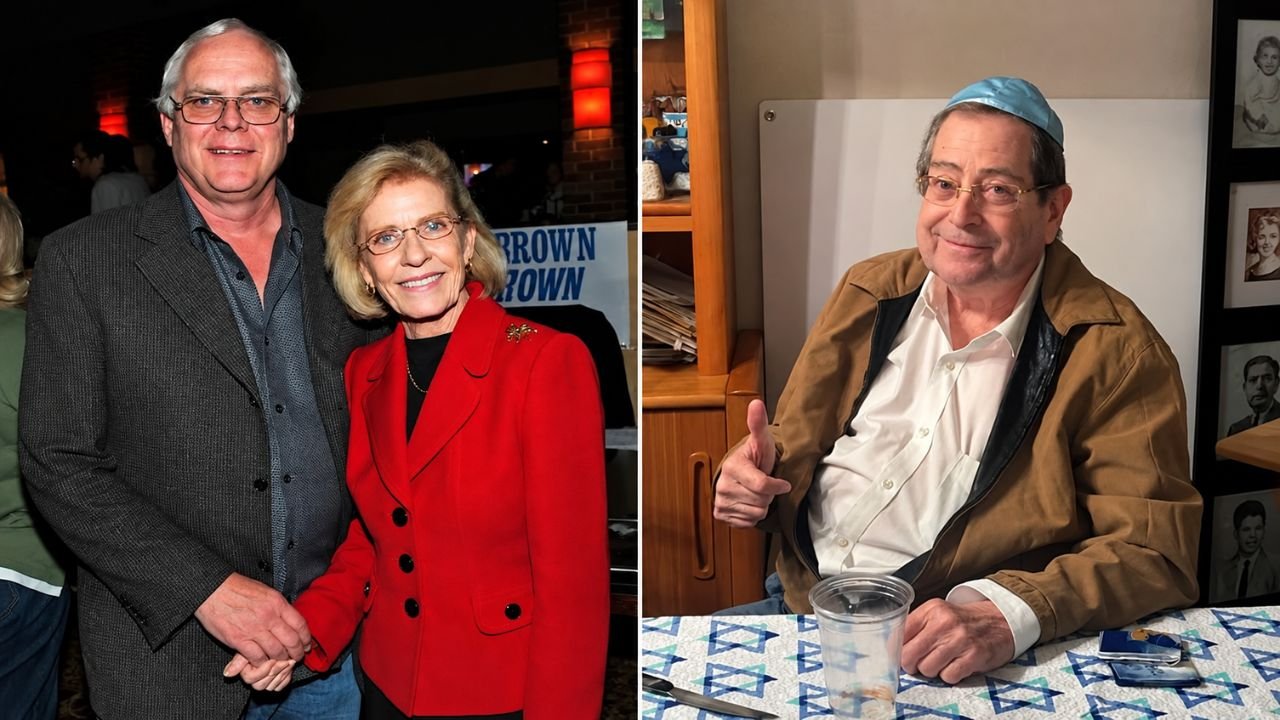
Michael Tell is best known today because of his brief marriage to actress Patty Duke and his later connection to actor Sean Astin. That part of his story has attracted attention for decades, but it represents only one chapter of his life. Before his name became connected with Hollywood, Michael Tell had already built a career around entertainment promotion, newspapers, and life in Las Vegas. His own oral-history interview preserved by the University of Nevada, Las Vegas, provides details about his teenage years, the nightclub he opened, his work with musicians, and his return to the family newspaper business.
Michael Tell’s life is therefore more complicated than the short descriptions found on many celebrity biography websites. His career took him from Las Vegas entertainment venues to concert promotion in Los Angeles before bringing him back to the newspaper business his family had established. His relationship with Patty Duke later became the part of his biography most frequently discussed in the entertainment press. The eventual confirmation that he was Sean Astin’s biological father added another lasting connection between Michael Tell and Hollywood.
Who Was Michael Tell?
Michael Tell was an American concert promoter and newspaper publisher whose life was closely connected to Las Vegas. He was the son of Jack and Beatrice Tell, a family involved in newspaper publishing, and he eventually became part of the second generation managing the Las Vegas Israelite. His career was not limited to publishing because, as a young man, he became involved in entertainment promotion and worked with performers who were already important names in American popular music. The University of Nevada, Las Vegas, preserved his recollections in a 2018 oral-history interview, making his own account an important source for understanding his career.
Much of the online interest surrounding Michael Tell now comes from his connection to Patty Duke and Sean Astin. His marriage to Duke lasted only 13 days, yet the relationship became historically significant because Sean Astin was born the following year and later learned that Tell was his biological father. The story became more complicated because John Astin, whom Patty Duke married after Tell, played a major father role in Sean’s upbringing. Michael Tell’s biography therefore crosses the worlds of entertainment promotion, journalism, celebrity relationships, and a decades-long family story.
Michael Tell’s Early Life and Family Background
Michael Tell grew up in a family with strong connections to newspaper publishing. His father, Jack Tell, was involved in the newspaper business and later established the Las Vegas Israelite, which became an important publication serving the local Jewish community. Michael recalled moving west with his father when he was 16, eventually becoming connected to Nevada and attending Reno High School. His early exposure to his family’s newspaper work gave him an understanding of publishing long before he returned to that industry as an adult.
His teenage years also introduced him to the entertainment business in an unusually direct way. Rather than simply watching performers from the audience, Michael Tell became interested in creating entertainment opportunities for young people in Las Vegas. That interest eventually led him to establish a teen nightclub and begin promoting live performances. His experience as a young promoter would later become the foundation for a much larger career in concert promotion.
How Michael Tell Started the Twin Lakes Twist
One of the most distinctive parts of Michael Tell’s story is the creation of the Twin Lakes Twist nightclub in Las Vegas. According to his oral-history account, he opened the teen club in 1961 when he was still very young and believed local teenagers needed somewhere to go for entertainment. The project quickly became much bigger than a typical youth hangout because Tell began bringing recognized performers to the venue. His recollection describes an early encounter with Bobby Darin that helped him secure performers for the club.
Michael Tell recalled approaching Bobby Darin and explaining that teenagers in Las Vegas needed something to do. Darin reportedly agreed to perform and helped connect Tell with Wayne Newton for another appearance. Tell remembered that the first weekend generated about $10,000, a remarkable amount for a teenage promoter at the time, and he said the money also helped his family with groceries. This early success showed him that entertainment promotion could become more than a temporary teenage project.
The Twin Lakes Twist became an important turning point because it gave Michael Tell practical experience in booking artists, attracting audiences, advertising events, and handling money. Those skills were transferable to the larger concert-promotion business he entered afterward. His story also shows why his biography cannot be reduced to his later connection with Patty Duke. Long before that marriage, he had already developed a professional identity in entertainment.
Some of the early details remembered by Michael Tell include:
- Opening the Twin Lakes Twist in Las Vegas in 1961
- Booking Bobby Darin for the young audience
- Bringing Wayne Newton to perform
- Learning the practical side of entertainment promotion
- Building contacts with performers and radio personalities
- Moving from a teen nightclub into larger concert promotion
Michael Tell’s Career as a Concert Promoter
The success of the Twin Lakes Twist encouraged Michael Tell to pursue concert promotion on a much larger scale. His oral-history interview describes a career involving major performers and increasingly ambitious shows. He promoted concerts in Las Vegas before eventually expanding his operations to Los Angeles. The transition gave him access to a much larger entertainment market and brought him into contact with influential figures in radio and music promotion.
Michael Tell recalled promoting artists including James Brown, Jimi Hendrix, Jose Feliciano, Al Green, and The Dramatics. He also discussed his earlier relationships with performers such as Bobby Darin and Wayne Newton. These names place his career within an important period in American popular music, when live concerts were becoming a major part of the entertainment industry. Because these details come from Tell’s own recollections, they are best presented as his account rather than as independently verified claims about the size or ranking of his promotion company.
His promotion work eventually became associated with Mike Tell Productions. According to his oral history, a Los Angeles radio figure named Sam Riddle encouraged him to move his operation from Las Vegas to Los Angeles after noticing his promotional work. Tell described the move as an important step in his career and recalled becoming a significant promoter in the American concert business. His account gives a picture of an ambitious young businessman who built connections by taking risks and personally approaching performers.
Michael Tell and Famous Musicians
Michael Tell’s connection to musicians is one of the least discussed parts of his biography. Most internet profiles begin with Patty Duke, even though Tell’s entertainment career existed independently of that relationship. His oral-history interview provides first-hand recollections involving several prominent performers from the 1960s and 1970s. Those stories help explain the professional world in which Michael Tell operated before his name became associated with Hollywood family history.
Among the performers mentioned in his account are Jimi Hendrix and Jose Feliciano. Tell recalled working with artists at a time when the concert industry was changing rapidly and performers were building increasingly large audiences. He also discussed James Brown, Al Green, and The Dramatics in connection with his promotion work. These experiences became a major part of his professional identity and demonstrate that he had an entertainment career of his own.
His work involved more than simply arranging appearances. A concert promoter had to deal with venues, advertising, performers, radio promotion, ticket sales, and financial arrangements. Michael Tell’s stories from this period show how personal relationships and persistence could play a major role in securing performers. The career also exposed him to the risks of live entertainment, including financial and personal problems that could arise around large events.
The Concert That Became a Turning Point
Michael Tell’s account of his final period as a concert promoter contains another unusual detail. He recalled an Al Green concert that became associated with a serious incident involving him being held at gunpoint. The experience was significant enough to become part of the story he told about leaving concert promotion. Rather than presenting the event as an established criminal case with details that are difficult to independently verify, it is more accurate to identify it as Tell’s own recollection in his UNLV oral history.
Leaving concert promotion eventually opened the way for Michael Tell to return to another part of his family’s history. His connection to the Las Vegas Israelite provided a different kind of public role, one centered on publishing and community affairs rather than live entertainment. The shift also brought him back to Las Vegas after his years in Los Angeles. It was a significant change in direction, but newspaper publishing had been part of his family background for years.
Michael Tell and the Las Vegas Israelite
The Las Vegas Israelite was founded by Michael Tell’s father, Jack Tell, in 1965. The publication served the Jewish community in Las Vegas and became closely associated with the Tell family. Michael eventually became the second generation involved in managing the newspaper. His work there gave him a long-term connection to the local community that extended well beyond his brief marriage to Patty Duke.
After his father’s death, Michael Tell returned to Las Vegas in 1979 to help his mother with the newspaper. The UNLV archive records his recollections about the publication’s circulation, operations, and changing role within the city’s Jewish community. His interview also contains observations about Las Vegas as it developed over the decades. This side of his career is rarely mentioned in short celebrity biographies, yet it occupied a significant portion of his professional life.
The newspaper also gave Michael Tell an opportunity to document changes within the Jewish community in Las Vegas. His oral history discusses religious institutions, community events, advertising, and developments involving Jewish organizations in the city. He remembered publishing material connected with High Holy Days services and described developments involving the Chabad movement in Las Vegas. These details provide a glimpse into the community journalism side of his career.
Michael Tell and Patty Duke
Michael Tell became widely known outside his professional circles because of his relationship with actress Patty Duke. The two married in 1970, but the marriage lasted only 13 days before it was annulled. Their extremely brief marriage later became one of the most frequently repeated facts in biographies about both people. The relationship became even more significant because Patty Duke gave birth to Sean Astin in 1971.
The circumstances surrounding the marriage and the identity of Sean Astin’s biological father were complicated for many years. Different accounts circulated, and Patty Duke’s relationships with Michael Tell, John Astin, and Desi Arnaz Jr. became part of the public story. That uncertainty lasted much longer than the marriage itself. The later DNA evidence changed what could be said with greater confidence about Sean Astin’s biological parentage.
Why Did Michael Tell and Patty Duke’s Marriage Last Only 13 Days?
The 13-day length of Michael Tell and Patty Duke’s marriage is well documented in biographical accounts, but explanations for exactly what happened have varied. Reports have described the marriage as a rushed decision made during a complicated period in Duke’s personal life. Patty Duke later provided her own account of the relationship, including statements about the marriage in her autobiography. Because accounts from different periods do not always present the same interpretation, the safest approach is to separate documented events from later explanations.
What is clear is that the marriage was legally annulled after only 13 days. It did not develop into a conventional long-term marriage, and Michael Tell did not become the primary father figure in Sean Astin’s childhood. Nevertheless, his brief marriage to Duke had consequences that lasted for decades. The connection eventually became central to the question of Sean Astin’s biological father.
Was Michael Tell Sean Astin’s Biological Father?
Yes, DNA testing later established Michael Tell as Sean Astin’s biological father. Sean Astin was born in 1971 to Patty Duke, and for years there was uncertainty surrounding his biological parentage. Later testing identified Michael Tell as his biological father, resolving an issue that had remained part of the family’s public history for decades. People has reported the DNA-testing history in its coverage of Sean Astin’s family background.
The story is more complicated than simply identifying one biological parent. Sean Astin grew up with John Astin as an important father figure, while Desi Arnaz Jr. was also connected to the earlier uncertainty surrounding his parentage. Sean has spoken about having multiple people who occupied meaningful father roles in his life. That distinction between biological parentage and the person who raises a child is central to understanding the family story.
How Sean Astin Discovered Michael Tell Was His Biological Father
Sean Astin eventually learned the truth through DNA testing when he was an adult. According to published accounts, the testing established that Michael Tell was his biological father rather than John Astin or Desi Arnaz Jr. This discovery gave Sean a definitive biological answer after years of uncertainty. The revelation also brought renewed public attention to Michael Tell because of Sean’s established career as an actor.
The discovery did not erase the relationships Sean had already developed with other father figures. Sean has continued to discuss John Astin’s importance in his life, even after learning that Tell was his biological father. That makes the story less about replacing one father with another and more about understanding the different relationships that shaped Sean’s upbringing. Recent reporting has continued to describe this distinction in Sean’s own discussions about his family.
Michael Tell’s Relationship With Sean Astin
Public information about Michael Tell’s relationship with Sean Astin is much more limited than the information available about Sean’s relationship with John Astin. Tell lived much of his life away from the center of Hollywood publicity, while Sean became a recognizable actor through films and television. As a result, the two men did not have the same kind of highly public father-son relationship that Sean had with John Astin. The biological connection nevertheless became an established part of Sean’s family history after the DNA testing.
Sean Astin’s public comments suggest that he does not view his family history through a single simple relationship. John Astin remained meaningful to him despite the later discovery about his biological father. This is an important detail because many short internet biographies reduce the story to a paternity revelation without explaining the family relationships that existed before it. A fuller Michael Tell biography should acknowledge both the biological fact and the role of the people who raised Sean.
Michael Tell’s Life Away From Hollywood
Michael Tell spent much of his professional life outside the Hollywood spotlight. His work in concert promotion and newspaper publishing gave him careers that did not depend on being a celebrity himself. The Patty Duke marriage created a lasting public connection to the entertainment industry, but his professional history was already established before that relationship. His later return to the Las Vegas Israelite further separated his day-to-day life from the Hollywood world.
This is one reason Michael Tell remains an unusual figure in celebrity biographies. He was connected to famous performers without becoming a performer himself, and he became connected to a famous actor through biological parentage without raising that actor as his primary father. His career moved through several industries and locations, with Las Vegas remaining an important part of his story. The available archival record therefore gives a more detailed picture than the short celebrity profiles that focus only on his marriage.
What Most Online Michael Tell Profiles Leave Out
Many online pages about Michael Tell concentrate on a small set of facts: his marriage to Patty Duke, the 13-day duration, and his connection to Sean Astin. Those facts are relevant, but they do not explain what Tell actually did during much of his working life. His own UNLV oral-history interview provides details about the Twin Lakes Twist, concert promotion, musicians, Los Angeles, and the Las Vegas Israelite. Those details make it possible to understand Michael Tell as a businessman and publisher rather than only as a figure in someone else’s biography.
There are also many personal details repeated across low-quality biography pages that are difficult to verify from authoritative sources. Claims about exact net worth, physical measurements, private relationships, and other personal statistics should therefore be treated cautiously. A reliable biography should distinguish documented information from details that appear to have been copied from one website to another. In Michael Tell’s case, the first-person UNLV archive is much more useful for his career history than unsourced celebrity profile tables.
What Made Michael Tell’s Story Unusual?
Michael Tell’s story stands out because several unrelated parts of American culture intersected in his life. He grew up around newspaper publishing, opened a teen nightclub, promoted major musicians, worked in Los Angeles entertainment, returned to a family newspaper, and became connected to one of Hollywood’s most discussed family stories. None of those chapters completely explains his life on its own. Taken together, they show why a fuller biography is more interesting than the familiar Patty Duke headline.
His story also demonstrates how a brief event can have consequences lasting much longer than the event itself. The marriage to Patty Duke lasted only 13 days, yet it eventually became connected to Sean Astin’s biological identity. At the same time, Tell’s decades of professional work in entertainment and publishing received far less public attention. The contrast between his private career and his public association with Hollywood is one of the defining features of his biography.
Frequently Asked Questions About Michael Tell
Who was Michael Tell?
Michael Tell was an American concert promoter and newspaper publisher who became widely known because of his brief marriage to actress Patty Duke. He also became known as Sean Astin’s biological father after DNA testing established their biological relationship. Earlier in his career, he operated the Twin Lakes Twist teen nightclub in Las Vegas and worked as a concert promoter. He later returned to the family newspaper business and became involved with the Las Vegas Israelite.
How long were Michael Tell and Patty Duke married?
Michael Tell and Patty Duke were married for 13 days in 1970 before their marriage was annulled. The short marriage became an enduring part of both of their biographies because Sean Astin was born the following year. The circumstances surrounding the marriage have been described differently in later accounts, so individual explanations should be attributed to their respective sources. The duration of the marriage itself is the more firmly established part of the story.
Is Michael Tell Sean Astin’s biological father?
Yes. DNA testing later established Michael Tell as Sean Astin’s biological father. The result resolved years of uncertainty involving Tell, John Astin, and Desi Arnaz Jr. Sean’s family history is still more complicated than the biological relationship alone because John Astin was an important father figure during Sean’s upbringing.
What did Michael Tell do for a living?
Michael Tell worked in both entertainment promotion and newspaper publishing. As a young man in Las Vegas, he opened the Twin Lakes Twist and later moved into concert promotion involving major musicians. He eventually operated Mike Tell Productions in Los Angeles before returning to Las Vegas and becoming involved with the family-owned Las Vegas Israelite. His UNLV oral-history interview provides first-hand information about these career stages.
What was the Twin Lakes Twist?
The Twin Lakes Twist was a teen nightclub that Michael Tell opened in Las Vegas in 1961. Tell recalled booking performers such as Bobby Darin and Wayne Newton for the venue when he was still very young. The club gave him his first significant experience in entertainment promotion and helped lead him into the larger concert business. It is one of the most distinctive and best-documented parts of his early career.
Conclusion
Michael Tell’s biography reaches far beyond his 13-day marriage to Patty Duke. His early work at the Twin Lakes Twist led to a career promoting concerts and working with well-known musicians, while his family background eventually brought him back to the Las Vegas Israelite. His connection to Patty Duke later became historically significant because DNA testing established him as Sean Astin’s biological father. Looking at these chapters together provides a fuller picture of a man whose professional life in entertainment and publishing has often been overshadowed by his connection to Hollywood.
The most valuable source for understanding Michael Tell remains his own oral-history account preserved by the University of Nevada, Las Vegas. It adds details about his teenage years, concert promotion, musicians, Los Angeles, and newspaper career that are missing from many short online biographies. Those details make it possible to tell his story as the biography of a businessman, promoter, and publisher rather than simply as the story of Patty Duke’s former husband. His connection to Sean Astin remains an important part of the story, but it is only one chapter in a much longer life.