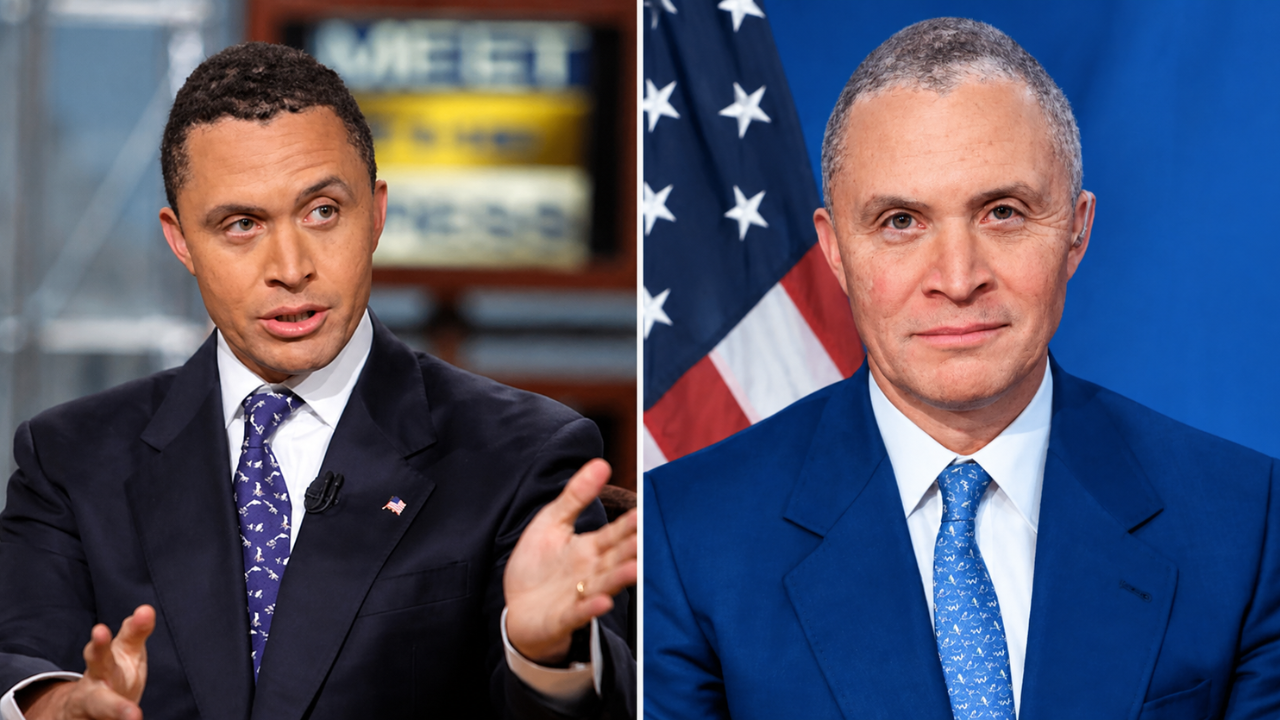
Harold Ford Jr. is an American businessman, former congressman, author, professor and television commentator whose career has crossed politics, finance, education and media. Born in Memphis, Tennessee, he entered national politics at a young age and represented Tennessee’s 9th Congressional District in the U.S. House from 1997 to 2007. After leaving Congress, Harold Ford Jr. built a career in financial services while continuing to work in education and television. His professional life entered another chapter in 2026 when he joined Truist as a vice chair in its Wholesale Banking business.
Who Is Harold Ford Jr.?
Harold Eugene Ford Jr. was born on May 11, 1970, in Memphis, Tennessee. He is the eldest son of former U.S. Representative Harold Ford Sr. and Dorothy Bowles Ford, and his family’s political background played an important role in his early life. His father represented a Memphis-area district in Congress from 1975 until 1997. Harold Ford Jr. later succeeded his father in the same congressional seat, continuing a political family connection that had already existed for more than two decades.
Ford spent part of his childhood in Memphis and later attended school in Washington, D.C. He studied at St. Albans School, where he graduated in 1988. His early exposure to Washington and his father’s political career gave him an unusual introduction to public life. Before entering Congress himself, he gained experience through government positions and his family’s political campaigns.
Harold Ford Jr.’s Family Background
Harold Ford Jr.’s political story is closely connected with his family. His father, Harold Ford Sr., served in the U.S. House for more than two decades and became an important political figure in Tennessee. Ford Sr. represented the Memphis area from 1975 to 1997 before retiring from Congress. His son eventually followed the same path and won the seat after his father’s retirement.
Harold Ford Jr. was only a child when his father entered Congress, so politics became part of his family environment from an early age. He later worked on his father’s political campaigns during the 1990s. Those campaign experiences gave him an early understanding of elections, fundraising, public appearances and political organization. By the time he decided to run for Congress himself, he already had years of exposure to the political world.
The Ford family’s political history is important to understanding Harold Ford Jr., but his career eventually developed well beyond elected office. After Congress, he moved into financial services, education and television. His professional path therefore combines a political upbringing with a substantial private-sector career. This makes his biography broader than that of a former congressman who remained involved only in politics.
Harold Ford Jr.’s Education
Harold Ford Jr. attended St. Albans School in Washington, D.C., before entering the University of Pennsylvania. He graduated from the University of Pennsylvania in 1992 with a degree in American history. His choice of history gave him an academic background that connected naturally with his later interest in government and public policy. After college, he began working in Washington before continuing his education.
Ford later attended the University of Michigan Law School and earned his Juris Doctor degree in 1996. His law education came shortly before he entered Congress, giving him formal training in legal and governmental matters. His academic background ultimately included history, law and public policy experience. These qualifications became part of the foundation for his congressional career and later work in education.
Before becoming a congressman, Ford worked in several government-related positions. He served as a staff aide for the U.S. Senate Committee on the Budget and later worked as a special assistant at the U.S. Department of Commerce. He also gained campaign experience through his father’s political activities. These early positions helped him understand the federal government before he became an elected official.
Harold Ford Jr.’s Early Political Career
Harold Ford Jr. entered electoral politics in 1996 after his father announced that he would retire from Congress. Ford decided to run for the same Tennessee district his father had represented for more than two decades. His campaign was supported by his family’s political network, but he also developed his own public identity during the election. He won the Democratic nomination and then won the general election.
Ford entered Congress in January 1997 at the age of 26. His arrival made him one of the younger members of the House at the time. He represented Tennessee’s 9th Congressional District, a Memphis-centered district, for five terms. His congressional service lasted from 1997 until 2007.
His early years in Congress quickly brought him national attention. He became president of the Democratic freshman class and took part in several high-profile political events. In 2000, he delivered the keynote address at the Democratic National Convention. The speech increased his national profile while he was still in his first few years in Washington.
Harold Ford Jr.’s Congressional Career
Harold Ford Jr. served in the U.S. House for ten years. During that period, he worked on several congressional committees dealing with government oversight, education, financial services and the federal budget. His committee assignments changed as he gained seniority. His experience on the Financial Services Committee was particularly relevant to his later career in banking and finance.
Ford’s congressional career also included involvement with several Democratic organizations. He was associated with the Blue Dog Coalition and the Congressional Black Caucus. His public statements during his House career sometimes emphasized an approach that differed from Democratic leadership. He described himself as willing to disagree with party leaders when he believed a different position was appropriate.
Some of the issues connected with his political campaigns and congressional work included education, job training, health care, Medicare and economic development. His district was centered around Memphis, so local economic conditions and employment were important parts of his political work. He also developed a national profile through speeches and television appearances. This combination of local representation and national visibility helped make Harold Ford Jr. one of the better-known younger Democrats of his era.
Harold Ford Jr.’s 2002 Leadership Campaign
One of the most notable moments of Ford’s congressional career came in 2002. He challenged Nancy Pelosi for the position of Democratic leader in the House. Pelosi ultimately won the leadership contest, but Ford’s decision to challenge her demonstrated that he was seeking a larger role within the Democratic Party.
The leadership campaign came only a few years after Ford had first entered Congress. He was already attracting national attention because of his age, family background and appearances at major political events. His 2000 Democratic National Convention speech had further increased his visibility. The 2002 contest became another major step in his rise within national politics.
Although Ford did not win the leadership position, the campaign became an important part of his political biography. It showed that his ambitions were not limited to representing his Memphis-area district. He had already begun participating in broader debates about the direction and leadership of the Democratic Party.
Harold Ford Jr.’s 2006 Senate Campaign
In 2005, Harold Ford Jr. announced that he would run for the U.S. Senate seat being vacated by Republican Bill Frist. He chose not to seek another House term while pursuing the Senate position. Ford won the Democratic nomination and faced Republican Bob Corker in the 2006 general election.
The Senate race attracted considerable national attention. Ford campaigned on issues including health care, education and economic development. Corker ultimately won the election, with approximately 51 percent of the vote compared with Ford’s 48 percent. The result brought Ford’s career as an elected member of Congress to an end.
The 2006 campaign became an important turning point in Harold Ford Jr.’s career. After leaving the House in January 2007, he did not immediately return to electoral politics. Instead, he moved into finance, education, media and organizational leadership. His career after Congress eventually became almost as significant as his decade in elected office.
Harold Ford Jr. and the Democratic Leadership Council
After leaving Congress, Ford remained involved in national political discussions. He became chairman of the Democratic Leadership Council, an organization associated with centrist Democratic politics. He was the final chairman of the organization before it closed in 2011.
His involvement with the Democratic Leadership Council added another dimension to his post-Congress career. Rather than holding elected office, he participated in discussions about the future direction of the Democratic Party. His political background and experience in Congress made him a recognizable figure within those discussions.
The role also connected with his broader interest in public policy. Ford later moved between finance, academia and television while continuing to discuss political issues. His career therefore did not completely separate from public affairs after he left Congress.
Harold Ford Jr.’s Career After Congress
Leaving elected office did not mark the end of Harold Ford Jr.’s public career. Instead, it began a period in which he worked across several different industries. He became involved in finance, university teaching and television commentary. His professional experience after Congress also expanded his network beyond Washington and Tennessee.
Ford worked at Merrill Lynch before joining Morgan Stanley. His work in financial services focused on client relationships and business development. He later became involved with PNC Financial Services Group, eventually serving as executive vice president and regional president for New York.
This transition from Congress to finance is one of the most notable parts of Ford’s professional story. His congressional experience included work on the Financial Services Committee, while his later career placed him directly inside the financial industry. He therefore moved from helping shape financial policy in government to working with financial clients in the private sector.
Harold Ford Jr.’s Career at Morgan Stanley
Harold Ford Jr. joined Morgan Stanley in 2011 as a managing director and senior client relationship manager. His responsibilities involved working with clients and business relationships across the firm’s operations. He had previously worked at Merrill Lynch, giving him several years of financial-services experience before his Morgan Stanley appointment.
His time at Morgan Stanley became an important part of his post-Congress career. It also helped establish him as a financial-services executive rather than simply a former politician. His work in the industry continued for several years before he later moved to PNC.
The finance career also allowed Ford to use skills that were useful in both politics and business. Relationship management, public communication, negotiation and understanding policy can all be important in financial services. His background therefore gave him a combination of public-sector and private-sector experience.
Harold Ford Jr. and PNC
Ford joined PNC Financial Services Group and eventually became executive vice president and regional president for New York. In that position, he was responsible for business development and relationships with clients and organizations in one of the country’s largest financial markets.
His PNC role increased his involvement in New York’s business community. It also marked another stage in his transition from national politics to corporate leadership. During this period, many biographies continued to describe him as a former congressman and financial executive.
Ford’s time at PNC is now part of his previous career rather than his current position. In 2026, he moved to Truist, creating another major transition in his professional life. This update matters because older articles may still identify PNC as his current employer.
Harold Ford Jr.’s New Truist Role in 2026
In August 2026, Harold Ford Jr. joined Truist as a vice chair in its Wholesale Banking business. The role places him in a senior position focused on business growth, client relationships and policy matters. His responsibilities include working with commercial, corporate, institutional and wealth-management clients.
Ford joined Truist after his time at PNC and his earlier positions at Merrill Lynch and Morgan Stanley. His new position brings together his experience in financial services, government and public policy. It also represents the latest stage of a career that began in Washington politics and later expanded into the private sector.
As of September 2026, Harold Ford Jr. is therefore no longer simply a former congressman or PNC executive. His current professional position is with Truist’s Wholesale Banking business. He also remains connected to public policy and media through other professional activities.
Harold Ford Jr.’s Academic Career
Education has remained part of Harold Ford Jr.’s life after Congress. He has held teaching and visiting professor positions at universities, including Vanderbilt University and the University of Michigan. His academic work has focused on public policy and related subjects.
His background in history, law and government provides a natural foundation for teaching public policy. His experience as a congressman also gives him firsthand knowledge of how government institutions operate. Students studying politics and public policy can therefore encounter both academic concepts and practical government experience through his work.
Ford’s academic career is sometimes overlooked because his time in Congress and financial-services career receive more attention. However, teaching represents a meaningful part of his post-political life. It also demonstrates that his work after Congress has not been limited to business.
Harold Ford Jr.’s Television Career
Harold Ford Jr. has also worked as a television political commentator. After leaving Congress, he appeared on major news networks and political programs to discuss elections, government and public policy. His previous experience as a member of Congress made him a familiar face for audiences interested in American politics.
Ford’s media career continued alongside his work in finance and education. He has appeared on programs including Meet the Press and other political broadcasts. His television work gave him another way to remain involved in national political conversations without holding elected office.
His current professional biography also identifies him as a contributor to Fox News. Media positions can change over time, so the exact nature of his current television role may evolve. His broader history as a political commentator, however, is well established.
Harold Ford Jr.’s Book, More Davids Than Goliaths
Harold Ford Jr. published his memoir More Davids Than Goliaths: A Political Education in 2010. The book describes his political upbringing, his family’s history and his experiences in Congress. It also discusses his views about leadership and American politics.
The memoir provides a first-person perspective on a career that had already included congressional service, a leadership campaign and a Senate race. It gives readers insight into how Ford understood his political background and the challenges that came with growing up in a political family. The book is therefore a useful part of his biography for anyone interested in his own account of his career.
The title also reflects one of the recurring themes in Ford’s political story. His career involved competing against established figures and participating in political contests at a relatively young age. His book allows readers to examine those experiences through his own perspective rather than relying entirely on outside profiles.
Harold Ford Jr. and Emily Threlkeld
Harold Ford Jr. married Emily Threlkeld on April 26, 2008. Their relationship brought together two people with very different professional backgrounds. Ford had spent a decade in Congress and was beginning his career in finance, while Emily Threlkeld had experience in fashion, marketing and public relations.
Emily Threlkeld is known for her reported work with fashion brands including Nina Ricci and Carolina Herrera. She was also associated with the swimwear company Basta Surf. Unlike her husband, she has generally maintained a low public profile and has not pursued the same level of media attention.
The couple have two children, Georgia Walker Ford and Harold Eugene Ford III. Their family life has largely remained private, with limited public information about the children’s daily lives. This has allowed Harold Ford Jr. to maintain a public professional career while keeping much of his family life away from regular media coverage.
Harold Ford Jr.’s Children and Family Life
Harold Ford Jr. and Emily Threlkeld have two children. Their daughter is Georgia Walker Ford, and their son is Harold Eugene Ford III. Their daughter was born in 2013, while their son was born in 2015.
The family has spent much of its post-Congress life in New York. Ford’s financial career has been centered largely in New York, while his wife has a background in the city’s fashion industry. Their professional and family lives therefore became closely connected with New York after Ford left elected office.
There is relatively little reliable public information about the children’s private lives. A biography of Harold Ford Jr. does not need to include details about their schools, routines or personal activities. The basic family information is enough to explain this part of his life while respecting their privacy.
Harold Ford Jr.’s Current Career and Professional Roles
As of September 2026, Harold Ford Jr. is serving as a vice chair in Truist’s Wholesale Banking business. His current responsibilities include business development, client relationships and policy-related work. He joined Truist after serving as a senior executive at PNC.
His professional background now spans several distinct fields:
- Politics and elected government
- Financial services
- Public policy and education
- Television commentary
- Publishing
- Corporate and nonprofit board service
This combination makes Harold Ford Jr. different from someone whose career remained within a single profession. His transition from Congress to finance is particularly notable because he spent years working on government policy before moving into a major financial-services career.
Harold Ford Jr. Quick Facts
- Full name: Harold Eugene Ford Jr.
- Date of birth: May 11, 1970
- Birthplace: Memphis, Tennessee
- Education: University of Pennsylvania and University of Michigan Law School
- Political party: Democratic
- Former office: U.S. Representative from Tennessee
- Congressional service: 1997–2007
- Congressional district: Tennessee’s 9th District
- Senate campaign: 2006
- Wife: Emily Threlkeld
- Children: Two
- Book: More Davids Than Goliaths: A Political Education
- Former financial employer: PNC Financial Services Group
- Current company: Truist
- Current role: Vice chair in Wholesale Banking
Frequently Asked Questions About Harold Ford Jr.
Who is Harold Ford Jr.?
Harold Ford Jr. is a former U.S. congressman from Tennessee, businessman, author, professor and television commentator. He represented Tennessee’s 9th Congressional District from 1997 to 2007. After Congress, he developed a career in financial services, education and media.
How old is Harold Ford Jr.?
Harold Ford Jr. was born on May 11, 1970, in Memphis, Tennessee. He is 56 years old as of September 2026.
Who is Harold Ford Jr.’s wife?
Harold Ford Jr.’s wife is Emily Threlkeld. They married on April 26, 2008, and have two children. Emily Threlkeld has a professional background in fashion, public relations, marketing and business.
What does Harold Ford Jr. do now?
As of September 2026, Harold Ford Jr. is a vice chair in Truist’s Wholesale Banking business. His work focuses on business development, client relationships and policy matters involving corporate, commercial, institutional and wealth-management clients.
How long was Harold Ford Jr. in Congress?
Harold Ford Jr. served in the U.S. House of Representatives from January 1997 until January 2007. He represented Tennessee’s 9th Congressional District for five terms before leaving Congress after his unsuccessful 2006 U.S. Senate campaign.
Conclusion
Harold Ford Jr.’s career has developed through several major stages, beginning with his family’s political history in Memphis and leading to ten years in the U.S. House of Representatives. During his congressional career, he gained national attention through major political speeches, committee assignments, a 2002 leadership campaign and his 2006 Senate race. After leaving Congress, he built a second career in financial services while also working in education, television and publishing.
His personal life has also remained an important part of his public biography. His marriage to Emily Threlkeld connects him with the fashion and business world, while their two children have largely remained outside the public spotlight. His own professional identity, however, has continued to evolve.
The latest chapter came in 2026 when Harold Ford Jr. joined Truist as a vice chair in its Wholesale Banking business. His move followed senior roles at PNC, Morgan Stanley and Merrill Lynch, adding another stage to a career that has crossed between government, finance, education and media. From his early years in Memphis politics to his current work in financial services, Harold Ford Jr. has built a professional history that extends well beyond his time in Congress.