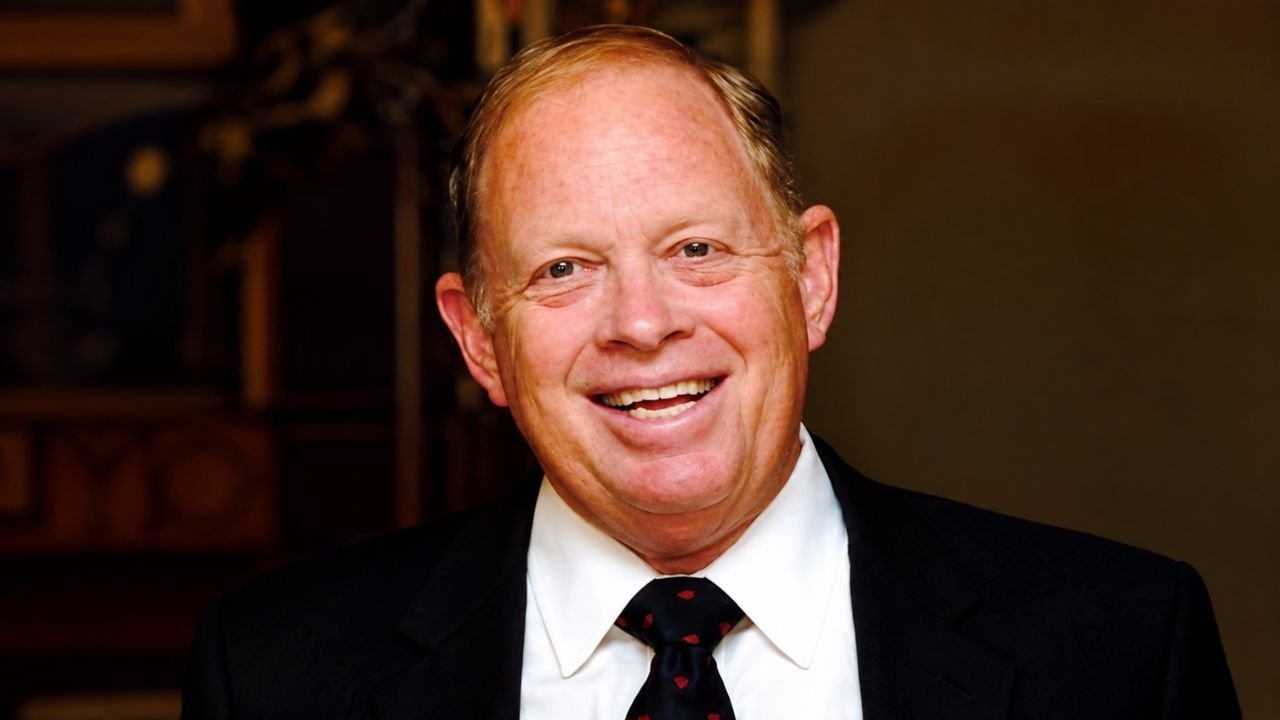
Richard Peery is an American real estate developer whose career became closely connected with the growth of Silicon Valley. He built his fortune through commercial property development and a long-running partnership with John Arrillaga, acquiring land and developing office properties during the rapid expansion of California’s technology industry. Forbes currently lists Richard Peery with a real-time net worth of $3.5 billion as of September 10, 2026, with real estate identified as his main source of wealth. His story also includes early entrepreneurial ventures, a family background in real estate, philanthropy, and a long connection with Brigham Young University.
Richard Peery Early Life and Family Background
Richard Peery was born in 1938 or 1939 and grew up in a family with strong connections to banking, investments, and real estate. His father, H. Taylor Peery, developed a career in banking and eventually became involved in real estate, creating an environment in which Richard was exposed to property and investment decisions at an early age. Richard later took over the management of his father’s property portfolio while he was in his twenties, giving him practical experience before he became known as a major Silicon Valley developer. This early experience became an important foundation for the career that followed.
Richard Peery’s family history also became connected with education and philanthropy. His sister Nancy Peery Marriott became part of the Marriott family through her marriage, while Richard’s own family later established philanthropic initiatives associated with his name. His wife is Mimi Peery, and the couple have four children: Dennis, Jason, Jennifer, and David. David Peery later became closely involved with the family’s philanthropic work through the Peery Foundation.
Richard Peery Education and Early Business Interests
Richard Peery attended Brigham Young University and later entered the Stanford MBA program, although he did not complete the Stanford degree. His career demonstrates how much of his eventual business education came through practical experience rather than a completed graduate program. After entering his father’s property business, he gained firsthand knowledge of managing real estate and dealing with the commercial opportunities developing around Palo Alto and the wider Bay Area. Those experiences positioned him for the partnership that would define much of his professional life.
Long before becoming a billionaire real estate developer, Richard Peery showed an interest in small businesses. A 2016 Bisnow profile reported that he owned the gumball machines on the Stanford campus while he was in middle school and later opened a miniature-golf course as a teenager. These ventures are notable because they show that his entrepreneurial activities began well before his involvement in major commercial property development. They also provide a more personal look at the business interests that preceded his Silicon Valley career.
Richard Peery and John Arrillaga
The partnership between Richard Peery and John Arrillaga became the defining business relationship of Peery’s career. The two began working together in the 1960s, when Silicon Valley was still developing into the technology center it would eventually become. They acquired farmland in the area and converted it into office parks as demand for commercial space increased with the expansion of technology companies. Their strategy placed them in a strong position as the semiconductor and technology industries expanded around Palo Alto, Mountain View, Sunnyvale, and other parts of the region.
The Peery-Arrillaga partnership eventually became one of the most significant commercial real estate operations associated with Silicon Valley. Over roughly five decades, the partnership developed more than 20 million square feet of commercial real estate. Their properties became associated with major technology companies, including companies such as HP, Google, Intel, Apple, and Intuit. Rather than depending on one company or one property, the business grew by developing office space in locations where technology companies needed room to expand.
Several factors helped the partnership succeed during Silicon Valley’s transformation. The developers were acquiring land before the technology boom had fully changed the character and value of the region, allowing them to benefit as commercial demand increased. Their properties were positioned near the companies and industries driving the local economy, while the expansion of technology employment created continuing demand for office space. This combination of land acquisition, timing, development, and long-term commercial demand became central to Richard Peery’s real estate career.
How Richard Peery Built His Real Estate Fortune
Richard Peery’s wealth came primarily from commercial real estate rather than from founding a technology company or building a consumer brand. His business model involved acquiring land, developing commercial properties, leasing those properties, and eventually selling selected holdings when market conditions created an opportunity. The growth of Silicon Valley provided an unusually strong environment for this approach because technology companies needed large amounts of office and research space. Forbes identifies real estate as Peery’s source of wealth and describes him as self-made.
The scale of the Peery-Arrillaga business is one of the clearest indicators of how the fortune developed. The partnership reportedly developed more than 20 million square feet of commercial real estate over its long operating history. This was not a business built around one famous property, but a large portfolio spread across the Silicon Valley market. The value of those properties increased alongside the region’s transformation into one of the world’s most important technology centers.
The partnership’s operating style also had an unusual characteristic. A San Francisco Chronicle account reported that even after the business had developed roughly 20 million square feet of commercial property, the company’s Palo Alto headquarters operated with a staff that never exceeded 12 people. The report also noted that Peery and Arrillaga did not use formal job titles. This detail helps explain why their business is often described through the personalities and decisions of its two founders rather than through a large corporate organization.
The $1.1 Billion Silicon Valley Property Sale
One of the most important transactions in Richard Peery’s career took place in 2006. Peery-Arrillaga sold a portfolio containing 119 buildings and approximately 5.3 million square feet of property in a transaction valued at about $1.1 billion. CBRE identified the transaction as the largest portfolio sale in Silicon Valley at that time and said it represented Peery-Arrillaga in the disposition. The same filing stated that CBRE arranged $700 million in acquisition financing for the purchaser.
The 2006 transaction provides a concrete example of how the partnership monetized decades of property development. Instead of holding every building indefinitely, Peery-Arrillaga could sell a large portfolio after developing and operating the properties for years. The transaction involved a substantial amount of commercial space and demonstrated the scale of the assets that the partnership had accumulated. It also occurred during a period when institutional investors were increasingly interested in major Silicon Valley real estate portfolios.
The sale should not be confused with Richard Peery’s personal net worth. A $1.1 billion property transaction represents the value of a real estate portfolio changing hands, not money that went directly into one individual’s bank account. The ownership structure, financing, costs, taxes, and interests of the partnership all affect how such a transaction translates into personal wealth. For that reason, the deal is best used as evidence of the scale of Peery’s real estate business rather than as a direct calculation of Richard Peery’s net worth.
Richard Peery Net Worth in 2026
Richard Peery’s net worth has changed over time as the value of his real estate holdings and other assets changed. Forbes currently reports his real-time net worth at $3.5 billion, with the figure dated September 10, 2026. Forbes also lists him as 87 years old and identifies real estate as his primary source of wealth. The figure should be treated as an estimate that can change rather than as a fixed amount.
Older sources contain lower estimates because they were published in earlier years. Bisnow’s 2016 profile placed Richard Peery’s net worth at approximately $2.20 billion, while older biographical material has cited figures around $2.7 billion or $3.6 billion depending on the year being discussed. These differences do not necessarily indicate an error because billionaire net worth estimates move with property valuations, investments, transactions, and the methodology used by each publication. For a current Richard Peery biography, the Forbes September 2026 estimate is the clearest figure to use.
The most useful way to understand Richard Peery’s wealth is to look at the business behind the number. His fortune is linked to decades of commercial real estate development in one of the most valuable property markets in the United States. The Peery-Arrillaga partnership developed millions of square feet of office space, while major transactions demonstrated the financial value of those holdings. His current Forbes profile therefore reflects a long accumulation of real estate wealth rather than a single business sale.
Richard Peery Real Estate Legacy in Silicon Valley
Richard Peery’s career is closely tied to the physical development of Silicon Valley. The region became known around the world for technology companies, but those companies also needed land, buildings, offices, laboratories, and research facilities. Peery and Arrillaga recognized this demand and developed commercial properties that allowed technology businesses to establish and expand their operations. Their real estate activities therefore became connected to the broader economic development of the region.
The partnership’s properties were associated with some of the biggest names in the technology sector. Historical profiles mention companies including Google, Apple, Intel, HP, and Intuit in connection with their developments. The exact tenants and property ownership arrangements changed over time, so historical references should not automatically be interpreted as current leases. What remains clear is that the Peery-Arrillaga portfolio became deeply connected with the commercial infrastructure of Silicon Valley.
Some biographical sources have reported that Richard Peery retained approximately 3.3 million square feet of office space, with Google and Intuit among the companies associated with properties connected to him. Because that figure comes from earlier reporting, it should not be presented as a confirmed 2026 measurement of his current holdings. Property portfolios can change through sales, purchases, refinancing, partnerships, and changes in ownership structures. The broader point is that commercial real estate has remained central to Richard Peery’s wealth and professional identity.
Richard Peery and the Peery Foundation
Richard Peery’s activities extend beyond commercial real estate through the Peery Foundation. He founded the private family foundation in 1978, and the organization has supported social entrepreneurs and nonprofit groups working on issues related to poverty, youth, families, and social opportunity. The foundation describes itself as a family-run private grantmaking organization that proactively finds, funds, and supports initiatives of interest to the family. Its work has included organizations in the Bay Area as well as international initiatives.
The Peery Foundation is now headed by Richard Peery’s son, David Peery. According to reported nonprofit filings, the foundation had approximately $64.14 million in assets, $6.35 million in revenue, and $3.17 million in expenses in 2024. These figures provide a useful picture of the size of the organization, although the foundation’s assets should not be treated as part of Richard Peery’s personal net worth. The foundation is a separate philanthropic entity with its own finances and activities.
The foundation’s work also gives the Peery family a continuing connection with social entrepreneurship. David Peery has been involved with international philanthropy networks and investment activities, extending the family’s interests beyond traditional real estate. This means the Peery family’s legacy is not limited to property development and financial wealth. Philanthropy and support for social entrepreneurs have become another important part of the family’s public profile.
Richard Peery’s Connection to Brigham Young University
Education has been another significant part of Richard Peery’s family legacy. The Peery family supported the creation of the H. Taylor Peery Institute of Financial Services at Brigham Young University in honor of Richard’s father. BYU materials describe the institute as part of the university’s Marriott School of Business and connect its creation to financial support from Richard Peery and members of his family. The exact historical donation figure differs between BYU materials, so it is safer to describe the contribution as a multimillion-dollar family endowment.
The connection is particularly meaningful because H. Taylor Peery had his own career in banking and real estate. He worked at Bank of America for decades and eventually became a vice president before pursuing his own real estate interests. His son Richard later took over management of the family’s property portfolio and built his own career in commercial real estate. The institute therefore carries forward a family connection with finance, investment, and property that stretches across generations.
Richard Peery Wife and Family
Richard Peery is married to Mimi Peery, and the couple have four children. Their children are identified in biographical sources as Dennis, Jason, Jennifer, and David, with David becoming particularly visible through his leadership of the Peery Foundation. The family has maintained a relatively private public profile compared with many billionaire families. Much of the available information about them comes through philanthropy, education, and business activities rather than entertainment or public appearances.
Family relationships have also played a role in Richard Peery’s broader biography. His sister Nancy Peery Marriott became connected to the Marriott family, while the Peery family has supported educational and philanthropic projects over the years. These relationships help explain the family’s wider presence in business, education, and charitable activities. Still, Richard Peery’s own career remains primarily associated with commercial real estate and the development of Silicon Valley properties.
Richard Peery Career Highlights
The major milestones in Richard Peery’s career can be summarized through several stages. His early entrepreneurial activities showed an interest in business while he was still young, and his work managing his father’s property portfolio gave him direct experience in real estate. His partnership with John Arrillaga then allowed him to participate in the rapid transformation of Silicon Valley from agricultural land into a major technology center. Over the following decades, the partnership developed millions of square feet of commercial property and generated major transactions.
Key facts about Richard Peery include:
- Born in 1938 or 1939.
- Attended Brigham Young University.
- Entered Stanford’s MBA program but did not complete it.
- Managed his father’s property portfolio in his twenties.
- Partnered with John Arrillaga in the 1960s.
- Helped develop more than 20 million square feet of commercial real estate through the partnership.
- Participated in the approximately $1.1 billion 2006 portfolio sale.
- Founded the Peery Foundation in 1978.
- Has four children with his wife, Mimi Peery.
- Has a current Forbes real-time net worth estimate of $3.5 billion as of September 10, 2026.
What Makes Richard Peery’s Story Different
Richard Peery’s biography stands out because his fortune was built around the development of an entire business region rather than a single consumer-facing company. He and John Arrillaga acquired land at a time when Silicon Valley had not yet reached its later global prominence. As technology companies expanded, the commercial properties they developed became part of the infrastructure supporting that growth. This created a direct connection between land development and the rise of one of the world’s best-known technology centers.
His early business activities also make the biography more interesting than a standard billionaire profile. Owning gumball machines at Stanford and operating a mini-golf course as a teenager show that his interest in business began long before the development of major office parks. Later, managing his father’s property portfolio gave him an opportunity to turn that entrepreneurial interest into professional real estate experience. Those early stages provide context for understanding how Richard Peery eventually entered large-scale commercial development.
Frequently Asked Questions About Richard Peery
Who is Richard Peery?
Richard Peery is an American real estate developer known for his role in developing commercial properties throughout Silicon Valley. He partnered with John Arrillaga beginning in the 1960s, and their partnership developed more than 20 million square feet of commercial real estate over several decades. Forbes currently identifies real estate as his primary source of wealth.
What is Richard Peery’s net worth in 2026?
Forbes lists Richard Peery’s real-time net worth at approximately $3.5 billion as of September 10, 2026. The figure is an estimate and can change as property values and other assets change. Earlier publications reported different amounts because those estimates were based on previous years.
How did Richard Peery make his money?
Richard Peery built his wealth primarily through commercial real estate. He gained early experience managing his father’s property portfolio and later partnered with John Arrillaga to acquire land and develop office properties in Silicon Valley. The partnership’s large property portfolio and subsequent sales played a major role in building his fortune.
Who was Richard Peery’s business partner?
Richard Peery’s longtime business partner was John Arrillaga. The two worked together from the 1960s and developed large amounts of commercial real estate in Silicon Valley. Arrillaga died in 2022, while Peery remains associated with the family’s real estate and philanthropic interests.
What is the Peery Foundation?
The Peery Foundation is a private family-run grantmaking foundation founded by Richard Peery in 1978. It supports social entrepreneurs and nonprofit initiatives, including organizations working on poverty, youth, families, and related social issues. Richard Peery’s son David Peery currently leads the foundation.
Conclusion
Richard Peery’s career is closely connected to the transformation of Silicon Valley into a major technology and commercial center. His partnership with John Arrillaga produced more than 20 million square feet of commercial development and included a major $1.1 billion property portfolio transaction in 2006. His current Forbes profile places his estimated net worth at $3.5 billion, with real estate remaining the foundation of his wealth.
Beyond real estate, Richard Peery’s legacy includes the Peery Foundation, family philanthropy, and support for education through Brigham Young University. His early entrepreneurial activities, experience managing his father’s properties, and decades of commercial development provide a fuller picture of how his career developed. For anyone researching Richard Peery biography, his story is ultimately about land, timing, long-term property development, family business experience, and the growth of Silicon Valley.
Explore more real stories and biographies of notable personalities in our celebrity section.