
Cat Stevens is one of the most distinctive singer-songwriters of the modern music era. Born Steven Demetre Georgiou in London in 1948, he first became famous during the 1960s before reaching the height of his musical career in the early 1970s. Songs such as “Wild World,” “Father and Son,” “Peace Train,” “Moonshadow,” and “Morning Has Broken” established him as an artist whose music combined simple melodies with thoughtful lyrics about family, relationships, peace, spirituality, and life. His story later took a dramatic turn when he embraced Islam, became known as Yusuf Islam, stepped away from mainstream music, married Fauzia Mubarak Ali, raised a family, became involved in education and humanitarian work, and eventually returned to music.
Cat Stevens Early Life and Real Name
Cat Stevens was born Steven Demetre Georgiou on July 21, 1948, in London, England. He grew up in a family with Greek Cypriot and Swedish roots and was surrounded by London’s lively cultural atmosphere from an early age. Music became an important part of his childhood, although he also developed an interest in drawing and painting. As his teenage years progressed, songwriting and performing became increasingly important to him, eventually leading him toward a professional career in music.
The name Cat Stevens became part of his identity in 1965 when he began using it professionally. His early career was connected to the British pop scene, where young performers were competing for attention in a rapidly changing music industry. His distinctive voice and ability to write songs helped him stand out from many of the performers around him. Although his early music had a more conventional pop sound, the thoughtful songwriting that later became his trademark was already developing.
Cat Stevens Begins His Music Career
Cat Stevens made an early impression with songs including “I Love My Dog” and “Matthew and Son.” The success of “Matthew and Son” helped establish him as a recognizable young performer in Britain, while his songwriting ability attracted attention beyond his own recordings. He also wrote “The First Cut Is the Deepest,” a song that became successful through recordings by other performers.
His early success brought opportunities for touring, recording, television appearances, and interviews. However, the pressure associated with being a young pop star eventually affected his health and personal life. Cat Stevens was still in his twenties when his career began to move in a different direction, setting the stage for the more introspective music that would define his greatest period.
Cat Stevens Health Problems and Personal Transformation
In 1968, Cat Stevens became seriously ill with tuberculosis. He spent a significant amount of time in hospital recovering from the disease, and the experience forced him to slow down and reconsider his life. Being seriously ill at such a young age changed his perspective on fame, success, mortality, and the direction he wanted his life to take.
After recovering, he began exploring deeper themes in his songwriting. His music became less focused on the straightforward pop style of his earliest recordings and increasingly reflected questions about identity, relationships, spirituality, and existence. He also became interested in different philosophical and religious ideas as he searched for a greater sense of meaning.
This period was an important bridge between the young pop singer of the 1960s and the internationally recognized singer-songwriter of the 1970s. His experiences with illness and recovery influenced the way he approached both his music and his personal life. The songs that followed often carried a quieter and more reflective quality.
Cat Stevens Breakthrough in the 1970s
The early 1970s became the defining period of the Cat Stevens music career. Albums such as Mona Bone Jakon, Tea for the Tillerman, and Teaser and the Firecat established a musical style built around acoustic guitar, gentle arrangements, memorable melodies, and personal lyrics. Tea for the Tillerman became especially important and introduced several songs that would remain associated with him for decades.
“Father and Son” became one of Cat Stevens’ most recognizable songs. The song presents a conversation between a father and a son who have different ideas about the young man’s future. “Wild World” dealt with separation and the uncertainty that follows the end of a relationship. “Where Do the Children Play?” explored concerns about modern life and the direction of society.
Teaser and the Firecat continued his success with songs including “Peace Train,” “Moonshadow,” and “Morning Has Broken.” These recordings helped Cat Stevens become an international star and established him as one of the most recognizable singer-songwriters of his generation.
Some of his most famous songs include:
- “Wild World”
- “Father and Son”
- “Peace Train”
- “Moonshadow”
- “Morning Has Broken”
- “Where Do the Children Play?”
- “Oh Very Young”
- “The Wind”
- “Lady D’Arbanville”
- “Hard Headed Woman”
Why Cat Stevens’ Songs Became So Popular
The appeal of Cat Stevens’ music came partly from its simplicity. His songs did not depend on complicated arrangements or elaborate production to make an impact. His acoustic guitar, distinctive voice, and direct lyrics allowed listeners to focus on the emotions and ideas contained in each song.
“Father and Son” remains particularly memorable because it deals with a conflict that many families can understand. The father believes he is protecting his son, while the son feels that he needs to follow his own path. “Wild World” approaches heartbreak from a different perspective, while “Peace Train” expresses hope for a world moving toward greater harmony.
His songs also appealed to listeners because they did not always provide simple answers. Cat Stevens often wrote about uncertainty, personal choices, growing older, faith, and the search for meaning. Those subjects allowed his music to remain relevant long after the original records were released.
Cat Stevens and His Spiritual Search
Spirituality became increasingly important to Cat Stevens during the 1970s. His earlier experiences with illness had already caused him to think more deeply about life and death. Later, another major incident pushed him further toward religious reflection.
In 1975, Cat Stevens nearly drowned while swimming near Malibu, California. During the frightening experience, he later described making a promise to God that he would dedicate his life to God if he survived. The incident became another important moment in his spiritual journey.
His search eventually led him to Islam. His brother had given him a copy of the Quran, and Cat Stevens began studying it. In 1977, he embraced Islam, and in 1978 he adopted the name Yusuf Islam.
Why Did Cat Stevens Leave Music?
Cat Stevens’ decision to leave mainstream music surprised many people because he was still one of the most successful singer-songwriters of his era. His departure was closely connected to his conversion to Islam and his changing priorities. Instead of continuing to build his career in the entertainment industry, he wanted to concentrate on his faith, family, education, and charitable activities.
The decision was not simply a retirement from creativity. Yusuf continued writing, studying, supporting educational projects, and becoming involved in humanitarian causes. His life had moved in a different direction, and the priorities that came with that new life were more important to him than maintaining his position as a major pop star.
For many years, the public knew little about what was happening in his private life compared with the constant media attention he had received as Cat Stevens. His decision to live outside the traditional music industry made his story unusual among famous musicians.
Cat Stevens Became Yusuf Islam
The name Yusuf Islam represented a major personal change rather than a simple stage-name adjustment. His decision to embrace Islam influenced his lifestyle, his work, his family relationships, and his attitude toward music. He became increasingly focused on religious study and community activities.
During this period, Yusuf became involved in educational projects and humanitarian work. He helped establish a Muslim primary school in North London and supported charitable initiatives involving children and communities affected by poverty and conflict.
His years away from mainstream music therefore became a productive period in a different sense. Instead of releasing albums and touring internationally, he devoted much of his time to family, education, religion, and humanitarian causes.
Who Is Fauzia Mubarak Ali?
Fauzia Mubarak Ali is the wife of Yusuf Islam, formerly known as Cat Stevens. She became part of his life during the period when he was moving away from his previous career as an international pop star and building a new life centered on faith and family.
Fauzia has maintained a much more private public profile than her husband. As a result, there is considerably less reliable information available about her early life, education, career, and personal background. Many websites publish details about her birth date or birthplace, but those claims are not always supported by strong independent evidence.
What is clearer is her role as Yusuf’s wife and mother within their family. Their marriage began in 1979, several years after Cat Stevens embraced Islam. Their family life became an important part of Yusuf’s identity during the decades when he was away from mainstream music.
Cat Stevens and Fauzia Mubarak Ali’s Marriage
Cat Stevens and Fauzia Mubarak Ali married in September 1979 in London. Their marriage came shortly after Yusuf Islam had changed his name and stepped away from his previous life as a major recording artist.
The marriage marked the beginning of an important new chapter for Yusuf. Rather than spending his life touring and recording around the world, he became focused on his faith, family, education, and charitable activities. Fauzia remained largely outside the entertainment spotlight while supporting the family life they created together.
Because Fauzia has chosen to maintain her privacy, detailed information about their personal relationship is limited. This makes it better to focus on confirmed aspects of their family and charitable life rather than repeating unsupported claims about private matters.
Cat Stevens Family and Children
Family became central to Yusuf Islam’s life after his marriage to Fauzia Mubarak Ali. The couple have five surviving children, including one son and four daughters. They also experienced the loss of another son during infancy.
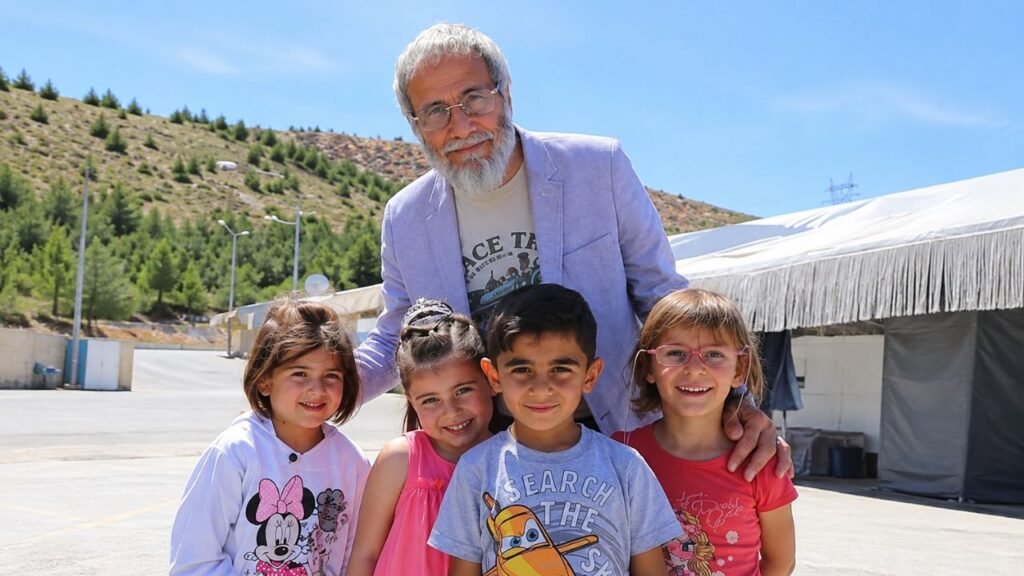
Their children grew up largely away from the intense celebrity attention that had surrounded their father during his Cat Stevens years. Yusuf’s family life became very different from the world of international tours, recording studios, interviews, and music industry events.
One of Yusuf’s sons, Muhammad, developed an interest in guitar and songwriting. His son’s interest in music eventually became one of the factors that encouraged Yusuf to reconsider some of his earlier ideas about music and his relationship with the recording industry.
Fauzia Mubarak Ali and Small Kindness
Fauzia Mubarak Ali is also connected to Yusuf Islam’s humanitarian work. In the late 1990s, Yusuf and his wife Fawziah established the Small Kindness charity after becoming increasingly involved with humanitarian issues connected to the conflicts in the Balkans.
Small Kindness focused on helping people affected by poverty, conflict, displacement, and humanitarian disasters. The organization’s work included support for orphans, widows, families, and communities facing difficult circumstances.
This part of Fauzia’s story is significant because it shows that her role in Yusuf’s life extended beyond being the wife of a famous musician. Their family became involved in humanitarian activities at a time when Yusuf was already concentrating on a life far removed from the commercial music industry.
Yusuf Islam’s Education and Humanitarian Work
Yusuf Islam spent much of his years away from mainstream music working on education and humanitarian causes. His involvement with education included helping establish a Muslim primary school in North London. He also supported humanitarian initiatives aimed at helping vulnerable communities.
His charitable activities eventually extended to different parts of the world. He became associated with projects involving children, education, poverty relief, and humanitarian assistance.
These activities became a major part of his public identity during the decades when he was no longer releasing mainstream pop albums. His work demonstrated that his life after Cat Stevens was not simply a period of retirement but a period of significant personal and social involvement.
Cat Stevens Return to Music
After many years away from mainstream music, Yusuf Islam gradually began returning to recording. His major musical comeback came in 2006 with the album An Other Cup. The release marked a new chapter in his relationship with the music industry.
His return surprised many listeners who remembered Cat Stevens from the 1970s. However, the comeback did not mean that Yusuf had abandoned the experiences or beliefs that had shaped his life since leaving music. His later work reflected both his earlier musical identity and the decades he had spent focusing on faith, family, and humanitarian activities.
He later released Roadsinger and continued recording and performing. His return allowed older fans to reconnect with the songs they remembered while introducing his work to listeners who had discovered his music years after his original success.
Cat Stevens and His Musical Legacy
The legacy of Cat Stevens rests heavily on the songs he wrote during his most successful period. His ability to turn ordinary experiences into memorable songs helped define the singer-songwriter style of the early 1970s.
His music often dealt with subjects that remain familiar to listeners, including family disagreements, love, separation, childhood, aging, peace, and spiritual questions. The arrangements were often relatively simple, allowing the lyrics and melodies to remain at the center.
His songs have also been recorded by other performers, helping introduce his songwriting to new generations. “The First Cut Is the Deepest” became particularly well known through versions by other artists, while “Father and Son” and several other Cat Stevens songs continued to appear in films, television programs, concerts, and later recordings.
Cat Stevens Rock & Roll Hall of Fame Recognition
Cat Stevens was inducted into the Rock & Roll Hall of Fame in 2014. The recognition reflected the impact of his songwriting and recording career during the 1960s and 1970s.
His induction also highlighted how unusual his career had been. He had achieved international fame, walked away from the music industry for decades, built a new life around faith and family, and eventually returned to performing.
Few artists have followed such a dramatic path. His career contains several distinct chapters, but the music of his classic period remains the foundation of his reputation.
Cat Stevens Later Albums and Projects
Yusuf continued releasing music after his return to recording. His later work allowed him to explore subjects that reflected his experiences and perspective after decades away from the spotlight.
In 2023, he released King of a Land, continuing a recording career that had already lasted for more than half a century. He also performed at major events and continued revisiting songs from his earlier catalog.
His later projects show that the relationship between Yusuf Islam and music never completely disappeared. Even after leaving the commercial music business, songwriting remained an important part of his creative identity.
Cat Stevens Memoir and Recent Career
The story of Cat Stevens has also been explored through his memoir Cat on the Road to Findout. The book covers different stages of his life, including his childhood, rise to fame, music career, spiritual journey, conversion to Islam, withdrawal from the entertainment industry, family life, and eventual return to music.
A memoir is particularly interesting in the case of Cat Stevens because his life has often been divided into separate chapters by the public. There was Steven Georgiou, the young musician; Cat Stevens, the international star; Yusuf Islam, the religious figure; and the later artist who returned to music.
His own account brings these stages together as parts of one life rather than completely separate identities. It provides another way to understand why the decisions he made during the height of his fame were so significant.
What Makes Cat Stevens’ Story Unique?
The unusual part of the Cat Stevens story is not simply that he became famous. Many musicians reach international success, but far fewer choose to step away from that success while still capable of continuing a major career.
His decision to embrace Islam and leave mainstream music changed the direction of his life. His marriage to Fauzia Mubarak Ali, the birth of their children, his educational activities, and his humanitarian work all became part of the life he built after leaving the pop industry.
His later return to music added another unexpected chapter. Instead of remaining permanently separated from his earlier career, he eventually found a way to reconnect with songwriting and performance while retaining the identity and beliefs he had developed as Yusuf Islam.
Cat Stevens’ Influence on Later Generations
The music of Cat Stevens continues to appeal to listeners because his songs are based on subjects that do not become outdated. A disagreement between a parent and child, the pain of saying goodbye, the desire for peace, and the search for meaning are experiences that continue across generations.
His straightforward songwriting style has also influenced the way many listeners think about acoustic singer-songwriters. His songs did not require elaborate production to communicate emotion. A guitar, a voice, and a strong melody were often enough.
The continued interest in his biography also comes from the contrast between his public identities. People who discover “Father and Son” or “Wild World” often become curious about the man behind the songs and why he disappeared from popular music at the height of his career.
Frequently Asked Questions About Cat Stevens
1. What is Cat Stevens’ real name?
Cat Stevens was born Steven Demetre Georgiou on July 21, 1948, in London, England. He adopted the name Cat Stevens professionally during the 1960s. After embracing Islam, he became known as Yusuf Islam in 1978.
2. Why did Cat Stevens leave music?
Cat Stevens left mainstream music after a long period of spiritual searching that culminated in his conversion to Islam. He wanted to focus on his faith, family, education, and humanitarian activities rather than continuing his previous career as an international pop star.
3. Who is Fauzia Mubarak Ali?
Fauzia Mubarak Ali is the wife of Yusuf Islam, formerly known as Cat Stevens. The couple married in 1979 and later built a family together. Fauzia has maintained a private life and has also been associated with humanitarian activities alongside her husband.
4. How many children does Cat Stevens have?
Yusuf Islam and Fauzia Mubarak Ali have five surviving children, including one son and four daughters. They also lost another son during infancy. Their children have largely remained outside the intense public spotlight associated with their father’s earlier music career.
5. Did Cat Stevens return to music?
Yes. Yusuf Islam returned to recording in 2006 with An Other Cup after spending many years away from mainstream music. He later released additional albums, performed internationally, and continued developing new musical projects while maintaining the Yusuf Islam identity.
Conclusion
The life of Cat Stevens is much more than the story of a successful singer-songwriter. Born Steven Demetre Georgiou, he became Cat Stevens during the 1960s and reached international fame through songs that explored family, love, peace, personal choices, and spirituality. His serious illness, spiritual search, conversion to Islam, and decision to leave mainstream music completely changed the direction of his life.
His marriage to Fauzia Mubarak Ali became an important part of the next chapter. Together they built a family and became involved in humanitarian work, including the Small Kindness charity. Yusuf’s years away from music were filled with education, family responsibilities, religious study, and charitable activities rather than the touring and recording schedule that had defined his earlier career.
His eventual return to music gave Cat Stevens’ story another unexpected turn. The songs that made him famous remained important, while his later work reflected the experiences he had gained during his years away. From Steven Georgiou to Cat Stevens and then Yusuf Islam, his journey remains one of the more unusual stories in popular music, combining international fame, personal transformation, family, faith, humanitarian work, and a return to the creative world he once left behind.