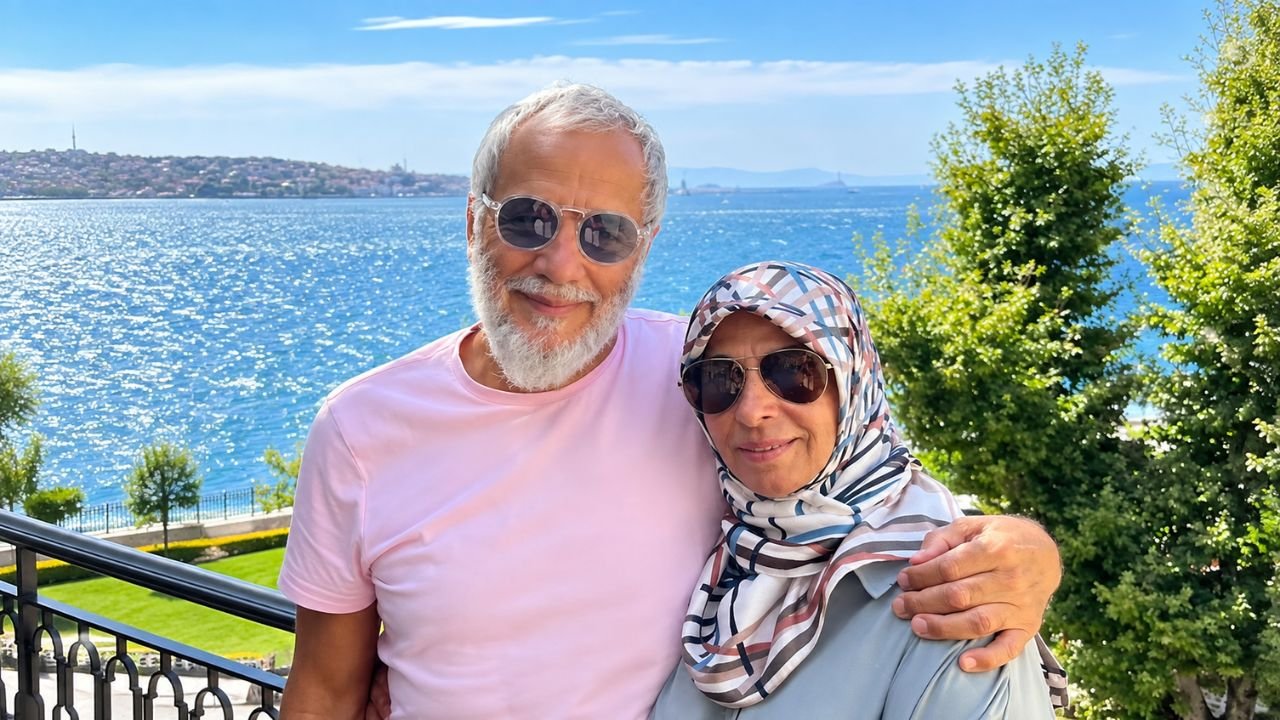
Fauzia Mubarak Ali is best known as the wife of British singer-songwriter Yusuf Islam, formerly known as Cat Stevens. She became part of Yusuf’s life at a major turning point, shortly after he had embraced Islam and stepped away from the international music career that had made him famous. Unlike her husband, Fauzia has maintained a largely private life and has rarely sought attention from the entertainment industry. Her story is connected not only to Cat Stevens and his family but also to education, humanitarian work, and the life Yusuf built after leaving mainstream music.
Who Is Fauzia Mubarak Ali?
Fauzia Mubarak Ali is the wife of Yusuf Islam, the musician who became internationally famous under the name Cat Stevens. The couple married in London in 1979, several years after Cat Stevens converted to Islam and adopted the name Yusuf Islam. Their marriage marked the beginning of a new stage in Yusuf’s personal life, as he increasingly focused on faith, family, education, and charitable activities. Fauzia remained largely outside the celebrity spotlight while becoming an important part of the family and charitable life Yusuf developed after his music career changed direction.
Information about Fauzia Mubarak Ali is much more limited than information about her husband. Cat Stevens spent decades as a globally recognized performer, while Fauzia has generally avoided the public attention associated with celebrity families. As a result, many websites repeat details about her age, birthplace, education, and career without providing strong evidence for every claim. A reliable biography should therefore separate documented information from details that appear repeatedly online but remain difficult to independently confirm.
Fauzia Mubarak Ali Early Life and Family Background
Several biographies describe Fauzia Mubarak Ali as the daughter of an accountant from Surbiton, an area in southwest London. This detail is useful because it provides some background to her life before her marriage to Yusuf Islam. Other websites have claimed that she was born in Karachi, Pakistan, and have published a specific date of birth, but those details are not strongly documented by reliable primary sources. For that reason, her exact birth date and birthplace should be treated cautiously when discussing Fauzia Mubarak Ali.
Some profiles also claim that Fauzia was not particularly familiar with Cat Stevens when they first met. One account says that she was more interested in Elvis Presley and did not initially know the extent of Cat Stevens’ international fame. If accurate, this makes an interesting contrast between the musician’s enormous public reputation and Fauzia’s apparently limited interest in his celebrity status. It also helps explain why their relationship is better understood through Yusuf’s personal life than through the entertainment industry.
How Fauzia Mubarak Ali Met Yusuf Islam
The story of how Fauzia met Yusuf is sometimes simplified online as an arranged marriage. Accounts attributed to Yusuf provide a more detailed version of the events surrounding his decision to marry. According to this account, Yusuf was considering two potential partners and introduced them separately to his mother before seeking her opinion. Fauzia was ultimately the woman he decided to marry, and their relationship developed during an important period of change in his life.
The timing of their relationship is significant because Yusuf had already left behind much of the lifestyle associated with Cat Stevens. He had embraced Islam in 1977 and adopted the name Yusuf Islam in 1978, and his priorities were changing rapidly. When he married Fauzia in 1979, he was moving toward a life centered on religion, family, education, and charitable work. Their marriage therefore belongs to the beginning of the period in which Yusuf’s public identity became very different from that of the 1970s pop star.
Fauzia Mubarak Ali and Cat Stevens’ 1979 Marriage
Fauzia Mubarak Ali and Yusuf Islam married on September 7, 1979, at Regent’s Park Mosque in London. Their wedding took place only a short time after Yusuf had formally changed his name and stepped away from the mainstream music industry. The marriage brought family responsibilities into a life that had previously been dominated by recording, touring, and international fame. Fauzia subsequently became part of the quieter family life that Yusuf had chosen.
Their marriage has attracted interest because of the contrast between Yusuf’s public past and his private life afterward. Cat Stevens had been one of the best-known singer-songwriters of the early 1970s, but Yusuf no longer wanted his life to revolve around commercial music. Fauzia did not become a celebrity personality in her own right, and the couple generally kept their family away from the level of publicity that surrounded Yusuf during his years as Cat Stevens. This privacy has contributed to the limited amount of reliable information available about Fauzia Mubarak Ali.
Fauzia Mubarak Ali and Cat Stevens’ Family
Fauzia and Yusuf built a large family together after their marriage. They have five surviving children, including one son and four daughters, while another son died during infancy. Their children grew up during a period when Yusuf was largely away from the mainstream entertainment industry. Family life therefore became one of the central parts of his identity during the decades when the public heard relatively little from him as a recording artist.
The family later became connected to Yusuf’s changing relationship with music. His son Muhammad developed an interest in playing guitar and writing songs, and this helped Yusuf reconsider some of his earlier views about returning to music. The story is significant because it shows how Yusuf’s life as a husband and father eventually intersected with his earlier identity as Cat Stevens. His eventual return to recording was influenced by the experiences he had gained during his years away from the music business.
Fauzia Mubarak Ali and the “Hard Headed Woman” Connection
One unusual detail connecting Fauzia to Cat Stevens’ music concerns the song “Hard Headed Woman.” According to accounts about Yusuf’s later performances, he sometimes changed the wording of the song when singing it after his marriage. Instead of describing himself as searching for a hard-headed woman, he would refer to having found his hard-headed woman, with the reference understood to be about Fauzia.
The story is interesting because it connects Fauzia Mubarak Ali to one of Cat Stevens’ well-known songs without suggesting that she was responsible for the song’s original creation. It also illustrates the way Yusuf’s older music became part of his family life after he had stepped away from the entertainment industry. Rather than being only a historical figure from Cat Stevens’ past, Fauzia became part of the personal story surrounding songs that audiences already knew.
Fauzia Mubarak Ali and Education
Education became an important part of Yusuf Islam’s life after he left mainstream music, and Fauzia also became connected to educational work. Public records from the United Kingdom have identified Fawziah Islam in connection with Islamia Girls’ School in London. At one point, she was listed as proprietor and principal of the school, showing that her activities extended beyond being known simply as Yusuf Islam’s wife.
The connection with education fits into the broader work Yusuf developed after his conversion to Islam. He had already become interested in creating educational opportunities for Muslim children and later became involved in school projects in North London. Fauzia’s involvement in education gives her biography a more substantial dimension because it provides a documented area of activity associated with her public life. It is also one of the areas where reliable records offer more useful information than the many celebrity websites that focus mainly on her marriage.
Fauzia Mubarak Ali and Small Kindness
Humanitarian work is another important part of the Fauzia Mubarak Ali story. Yusuf and his wife Fawziah established Small Kindness in the late 1990s, following their growing concern about people affected by conflicts and humanitarian disasters. The organization focused on helping vulnerable people, including orphans, widows, families, and communities affected by conflict. Its work became part of the wider charitable activities associated with Yusuf’s post-music life.
The organization is particularly connected with humanitarian concerns arising from the conflicts in the Balkans. Yusuf became involved in relief efforts related to the suffering caused by the Bosnian War and the Srebrenica massacre. Education and support for vulnerable women and children were among the concerns associated with this work. Fauzia’s involvement therefore forms an important part of her public story, particularly because it shows how her life with Yusuf extended into humanitarian activities.
Fauzia Mubarak Ali and Humanitarian Work
Fauzia’s connection to humanitarian work is sometimes described more broadly by online biography sites, with some sources calling her an activist involved in women’s rights and social issues. However, many of those claims are repeated without enough independent documentation to establish every detail. The stronger information concerns her connection with Yusuf’s charitable activities and the Small Kindness organization. Keeping those distinctions clear makes a biography more reliable.
Her humanitarian involvement also reflects the priorities of the life she shared with Yusuf. After leaving mainstream music, he devoted significant attention to religious education, schools, charity, and humanitarian relief. Fauzia was part of that family environment and became connected with some of those activities. Her public story is therefore closely connected with the second half of Yusuf’s life rather than with the entertainment career of Cat Stevens.
Jane Fonda’s Meeting With Fauzia Mubarak Ali
A rare public description of Fauzia comes from actress Jane Fonda, who wrote about meeting Yusuf Islam and Fauzia at an event in Germany in 2009. Fonda described the couple in a personal setting and mentioned Fauzia participating in a conversation about Islam and the Quran. This is notable because firsthand accounts of meeting Fauzia are uncommon compared with the enormous amount of material available about her husband.
The account provides a small glimpse into Fauzia’s public personality without turning her into a celebrity figure. She appears in the story as an active participant in conversation rather than simply as Yusuf’s wife accompanying him to an event. Because direct accounts about her are rare, details such as this can add depth to an article while still keeping the focus on information that can be attributed to a specific person.
Fauzia Mubarak Ali Age and Birthplace
The exact age of Fauzia Mubarak Ali is difficult to establish with confidence. Several websites report that she was born on March 24, 1958, and some identify Karachi, Pakistan, as her birthplace. Those details have been repeated across multiple biography websites, but repetition alone does not establish that they are correct. There is not enough strong public documentation to treat the exact birth date as a confirmed fact.
For this reason, a careful biography should avoid presenting an unverified birthday as certain. Readers searching for Fauzia Mubarak Ali may encounter the same date on several websites and assume that it has been independently confirmed. In reality, many celebrity biography pages can repeat information from one another. A responsible article should make the distinction clear rather than filling gaps in her biography with unsupported details.
Fauzia Mubarak Ali Education Claims
Several online profiles claim that Fauzia studied at Kinnaird College for Women in Lahore and later attended Columbia University. Some sources go further by claiming that she studied Urdu literature and comparative literature. These details are frequently repeated in articles about her, but reliable institutional documentation supporting the complete educational history is difficult to locate.
That does not necessarily mean the claims are false. It means they should not automatically be presented as established facts simply because multiple websites publish them. If stronger documentation becomes available, these details could be added to her biography later. Until then, the documented connection between Fauzia and educational work provides a safer and more useful focus.
Why Is Fauzia Mubarak Ali So Private?
One of the most distinctive aspects of Fauzia Mubarak Ali’s public profile is how little she has pursued celebrity attention. She married a musician who had already achieved worldwide fame, yet she did not become a regular entertainment personality herself. Much of what the public knows about her comes through information about Yusuf Islam, their family, education, and humanitarian activities. This is very different from the public profiles of many celebrity spouses.
Her private nature also explains why online information about her can be inconsistent. When a public figure rarely gives interviews or maintains a large media presence, secondary websites often fill gaps with information that may not be properly sourced. This has happened repeatedly with claims about Fauzia’s birthday, birthplace, education, and career. Her biography is therefore best written around documented events and clearly attributed information rather than speculation.
Fauzia Mubarak Ali and Yusuf Islam’s Return to Music
Yusuf’s eventual return to music added another chapter to Fauzia’s connection with his career. After spending decades away from mainstream music, he began recording again in the 2000s. His son Muhammad’s interest in music was one of the experiences that helped him reconsider his relationship with musical performance.
Fauzia was part of the family environment during this period of change. Her husband had spent many years concentrating on religion, education, family, and humanitarian work, but music eventually returned to his life in a different form. The comeback did not erase his years as Yusuf Islam or his experiences after leaving the Cat Stevens identity. Instead, it became another stage in a life that had already taken several unexpected directions.
Frequently Asked Questions About Fauzia Mubarak Ali
Who is Fauzia Mubarak Ali?
Fauzia Mubarak Ali is the wife of British singer-songwriter Yusuf Islam, formerly known as Cat Stevens. She married Yusuf in 1979 and became part of his family, educational, and humanitarian life. She has maintained a much more private public profile than her husband.
When did Fauzia Mubarak Ali marry Cat Stevens?
Fauzia Mubarak Ali married Yusuf Islam on September 7, 1979, at Regent’s Park Mosque in London. At the time, Yusuf had already converted to Islam and had stepped away from his former career as Cat Stevens. Their marriage marked the beginning of an important family-centered period in his life.
How many children does Fauzia Mubarak Ali have?
Fauzia Mubarak Ali and Yusuf Islam have five surviving children, including one son and four daughters. They also experienced the loss of another son during infancy. Their children have largely lived away from the intense celebrity attention surrounding Yusuf’s earlier career.
What does Fauzia Mubarak Ali do?
Fauzia is associated with family life, education, and humanitarian activities. Public records have connected her with Islamia Girls’ School in London, while she and Yusuf were also involved with the Small Kindness charity. Much of her life remains private, so detailed information about her current activities is limited.
Is Fauzia Mubarak Ali’s date of birth confirmed?
A March 24, 1958 birth date is widely repeated online, along with claims that she was born in Karachi. However, these details have not been sufficiently confirmed through strong primary sources. A careful biography should therefore describe the date as reported rather than presenting it as an unquestioned fact.
Conclusion
Fauzia Mubarak Ali has lived a largely private life despite being married to one of Britain’s most famous singer-songwriters. Her marriage to Yusuf Islam came during a major transformation in his life, when he had already left behind the Cat Stevens identity and was focusing on Islam, family, education, and humanitarian work. Together they raised a family, became involved in educational activities, and established Small Kindness to support people affected by humanitarian crises. These parts of her story provide a clearer picture of her public life than the many unsupported details repeated by celebrity websites.
The limited information available about Fauzia is also part of what makes her biography unusual. She did not build her own celebrity career, and she has largely stayed away from the publicity surrounding her husband’s music. Her documented connections with education, family, and humanitarian work show a life that developed largely outside the entertainment industry. For readers interested in Cat Stevens, Yusuf Islam, or the family behind the musician, Fauzia Mubarak Ali offers an important perspective on the personal life that followed his departure from mainstream music.