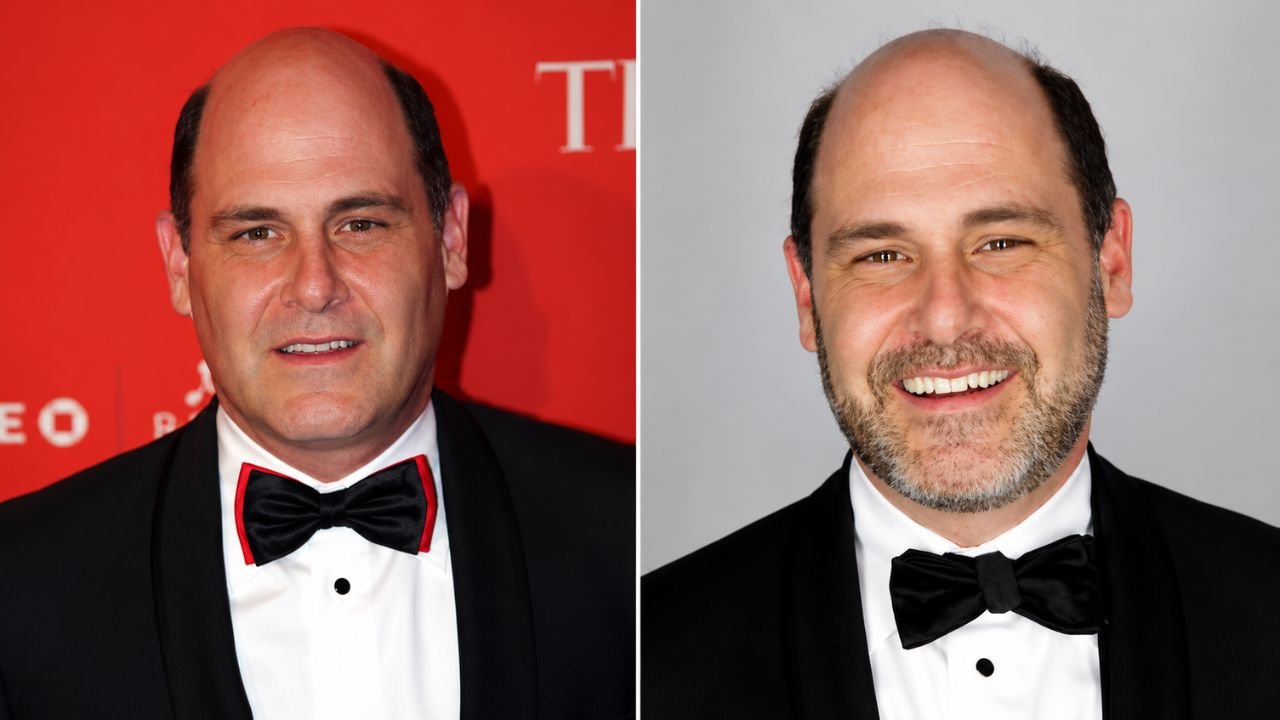
Matthew Weiner is an American television writer, producer, director and author best known for creating the acclaimed drama series Mad Men. Before becoming one of television’s most recognized showrunners, he spent years trying to establish himself as a screenwriter and worked on several television comedies. His career changed significantly when David Chase discovered his Mad Men pilot and brought him onto The Sopranos. That experience helped Weiner develop the skills and industry position that eventually allowed him to bring Mad Men to television. His work has since expanded into film, novels, anthology television and theater, making the Matthew Weiner career much broader than his association with one series.
Matthew Weiner Early Life and Family Background
Matthew Weiner was born on June 29, 1965, in Baltimore, Maryland. His family later moved to Los Angeles, where he spent much of his youth and developed an interest in storytelling and filmmaking. His early experiences in both Baltimore and Los Angeles would eventually become interesting parts of his personal background, particularly because one of his later theatrical projects returned to a historical figure connected with Baltimore. Weiner’s childhood and education eventually led him toward film and television rather than a conventional career outside entertainment.
Weiner’s interest in storytelling developed before he became a professional television writer. He attended the Park School in Baltimore and later continued his education in California. His academic background was not limited to practical filmmaking because he studied philosophy, literature and history at Wesleyan University. That combination gave him exposure to subjects that would later complement his interest in character development, social behavior and storytelling.
Matthew Weiner Education and USC Years
Matthew Weiner graduated from Wesleyan University in 1987 after studying philosophy, literature and history. He then attended the University of Southern California’s School of Cinema and Television, where he earned an MFA. USC became an important part of his professional development because he gained formal training in filmmaking while also building relationships within the entertainment industry. His years at USC eventually became connected to several important stages of his later career.
While studying at USC, Weiner worked on an early documentary project involving paparazzi and also developed his own film ideas. One early independent project associated with him was What Do You Do All Day?, which he worked on in the 1990s. These projects show that his interest in filmmaking existed well before Mad Men became a reality. His early work also demonstrates that his career developed gradually rather than appearing suddenly after the success of the AMC drama.
Matthew Weiner Early Career in Television
After completing his education, Weiner spent years trying to establish himself as a professional writer. His early television work included projects such as Party Girl, The Naked Truth, Becker and Andy Richter Controls the Universe. Much of this early work was in comedy, which may seem different from the serious dramatic storytelling for which he later became known. Those writing jobs nevertheless gave him practical experience with television production and helped him build a professional résumé.
Weiner’s path during these years was not especially straightforward. Like many aspiring writers, he had to spend time looking for opportunities before receiving a major breakthrough. He even appeared as a contestant on Jeopardy!, an unusual detail that is sometimes mentioned in biographies of his early career. The appearance is interesting because it took place before the success of Mad Men and illustrates how different his professional circumstances were before he became an established television creator.
How Matthew Weiner Created Mad Men
The origins of Mad Men can be traced back to a spec script Weiner wrote while he was working in television. The script centered on the world of advertising in 1960s New York and introduced the character who would become Don Draper. The concept was different from the comedy projects that had occupied much of Weiner’s early career. Although the script did not immediately become a television series, it remained an important project that eventually changed his career.
Weiner’s Mad Men pilot attracted the attention of David Chase, the creator of The Sopranos. Chase read the script and recognized Weiner’s potential, eventually bringing him into The Sopranos writing team. This opportunity became one of the most important steps in the Matthew Weiner career because it gave him direct experience working on a major serialized drama. His time with The Sopranos helped prepare him for the demands of running his own dramatic series.
Matthew Weiner and The Sopranos
Matthew Weiner joined The Sopranos during its later seasons and became a writer and producer on the HBO drama. Working under David Chase gave him experience with long-form character development, complicated relationships and serialized storytelling. These were all elements that would become central to Mad Men. His work on The Sopranos also gave him greater credibility when he eventually attempted to get his own series produced.
Weiner received major recognition for his work on The Sopranos. He was part of the production team that received Emmy recognition for the series and also received writing attention for individual episodes. His involvement demonstrated that he could work successfully within an established dramatic series before becoming a showrunner himself. The Sopranos therefore represents a crucial chapter in the Matthew Weiner biography rather than simply another credit on his résumé.
Matthew Weiner appeared on The Sopranos
One unusual fact about Matthew Weiner is that he also appeared on The Sopranos. He played Manny Safier, a fictional mafia expert and author who appeared through television broadcasts within the series. His role was small, but it gives his connection to The Sopranos an unusual personal touch. Weiner was therefore involved with the series both behind the scenes as a writer and producer and briefly in front of the camera.
Matthew Weiner Returns to USC as a Teacher
Weiner later returned to USC and taught screenwriting during a break from his professional television work. This was an interesting reversal because USC had been the place where he originally studied filmmaking. Returning as an instructor allowed him to share his experience with students who were pursuing screenwriting themselves. His connection with USC therefore continued beyond his education.
His relationship with USC also connects to another important person in his career, Erin Levy. Levy studied screenwriting at USC and had Matthew Weiner as one of her instructors. She later joined Mad Men as a writer’s assistant and became a credited writer on the show. This connection makes the Matthew Weiner and Erin Levy biographies particularly useful subjects for internal linking on a celebrity biography website.
How Mad Men Finally Reached Television
Although Weiner had written the Mad Men pilot, getting the series produced took time. The project was considered by several television networks before AMC eventually became interested. At the time, AMC was working to establish itself as a destination for original scripted programming, and Mad Men became one of the most important series in that transformation. The show premiered in July 2007 and quickly established a distinctive identity.
The pilot itself had an unusual production history. Weiner was able to work on the pilot in New York during a break from The Sopranos, and the first episode was filmed before the rest of the series entered regular production. The remaining episodes were primarily produced in Los Angeles and other locations. This process gave Weiner the opportunity to turn his original script into a visual version of the world he had imagined.
Matthew Weiner as the Creator of Mad Men
Mad Men was set in the advertising industry of 1960s Manhattan and centered on Don Draper and the people working around him. The series explored professional ambition alongside marriage, identity, gender roles, social change and personal dissatisfaction. Rather than relying only on large dramatic events, the show often built its stories around character decisions and subtle changes in relationships. This approach became one of the defining features of Matthew Weiner’s television work.
Weiner served as creator, showrunner, executive producer and writer on Mad Men. His involvement extended beyond scripts into casting, costumes, production details and the overall presentation of the series. He also directed numerous episodes during the show’s seven-season run. His broad responsibilities meant that his influence on Mad Men extended across both storytelling and production.
Matthew Weiner’s responsibilities on Mad Men
His work on the series included several major responsibilities:
- Creating the original series concept
- Writing and revising scripts
- Serving as showrunner
- Working as an executive producer
- Directing episodes
- Participating in casting decisions
- Overseeing the show’s visual details
- Guiding long-term character development
- Working with the writers’ room
- Helping shape the series finale
This combination of responsibilities explains why Matthew Weiner is so closely associated with the identity of Mad Men. He was not simply the person who wrote the original pilot. He remained involved in the series throughout its development and helped guide it through seven seasons.
Matthew Weiner and Erin Levy
The connection between Matthew Weiner and Erin Levy is one of the most interesting professional relationships in this career story. Levy studied screenwriting at USC, where Weiner was one of her instructors. When Mad Men needed a writer’s assistant, Levy eventually joined the series during its third season. She later moved from an assistant position into the show’s writing staff.
Weiner and Levy worked together on the Mad Men episode “Shut the Door. Have a Seat.” The episode became a major turning point for Levy because she shared the 2010 Primetime Emmy for Outstanding Writing for a Drama Series connected with the episode. This connection shows how Weiner’s influence on Mad Men extended to developing writers who went on to establish their own television careers.
Matthew Weiner’s Emmy Awards and Recognition
Matthew Weiner’s awards history includes major recognition for both The Sopranos and Mad Men. His work on The Sopranos contributed to the series’ success during its final seasons, while Mad Men brought him additional Emmy recognition as a creator, writer and producer. His awards record reflects a career that moved successfully between different roles in television production. He became one of the most recognized creative figures associated with the modern television drama era.
Mad Men itself won the Primetime Emmy Award for Outstanding Drama Series four consecutive times from 2008 through 2011. It was the first basic-cable series to win the category, giving the show a significant place in television history. Weiner received individual recognition for writing and producing as the series continued. The show’s success also helped establish AMC as a major producer of original scripted dramas.
Major areas of recognition
Matthew Weiner’s professional recognition includes:
- Primetime Emmy Awards
- Golden Globe Awards
- Writers Guild recognition
- Producers Guild recognition
- Peabody-related recognition connected with Mad Men
- Time 100 recognition
- Brandon Tartikoff Legacy Award
His recognition is not limited to one award ceremony. The combination of writing, producing and directing credits gave him opportunities to receive attention from several parts of the television industry.
Matthew Weiner as a Television Director
Although Matthew Weiner is primarily known as a writer and showrunner, he also developed a significant directing career. He directed numerous episodes of Mad Men and took a particularly prominent role in directing season-ending episodes. He directed all seven season finales of the series, giving him a direct role in shaping the show’s major seasonal turning points.
Directing allowed Weiner to influence the visual presentation of stories he had helped develop as a writer. His work behind the camera was particularly important because Mad Men relied heavily on visual details, period design and carefully constructed scenes. His directing responsibilities therefore complemented his work as a writer and producer.
Matthew Weiner and the Mad Men Series Finale
The Mad Men finale, “Person to Person,” represented the end of a seven-season story that had begun in 2007. Weiner was closely involved with the episode as a writer, producer and director. The finale brought together the show’s major themes surrounding identity, relationships, work and personal change. It remains one of the most discussed parts of his television career.
The conclusion of Mad Men also marked the end of Weiner’s longest-running television project. After spending years developing the show’s characters and world, he moved into different forms of storytelling. His work after Mad Men included film, fiction writing and another television anthology series.
Matthew Weiner and Are You Here
Weiner expanded into feature filmmaking with Are You Here, a comedy-drama released in 2013. He wrote and directed the film, which starred Owen Wilson, Zach Galifianakis and Amy Poehler. The story follows two longtime friends whose lives change after one of them inherits his father’s fortune. The project allowed Weiner to work in a feature-film format rather than the serialized television environment that had defined most of his career.
Are You Here demonstrated that Weiner was interested in stories beyond the world of Mad Men. The film explored friendship, family, money and personal responsibility through a different tone from his television drama. Although his television career remained his most recognizable achievement, the movie added another dimension to his work as a writer and director.
Matthew Weiner’s First Novel
After Mad Men, Weiner also moved into literary fiction. His first novel, Heather, the Totality, was published in 2017. The story focuses on a wealthy family and examines themes involving privilege, family relationships, obsession and danger. Writing a novel required Weiner to approach storytelling without the collaborative structure of a television writers’ room.
Heather, the Totality showed that his interest in character psychology extended beyond television. The book was another opportunity for him to explore the tensions between outward appearances and private behavior. Its publication also expanded his professional identity from television writer and producer to novelist.
Matthew Weiner and The Romanoffs
In 2018, Weiner returned to television with The Romanoffs. The Amazon anthology series was created, written and produced by Weiner and consisted of separate stories connected by characters who believed they were descendants of the Russian Romanov family. The anthology format gave him the opportunity to tell different stories rather than following one central group of characters throughout an entire series.
The Romanoffs represented a major structural change from Mad Men. Instead of building one continuing story over seven seasons, Weiner created separate narratives with different characters and settings. The series also featured an international cast and production locations, giving him an opportunity to work on a larger geographic scale.
Matthew Weiner’s Recent Stage Work
One of Weiner’s more recent projects moved away from television entirely. His play John Wilkes Booth: One Night Only! premiered at Baltimore Center Stage in 2025. The production focused on the historical figure John Wilkes Booth and was presented as a one-person theatrical performance. The project was particularly notable because of Weiner’s personal connection to Baltimore.
Weiner had maintained an interest in Booth for years before turning that fascination into a stage project. The Baltimore premiere also connected the production to the city where Weiner was born. This project demonstrates that his interest in historical figures and character psychology continues to influence his creative work outside television.
Matthew Weiner and Dead Calm
Another recent project associated with Weiner is a television adaptation of the psychological thriller Dead Calm. The project has been reported as a development effort involving Weiner as a writer. Because projects in development can change before production, it is more accurate to describe this as an adaptation project rather than a completed television series.
Dead Calm also fits several recurring elements of Weiner’s work. The story involves relationships, isolation and psychological tension, subjects that can be explored through character-focused drama. Its development demonstrates that Weiner continues to work on television projects after the completion of The Romanoffs.
Matthew Weiner Personal Life and Family
Matthew Weiner married architect Linda Brettler in 1991, and the couple have four sons. Public biographies have also connected his family to Mad Men because his son Marten Holden Weiner played Glen Bishop on the series. Marten appeared in multiple episodes, giving Weiner’s family a small but memorable connection to his most famous production.
Weiner’s personal life has generally received less public attention than his professional career. For a biography article, the most useful approach is to focus on information that is clearly documented rather than filling the section with speculation. His education, writing career, television work and creative projects provide considerably more reliable material than unverified claims about private matters.
Matthew Weiner’s Net Worth and Career Earnings
Searches for Matthew Weiner net worth are common because entertainment biography websites often publish estimated financial figures. However, an exact personal net worth cannot be established reliably from his public television, film and publishing credits alone. Writers, producers and showrunners can receive different compensation depending on contracts, residual arrangements, producing roles and other professional agreements.
For that reason, an article about Matthew Weiner should avoid presenting an estimated net worth as a confirmed figure. His long television career, successful shows, film work, book publication and producing credits clearly demonstrate a substantial professional career, but they do not provide enough information to calculate his private finances accurately.
Matthew Weiner Movies and TV Shows
People searching for Matthew Weiner movies and TV shows will find a career that extends across several formats. His television credits include early comedy projects, The Sopranos, Mad Men and The Romanoffs. His film work includes Are You Here, while his literary work includes Heather, the Totality. His more recent creative work has also included theater and projects in television development.
Some of the most notable projects connected with Matthew Weiner include:
- The Sopranos
- Mad Men
- Are You Here
- The Romanoffs
- Heather, the Totality
- John Wilkes Booth: One Night Only!
- Dead Calm adaptation
These projects show how his career has moved through television, film, literature and theater. Mad Men remains his most famous creation, but the other projects help provide a more complete picture of his creative development.
Why Mad Men Remains Central to Matthew Weiner’s Career
Mad Men remains the project most closely associated with Matthew Weiner because he developed the concept, guided its production and remained involved throughout its seven-season run. The show transformed the advertising world of 1960s Manhattan into a setting for stories about identity, ambition, family and social change. Its success also helped AMC establish itself as a major home for original scripted television. Weiner’s involvement across writing, producing and directing gave him an unusually broad connection to the final series.
The show’s importance also extends to the writers and actors who worked on it. Erin Levy is one example of a writer whose career developed through the Mad Men writers’ room. Jon Hamm, Elisabeth Moss, Christina Hendricks and other cast members became closely associated with the series as well. Because of this, a Matthew Weiner article can naturally connect with many related celebrity biographies.
Matthew Weiner’s Creative Career Beyond Mad Men
It would be easy to describe Matthew Weiner only as the creator of Mad Men, but that would leave out significant parts of his career. His work on The Sopranos helped establish his credentials before Mad Men was produced. His later projects showed an interest in film, novels, anthology television and historical theater. Each project offered a different format through which he could explore character and storytelling.
His career also demonstrates the value of moving between different creative roles. He has worked as a writer, producer, executive producer, showrunner and director. He has also written fiction and developed stage work. This combination of responsibilities makes Matthew Weiner a useful example of a television creator whose career developed beyond a single successful series.
Frequently Asked Questions About Matthew Weiner
Who is Matthew Weiner?
Matthew Weiner is an American television writer, producer, director and author best known as the creator of Mad Men. He also worked as a writer and producer on The Sopranos before Mad Men premiered. His later work has included film, novels, The Romanoffs and theater.
What is Matthew Weiner best known for?
Matthew Weiner is best known for creating the AMC drama Mad Men. He served as its creator, showrunner, writer and executive producer and directed numerous episodes. The series ran for seven seasons from 2007 to 2015 and received major awards recognition.
Did Matthew Weiner work on The Sopranos?
Yes, Matthew Weiner worked on The Sopranos as a writer and producer during the later seasons of the HBO series. David Chase hired him after reading his Mad Men pilot. His experience on The Sopranos helped prepare him for creating and running Mad Men.
Is Matthew Weiner connected to Erin Levy?
Yes. Erin Levy studied screenwriting at USC, where Matthew Weiner was one of her instructors. She later joined Mad Men as a writer’s assistant and became a credited writer on the series. Levy and Weiner co-wrote “Shut the Door. Have a Seat.,” which received the 2010 Emmy for Outstanding Writing for a Drama Series.
What other projects has Matthew Weiner created?
Beyond Mad Men, Matthew Weiner created The Romanoffs and directed the feature film Are You Here. He also wrote the novel Heather, the Totality and developed the stage play John Wilkes Booth: One Night Only! His career has therefore included television, film, literature and theater.
Conclusion
Matthew Weiner’s career is a story of persistence, television experience and gradual creative growth rather than an overnight success. He studied philosophy, literature, history and filmmaking before spending years working on television projects and trying to establish himself as a writer. His Mad Men pilot eventually caught David Chase’s attention and led to his work on The Sopranos, which provided the experience that helped him bring Mad Men to television. As the creator, showrunner, writer, producer and director of Mad Men, Weiner played a central role in shaping the series and became an Emmy-winning television creator.
His career did not end when Mad Men concluded in 2015. Weiner moved into feature filmmaking with Are You Here, published Heather, the Totality, created The Romanoffs and later explored historical storytelling through his stage play about John Wilkes Booth. His continued involvement with television development also shows that he remains connected to the medium that established his reputation. From his early years trying to break into television to his work across multiple forms of storytelling, the Matthew Weiner biography offers a detailed look at how a writer can develop into a creator, showrunner, director and producer.