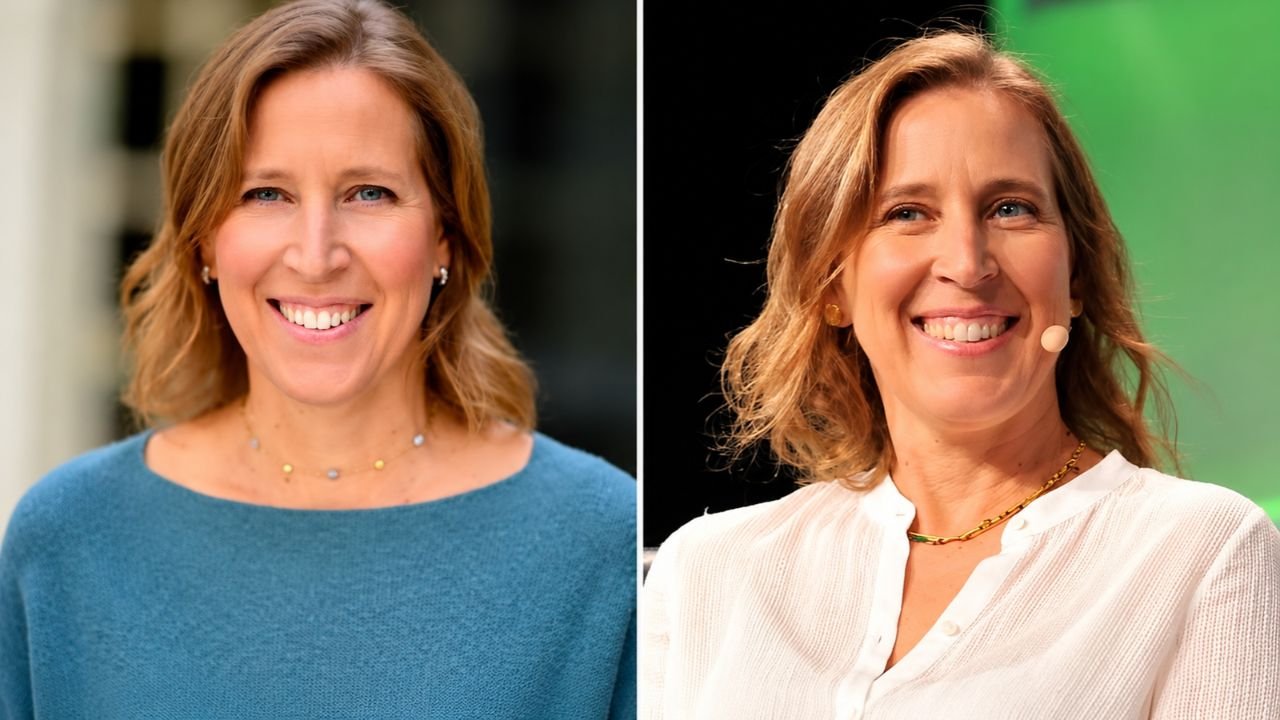
Susan Wojcicki was one of the most influential women in the technology industry, with a career that connected the early days of Google to the global growth of YouTube. She joined Google in 1999 as its 16th employee and became involved in some of the company’s most important advertising and consumer products. Years later, she became the chief executive officer of YouTube and led the platform through a period of enormous growth in users, creators, advertising and global reach. Her story also includes an unusual beginning in a Silicon Valley garage, a major role in Google’s decision to acquire YouTube, advocacy for women and parents in the workplace, and a later focus on improving lung cancer detection.
Susan Wojcicki Early Life and Family Background
Susan Diane Wojcicki was born on July 5, 1968, in Santa Clara, California, and grew up in the Stanford University community. Her father, Stanley Wojcicki, was a physics professor at Stanford, while her mother, Esther Wojcicki, became known as an educator and journalist. Susan grew up with two sisters, Anne and Janet, who later developed successful careers of their own. The family environment encouraged education, curiosity and independence, qualities that became visible throughout Susan Wojcicki’s professional life.
The Wojcicki sisters developed an interest in entrepreneurship and science from a young age. Their childhood included small business projects and activities that encouraged them to think creatively and work together. Susan later became a major technology executive, Anne became a co-founder of 23andMe, and Janet pursued an academic career in medicine and public health. Their shared background helps explain why education, science, technology and independent thinking remained important themes in the family’s life.
Susan Wojcicki Education and Early Career
Susan Wojcicki studied history and literature at Harvard University and graduated with honors. Her original career plans were not centered on becoming a technology executive, and she once considered pursuing a doctorate in economics and becoming an academic. Her interests gradually moved toward business and technology, leading her to earn a master’s degree in economics from the University of California, Santa Cruz. She later completed an MBA at UCLA Anderson School of Management.
Her professional experience before Google gave her a combination of marketing, consulting and technology-related business knowledge. She worked in marketing at Intel and also spent time at Bain & Company and R.B. Webber & Company. These positions helped her develop an understanding of business strategy and consumer markets before she entered Google’s rapidly growing environment. Her background was unusual for a future technology chief executive because it combined humanities, economics, management and marketing rather than following a traditional computer science path.
The Garage That Connected Susan Wojcicki to Google
One of the most recognizable parts of Susan Wojcicki’s story began before she officially worked for Google. In 1998, she and her husband rented the garage of their Menlo Park home to Larry Page and Sergey Brin, who were developing the search engine that would become Google. The young company used the property during its earliest stage while the founders worked on building their business. A year later, Wojcicki joined Google herself, turning a landlord relationship into one of the most remarkable career connections in Silicon Valley.
The garage story is significant because it places Susan Wojcicki close to Google’s beginnings without suggesting that she founded the company. She was not one of Google’s two founders, but she became one of its earliest and most important executives. Her decision to join the young company showed a willingness to take a risk on a business that was still developing its identity. That decision eventually put her in a position to influence advertising, consumer products and YouTube.
Susan Wojcicki Joins Google
Susan Wojcicki joined Google in 1999 as the company’s 16th employee and first marketing manager. At the time, Google was still a young search company and had nowhere near the size or influence it would eventually achieve. Her early responsibilities included helping develop Google’s marketing approach and building a recognizable brand around its search technology. She became part of a small team that was trying to turn an ambitious search project into a sustainable business.
Her importance at Google grew as the company expanded beyond its original search engine. Wojcicki worked on projects that included Google Images and Google Books, while also becoming deeply involved in the company’s advertising operations. Her ability to connect product development with business strategy made her increasingly valuable as Google’s user base and commercial activity grew. The experience gave her a central role in building the systems that would later help finance Google’s enormous expansion.
Susan Wojcicki and Google’s Advertising Business
Advertising became one of the defining areas of Susan Wojcicki’s Google career. She became involved with Google’s advertising products in the early 2000s and eventually worked with major systems including AdWords, AdSense, DoubleClick and Google Analytics. These products helped businesses reach audiences through Google’s search and online advertising ecosystem. Her work in this area contributed to a business model that became one of Google’s most important sources of revenue.
The significance of her advertising career is easy to overlook when most people remember her primarily as a YouTube CEO. Before she became the public face of YouTube, she had already spent years helping Google build its commercial infrastructure. Her understanding of digital advertising later became especially relevant to YouTube because advertising was central to the platform’s ability to support creators and generate revenue. This earlier part of her career explains why she was particularly well positioned to lead a massive online video business.
Major areas of her Google career included:
- Google advertising products
- AdWords and AdSense
- DoubleClick
- Google Analytics
- Google Images
- Google Books
- Consumer product development
- Marketing and brand strategy
Susan Wojcicki and the YouTube Acquisition
Susan Wojcicki became one of the people inside Google who recognized the growing importance of YouTube. The video-sharing service had become popular because users could easily upload and watch videos created by ordinary people, but its long-term business model was still uncertain. Wojcicki believed that online video had significant potential and supported Google’s decision to acquire the company. Google completed the YouTube acquisition in 2006 for approximately $1.65 billion in stock.
The acquisition became one of Google’s most important strategic decisions. YouTube eventually developed into a global platform used by billions of people and became a major part of online entertainment, education, music and news. Wojcicki’s involvement in recognizing the opportunity is an important part of her professional story because she understood that video could become much more than a feature of the internet. Her later appointment as YouTube CEO made the connection between her early advocacy and her eventual leadership position even more significant.
Susan Wojcicki Becomes YouTube CEO
In February 2014, Susan Wojcicki became the CEO of YouTube. She took over at a time when online video was already important, but the platform still had enormous room for growth. During her leadership, YouTube expanded its creator ecosystem, advertising business, international reach and subscription services. She remained CEO until February 2023, making her one of the longest-serving leaders in YouTube’s history.
Her time as YouTube CEO coincided with a major transformation in the way people consumed video. YouTube became a destination for music, entertainment, education, gaming, news, tutorials and independent creators. The platform also became increasingly important to businesses and advertisers seeking audiences outside traditional television. Under Wojcicki’s leadership, the company had to balance rapid growth with questions surrounding content moderation, copyright, misinformation, child safety and creator policies.
YouTube’s Growth Under Susan Wojcicki
The scale of YouTube increased dramatically during Susan Wojcicki’s tenure. The platform eventually reached more than two billion logged-in monthly users, while viewers were watching enormous amounts of video every day. YouTube also expanded its presence across countries and languages, making it one of the world’s most widely used digital platforms. Its growth changed not only Google’s business but also the broader media industry.
Creators became an increasingly important part of this expansion. YouTube allowed individuals to build audiences without relying on traditional television networks, newspapers or entertainment companies. Successful creators could turn channels into businesses through advertising, sponsorships, memberships and other forms of income. During Wojcicki’s leadership, YouTube reported paying tens of billions of dollars to creators, artists and media companies, reinforcing the platform’s role in the growing creator economy.
Susan Wojcicki’s Influence on YouTube Creators
One of the defining features of Susan Wojcicki’s YouTube leadership was the growing relationship between the platform and its creators. She regularly discussed the importance of giving people opportunities to express themselves and build businesses through video. This philosophy helped YouTube strengthen its identity as a platform where professional media companies and individual creators could operate alongside each other. The creator community became a major reason people continued returning to YouTube.
At the same time, managing the creator ecosystem was not always easy. YouTube faced disputes over monetization rules, copyright claims, advertiser-friendly content and platform policies. Creators sometimes criticized changes that affected their income or visibility, while advertisers demanded greater control over where their advertisements appeared. Wojcicki’s leadership therefore involved managing competing interests while trying to keep YouTube growing.
Susan Wojcicki and Women in Technology
Susan Wojcicki became an important advocate for women working in technology. She frequently spoke about the need for greater female participation in the technology industry and supported efforts designed to encourage girls and women to enter STEM fields. Her own career provided an example of how a person from a humanities and business background could reach the highest levels of a technology company. She also supported workplace policies intended to make professional careers more compatible with family responsibilities.
Her views on parental leave were shaped partly by her own experience as a mother. Wojcicki became known for supporting paid parental leave and workplace policies that helped employees balance professional responsibilities with raising children. She also became an advocate for women who wanted to continue advancing their careers after having families. This part of her legacy is separate from her achievements at Google and YouTube because it concerns the workplace culture she wanted technology companies to create.
Susan Wojcicki Husband and Children
Susan Wojcicki was married to Dennis Troper, a technology executive who also worked at Google. The couple had five children and maintained a family life away from much of the public attention surrounding Wojcicki’s career. She often spoke about the challenge of balancing a demanding executive position with motherhood. Her experience as a mother became part of her public advocacy for better parental policies in the workplace.
Wojcicki also valued ordinary family activities despite her demanding career. Reports about her personal life describe a family farm near their home where the family kept chickens, maintained a garden and worked with beehives. These details provide a different perspective on a woman whose professional life was closely associated with some of Silicon Valley’s most powerful companies. Her family remained an important part of her identity even while she was leading a global technology platform.
Susan Wojcicki Steps Down as YouTube CEO
In February 2023, Susan Wojcicki announced that she was leaving her position as YouTube CEO. She explained that she wanted to focus on her family, health and personal projects while continuing to serve as an adviser to Google and Alphabet. Neal Mohan, who had previously worked closely with her at YouTube, succeeded her as CEO. Her departure marked the end of an important era for the company.
By the time she stepped down, YouTube had become fundamentally different from the platform that existed when she became CEO in 2014. It had developed into a huge global ecosystem involving creators, advertisers, music companies, media organizations and audiences. Wojcicki had spent years dealing with the opportunities and difficult decisions that came with that expansion. Her resignation also later became more significant because her health situation was not widely known at the time.
Susan Wojcicki and Her Lung Cancer Diagnosis
In 2022, Susan Wojcicki was diagnosed with lung cancer after experiencing persistent hip pain. She initially believed the pain could have been related to physical activity, but medical imaging eventually revealed cancer. Further testing identified the source as lung cancer that had already spread to other parts of her body. Her diagnosis was particularly unexpected because she had never been a smoker and was known for maintaining an active lifestyle.
Wojcicki kept her diagnosis largely private while continuing her professional responsibilities. Her family later became involved in understanding why she had developed lung cancer despite having no smoking history. Her case highlighted the fact that lung cancer can affect people who do not fit the traditional public image associated with the disease. It also influenced the direction of the work her family pursued after her death.
Her cancer journey involved:
- A persistent hip pain that led to medical imaging
- The discovery of cancer that had spread
- Identification of lung cancer as the primary source
- Genetic testing and identification of a HER2-related mutation
- Clinical and experimental treatments
- A focus on understanding lung cancer in nonsmokers
Susan Wojcicki’s Final Years and Medical Advocacy
During her illness, Wojcicki pursued treatment that included clinical trials and experimental approaches. Her family became increasingly interested in improving understanding of lung cancer among people who had never smoked. They investigated possible environmental and genetic factors and consulted researchers and medical specialists. These efforts eventually became part of a much larger mission following her death.
Her experience also connected with her earlier interest in health information. While leading YouTube, Wojcicki had supported efforts to improve access to trustworthy medical information on the platform. Her personal experience with cancer gave this interest a deeply personal dimension. The connection between technology, public information and health research became an important part of the legacy she left behind.
Susan Wojcicki Death
Susan Wojcicki died on August 9, 2024, at the age of 56 after living with lung cancer for approximately two years. Her death was announced publicly by her husband, Dennis Troper, and was followed by tributes from Google, YouTube and technology leaders around the world. Google CEO Sundar Pichai described her as an incredible person and highlighted the influence she had on Google and YouTube. Her death was widely recognized as the loss of one of Silicon Valley’s most influential executives.
Her death also brought greater attention to the lesser-known parts of her career and personal life. Many people knew her primarily as the former YouTube CEO, while her earlier contributions to Google’s advertising business were less widely understood. Her family subsequently used her experience with lung cancer as motivation to support research into earlier detection and prevention. As a result, her legacy continued to develop after her death.
Susan Wojcicki Foundation and Her 2026 Legacy
The Susan Wojcicki Foundation was launched in May 2026 with a focus on improving early detection and prevention of lung cancer. The Wojcicki and Troper families committed approximately $150 million in founding support to the initiative. The foundation’s work focuses on research, education, risk identification and technologies that could help identify lung cancer before it reaches an advanced stage. This represents a significant shift from simply remembering Wojcicki to using her experience to support future medical research.
The foundation has also attracted support from major organizations and philanthropists. Its work includes research into lung cancer among people who have never smoked, an area that has received increasing attention because the disease can occur without a history of tobacco use. The foundation is supporting projects designed to identify biological signals and other factors that could eventually improve risk assessment and early diagnosis. Its work gives Wojcicki’s final years a continuing connection to science and technology.
Technology and AI in Susan Wojcicki’s Posthumous Legacy
Another distinctive aspect of the foundation’s work is its interest in technology and artificial intelligence. Research supported through the initiative includes efforts to use advanced data analysis to better understand lung cancer risk and identify people who may need earlier testing. The goal is not simply to apply technology because it is fashionable, but to use better data and computational tools to address a difficult medical problem. This creates an unexpected connection between Wojcicki’s technology career and her family’s health-focused work.
The connection to YouTube also remains relevant. YouTube has become an important source of health information for millions of people, and efforts connected with Wojcicki’s legacy aim to improve public understanding of lung cancer. Education about symptoms, risk factors and early detection can be especially important for people who do not believe they are at risk. In this way, the platform she once led can indirectly contribute to the public-health mission associated with her name.
Susan Wojcicki’s Recognition and Professional Legacy
Susan Wojcicki received recognition for both her technology career and her contribution to advertising. She was inducted into the Advertising Hall of Fame, reflecting the significance of her work on Google’s advertising business. Her career demonstrated how marketing and technology could be combined to build products used by billions of people. She also became a prominent example of female leadership in Silicon Valley.
Her legacy cannot be reduced to one company or job title. At Google, she helped develop advertising products that became central to the company’s business. At YouTube, she helped oversee the platform’s transformation into a global media and creator ecosystem. Outside those companies, she advocated for women in technology, parental leave and STEM education while later inspiring a family-led effort focused on lung cancer research.
Why Susan Wojcicki’s Story Still Matters
Susan Wojcicki’s story stands out because it contains several major transitions. She moved from studying history and literature into economics and business, then entered a small technology company before it became one of the world’s most valuable corporations. She helped shape Google’s advertising business before taking responsibility for YouTube, a platform that eventually became one of the most influential media services on the internet. Her career shows how business judgment, marketing knowledge and an understanding of emerging technology can combine to shape an entire industry.
Her later life adds another dimension to that story. A woman who spent decades helping technology companies reach billions of people eventually turned attention toward a problem that affected her personally. The foundation established in her name is now supporting research into early lung cancer detection and prevention. That work means her legacy is no longer limited to Google and YouTube, but also includes an effort to help people facing a disease that she herself experienced.
Frequently Asked Questions About Susan Wojcicki
Who was Susan Wojcicki?
Susan Wojcicki was an American technology executive best known for serving as the CEO of YouTube from 2014 to 2023. She joined Google in 1999 as its 16th employee and first marketing manager. Before becoming YouTube CEO, she held senior responsibilities involving Google’s advertising and consumer products. She became one of the most influential women in the technology industry.
When did Susan Wojcicki become YouTube CEO?
Susan Wojcicki became YouTube CEO in February 2014. She remained in the position until February 2023, when she stepped down to focus on her family, health and personal projects. Neal Mohan succeeded her as YouTube CEO. Her tenure covered a period of major growth for YouTube and its global creator community.
How was Susan Wojcicki connected to Google?
Susan Wojcicki was connected to Google even before becoming an employee because Larry Page and Sergey Brin rented the garage of her Menlo Park home in 1998. She joined Google the following year as the company’s 16th employee and first marketing manager. She later became a senior executive involved in advertising, consumer products and YouTube. Her career at Google lasted more than two decades.
What happened to Susan Wojcicki?
Susan Wojcicki died on August 9, 2024, at the age of 56 after being diagnosed with lung cancer in 2022. She had never been a smoker, and her diagnosis eventually led her family to become involved in research focused on lung cancer among nonsmokers. Her family later established the Susan Wojcicki Foundation to support early detection and prevention research.
What is the Susan Wojcicki Foundation?
The Susan Wojcicki Foundation was launched in 2026 to advance research and efforts focused on early detection and prevention of lung cancer. The foundation received approximately $150 million in founding support from the Wojcicki and Troper families. Its work includes research into risk factors, biological signals, screening and technologies that could improve early diagnosis. The foundation represents an important part of Susan Wojcicki’s continuing legacy.
Conclusion
Susan Wojcicki’s career stretched from the early days of Google to the global expansion of YouTube, making her one of the most important executives in modern technology. She helped build Google’s advertising business, supported the acquisition of YouTube and later led the video platform through a period of extraordinary growth. Her advocacy for women, parents and greater participation in technology also shaped the way many people viewed her leadership beyond corporate achievements.
Her final years added a deeply personal dimension to her story. After being diagnosed with lung cancer despite never having smoked, she and her family became increasingly interested in understanding the disease and improving early detection. The Susan Wojcicki Foundation now carries that mission forward through research, education and technology-focused initiatives. Her legacy therefore extends from the garage where Google’s early story began to YouTube’s global creator community and, ultimately, to efforts aimed at helping future patients detect lung cancer earlier.