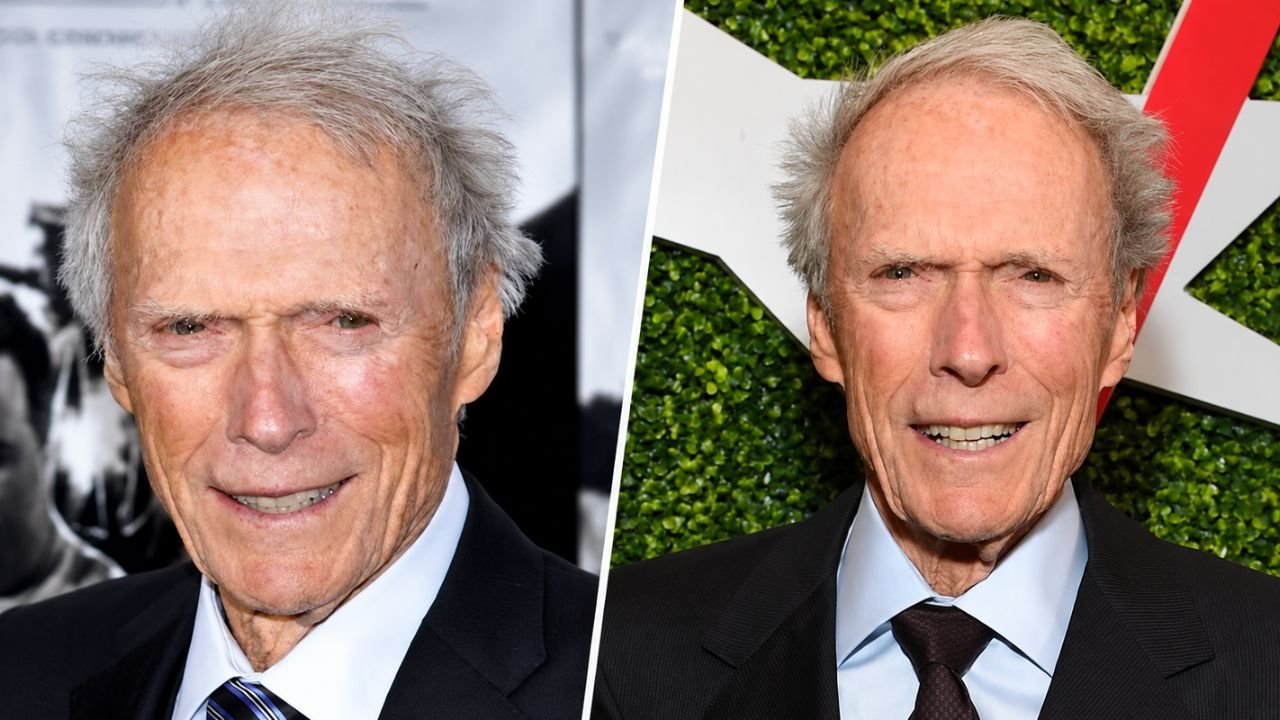
Clint Eastwood has spent more than six decades in Hollywood, building a career that began with small acting roles and eventually developed into one of the most respected careers behind and in front of the camera. He became internationally famous through western films, established another iconic identity as Dirty Harry, and later earned major recognition as an Oscar-winning director. His career includes acting, directing, producing, composing and even a period in public office, making his story much broader than that of a traditional movie star. At 96 years old in 2026, Clint Eastwood remains one of the longest-lasting figures from Hollywood’s classic generation.
Clint Eastwood’s Early Life and Childhood
Clint Eastwood was born Clinton Eastwood Jr. on May 31, 1930, in San Francisco, California. His family moved around California during the difficult years of the Great Depression before eventually settling in the San Francisco Bay Area. He attended schools in the area and graduated from high school in 1949, although his early life was far removed from the polished Hollywood environment he would later enter. Before becoming famous, he worked a variety of ordinary jobs and experienced a very different lifestyle from the one associated with his later career.
Eastwood’s early working life included jobs such as truck driving, logging and working around industrial equipment. He also spent time as a lifeguard and swimming instructor, experiences that became particularly relevant when he entered military service. His background gave him practical experience and helped develop the quiet, independent personality that audiences later associated with him. Rather than following a conventional route into entertainment, he gradually found his way toward acting after several years of work and military service.
Military Service Before Hollywood
Eastwood was drafted into the United States Army during the early 1950s and served at Fort Ord in California. His military responsibilities included working as a swimming instructor, which made use of his previous experience in the water. He left military service in 1953 and subsequently began focusing more seriously on building an acting career. His time in the Army became one of several experiences that shaped the disciplined and reserved public personality he later carried into his film roles.
After leaving the military, Eastwood studied at Los Angeles City College while taking ordinary jobs to support himself. He eventually obtained opportunities in Hollywood through screen testing and small acting parts. His early film appearances were not major successes, but they gave him experience in front of cameras and helped him understand the workings of the film industry. His career changed considerably once television provided him with a role that could expose him to a much larger audience.
Clint Eastwood and the Rise of Rawhide
The major early breakthrough for Clint Eastwood came with the television western series Rawhide. He played Rowdy Yates, a young cowboy involved in the dangerous work of driving cattle across the American frontier. The series ran for several seasons and gave Eastwood steady employment while establishing him as a recognizable face among American television viewers. More importantly, it gave him the western image that would soon become the foundation of his international movie career.
Rawhide helped Eastwood develop the controlled screen presence that became one of his trademarks. He was not known for excessive dialogue or exaggerated emotional performances, and his quiet manner worked particularly well in western stories. Although he was initially not the central star of the series, his popularity grew as the program continued. The experience also gave him enough recognition to pursue opportunities outside traditional American television.
Clint Eastwood and the Spaghetti Western Era
Eastwood’s career changed dramatically when he traveled to Europe to work with Italian director Sergio Leone. Leone cast him as the central gunslinger in a trilogy that became internationally famous and helped redefine the western genre. The three movies were A Fistful of Dollars, For a Few Dollars More and The Good, the Bad and the Ugly. Together, they transformed Eastwood from a television actor into a major international movie star.
The character Eastwood played in the trilogy was different from the traditional heroic cowboy often seen in American westerns. He was quiet, unpredictable and morally complicated, relying on facial expressions and body language as much as dialogue. Eastwood’s restrained performance style fit Leone’s visual direction extremely well. The success of these films created the image of the mysterious gunslinger that remained strongly associated with him for decades.
The Dollars Trilogy
The Dollars trilogy became one of the most important foundations of Eastwood’s film career. A Fistful of Dollars introduced the character and established the distinctive style that would continue through the next two films. For a Few Dollars More expanded the story and introduced another memorable gunslinger played by Lee Van Cleef. The Good, the Bad and the Ugly became the most widely recognized entry and helped establish Eastwood as one of the biggest western stars of the 1960s.
These films also helped popularize European-produced westerns among international audiences. Eastwood benefited from their success while developing a reputation for playing characters who were tough without constantly explaining themselves. The combination of his appearance, screen presence and restrained acting style became a major part of his appeal. When he returned to Hollywood, he was no longer simply the actor from Rawhide.
Clint Eastwood and the Dirty Harry Movies
After becoming famous through westerns, Eastwood created another defining character in Dirty Harry. Released in 1971, the film introduced San Francisco police inspector Harry Callahan, a character whose aggressive approach to crime made him controversial as well as popular. The movie became a major commercial success and created another long-running franchise for Eastwood. It also demonstrated that his screen persona could work outside the western genre.
Several sequels followed, including Magnum Force, The Enforcer, Sudden Impact and The Dead Pool. Through these movies, Eastwood became closely associated with tough police and action roles. Harry Callahan was different from the unnamed gunslinger of Leone’s films, but both characters shared an economical style and a willingness to act rather than talk. The Dirty Harry series therefore became an important bridge between Eastwood’s western fame and his later reputation as an action star.
Clint Eastwood’s Transition From Actor to Director
One of the most important developments in Eastwood’s career was his decision to move behind the camera. He made his directorial debut with Play Misty for Me in 1971, demonstrating that his ambitions extended beyond acting. Over time, directing became just as important to his career as performing. Instead of remaining dependent on the action and western roles that had made him famous, he gradually built a second identity as a filmmaker.
Eastwood developed a reputation for a relatively restrained filmmaking approach. His movies often focus on characters, moral choices and emotional consequences rather than relying entirely on elaborate production techniques. His directing career eventually covered westerns, crime stories, romances, war dramas, sports films, biographies and legal stories. This range helped change how Hollywood viewed him, moving him from the category of popular actor toward that of a serious filmmaker.
Unforgiven and Clint Eastwood’s Oscar Success
Unforgiven became one of the defining achievements of Eastwood’s directing career. Released in 1992, the western starred Eastwood as William Munny, a former outlaw drawn back into violence. Rather than celebrating the traditional image of the western hero, the film questioned the consequences of violence and the stories people tell about men who become legends. Eastwood’s direction gave the movie a darker and more reflective tone than many earlier westerns.
The film won four Academy Awards, including Best Picture and Best Director for Eastwood. Its success was particularly significant because it allowed Eastwood to revisit the genre that had originally made him famous while presenting it in a much more mature way. Unforgiven effectively became a statement about the western itself and the mythology surrounding the kind of characters Eastwood had played earlier in his career. It also established his reputation as an accomplished director rather than simply a successful actor who occasionally made movies.
Clint Eastwood and Morgan Freeman
Clint Eastwood’s professional relationship with Morgan Freeman is one of the strongest connections in his career and an important part of understanding several of his most acclaimed films. The two actors first worked together on Unforgiven, where Freeman played Ned Logan alongside Eastwood’s William Munny. Their collaboration continued more than a decade later with Million Dollar Baby and then with Invictus. This repeated professional relationship makes Morgan Freeman an especially important figure in any detailed biography of Eastwood.
Their collaboration is particularly useful when looking at Eastwood’s transition toward character-driven dramas. Freeman brought a calm and thoughtful presence to his roles, while Eastwood often played characters dealing with regret, responsibility or difficult moral choices. Their different acting styles worked effectively together and produced memorable scenes across multiple films. For readers interested in Clint Eastwood, Morgan Freeman’s career provides a natural connection to several important stages of Eastwood’s later work.
Million Dollar Baby and Morgan Freeman
Million Dollar Baby, released in 2004, became one of Eastwood’s most celebrated films. Eastwood directed the movie and also appeared as Frankie Dunn, while Hilary Swank played aspiring boxer Maggie Fitzgerald and Morgan Freeman played Eddie “Scrap-Iron” Dupris. Freeman’s character serves as an important observer and narrator within the story, giving the audience another perspective on the relationship between Frankie and Maggie. The film combined sports drama with themes of friendship, regret, ambition and difficult personal decisions.
The movie received widespread critical recognition and won four Academy Awards. Eastwood won Best Director, while the film also won Best Picture, and Morgan Freeman received the Academy Award for Best Supporting Actor. The success of the movie demonstrated Eastwood’s ability to create emotionally complex dramas long after his early western and action period. It also became one of the strongest professional connections between Clint Eastwood and Morgan Freeman.
Invictus and Nelson Mandela
Eastwood and Freeman worked together again on Invictus in 2009. Freeman portrayed Nelson Mandela, while Matt Damon played South African rugby captain François Pienaar. The film focuses on Mandela’s efforts to use the 1995 Rugby World Cup as a means of encouraging unity in a country emerging from apartheid. Eastwood approached the story as a historical drama centered on leadership, reconciliation and the symbolic power of sport.
Freeman’s casting was particularly significant because he had the opportunity to portray one of the most recognizable political figures of the twentieth century. Eastwood’s direction kept the story focused on the relationship between Mandela and Pienaar while showing the broader social atmosphere surrounding the rugby tournament. Invictus therefore became another important collaboration between Eastwood and Freeman and a natural link between their careers.
Clint Eastwood Movies That Defined His Career
The filmography of Clint Eastwood stretches across many decades and includes an unusually wide variety of roles. His most important movies can be viewed as different stages in the development of his career rather than simply a list of popular titles.
Some of the most notable films associated with Eastwood include:
- A Fistful of Dollars
- For a Few Dollars More
- The Good, the Bad and the Ugly
- Where Eagles Dare
- Dirty Harry
- Magnum Force
- Escape from Alcatraz
- Pale Rider
- Unforgiven
- In the Line of Fire
- The Bridges of Madison County
- Mystic River
- Million Dollar Baby
- Gran Torino
- Invictus
- American Sniper
- Sully
- The Mule
- Richard Jewell
- Cry Macho
- Juror #2
These films demonstrate why a discussion of Clint Eastwood movies needs to include both his acting and directing careers. Some titles are important because of his performances, while others are significant because of the way he shaped the entire production as a director. His filmography shows a gradual movement from western and action roles toward more mature dramas and character studies.
Mystic River and Eastwood’s Work With Actors
Mystic River became another important achievement during Eastwood’s directing career. The 2003 film starred Sean Penn, Tim Robbins and Kevin Bacon and dealt with the lasting effects of childhood trauma, violence and grief. Its serious subject matter showed how far Eastwood’s filmmaking had moved from the westerns that originally established his reputation.
The film also strengthened Eastwood’s reputation for drawing powerful performances from actors. Sean Penn won the Academy Award for Best Actor, while Tim Robbins won Best Supporting Actor. Eastwood’s ability to create an environment where actors could carry emotionally demanding stories became an important part of his directing legacy.
Gran Torino and a Late-Career Acting Role
Gran Torino gave audiences another major Eastwood performance late in his career. Released in 2008, the film featured Eastwood as Walt Kowalski, a bitter and isolated veteran whose relationship with his neighbors gradually changes his outlook. Eastwood also directed the movie, allowing him to combine his work in front of and behind the camera.
The role was different from many of his earlier characters because Walt was not presented simply as an action hero. The character’s prejudices, anger and personal history are central to the story, while his relationships gradually reveal a more complicated personality. Gran Torino became an important example of Eastwood using his established screen image to explore aging, loneliness, community and personal change.
American Sniper and Continued Directing Success
American Sniper showed that Eastwood could continue making commercially successful films decades into his career. Released in 2014, the movie starred Bradley Cooper as Navy SEAL Chris Kyle and focused on his experiences during the Iraq War. Eastwood directed the film and helped turn the real-life story into a major Hollywood production.
The movie received several Academy Award nominations, including Best Picture. It also demonstrated that Eastwood remained capable of handling large-scale productions while maintaining his preference for straightforward storytelling. By this stage, his reputation as a director was firmly established independently of his earlier fame as an actor.
Clint Eastwood’s Later Movies
Eastwood continued acting and directing into his later years. The Mule, released in 2018, featured him as Earl Stone, an elderly man who becomes involved in transporting drugs. The role allowed Eastwood to explore aging and personal responsibility while playing a character considerably closer to his own age than many of his earlier roles.
He later directed Richard Jewell, a historical drama released in 2019, followed by Cry Macho in 2021. In Cry Macho, Eastwood once again appeared as the leading actor while directing the film. These projects demonstrated that even in his nineties, he remained interested in stories centered on older characters and questions of identity, responsibility and change.
Juror #2 and Clint Eastwood’s Most Recent Directing Work
Juror #2, released in 2024, became the latest directorial feature in Eastwood’s career. The legal drama starred Nicholas Hoult and Toni Collette and focused on a juror who discovers information that could affect the outcome of a murder trial. The film represented another departure from Eastwood’s classic western and action material.
Juror #2 is particularly important when discussing Clint Eastwood today because it marked his 40th feature as a director. Reaching that milestone after a career spanning more than half a century is a remarkable achievement. It also provides a natural endpoint for a discussion of his directing career without suggesting that every stage of his life has been centered on filmmaking.
Clint Eastwood Age: How Old Is Clint Eastwood?
Clint Eastwood was born on May 31, 1930, which makes him 96 years old in 2026. His age has become an increasingly common search topic because of the unusual length of his Hollywood career. He has worked as an actor and filmmaker across generations, continuing to make feature films long after many performers of his era had left the industry.
The significance of his age is not simply the number itself. Eastwood continued working professionally well into his later years, including directing Juror #2 in his nineties. His career therefore provides an unusual example of longevity in an industry where many actors and directors eventually reduce their workload much earlier.
Is Clint Eastwood Still Alive?
Yes, Clint Eastwood is still alive in 2026. He turned 96 in May 2026 and has continued to maintain a comparatively private public life. Reports about his retirement from filmmaking have appeared during 2026, although comments attributed to members of his family have created some uncertainty over whether he considers himself formally retired.
For readers searching “is Clint Eastwood still alive,” the answer is straightforward, but his current professional situation requires more explanation. Juror #2 remains his most recent directorial feature, and there has been no confirmed new feature film following it. His legacy, however, is already firmly established regardless of whether he returns behind the camera.
Clint Eastwood Today
Clint Eastwood today represents the later stage of one of Hollywood’s longest careers. He is no longer working at the pace associated with earlier decades, and public appearances have become relatively limited. The focus has increasingly shifted from new acting projects to his legacy as an actor, director and filmmaker.
His current reputation rests on several different achievements rather than one particular character or movie. He remains associated with the westerns of Sergio Leone, the Dirty Harry series, Oscar-winning films such as Unforgiven and Million Dollar Baby, and later directing projects including American Sniper and Juror #2. That combination makes his career unusual even among Hollywood’s most successful stars.
Clint Eastwood Children and Family
Clint Eastwood has eight known children, several of whom have pursued careers connected to entertainment. His children include Laurie Murray, Kyle Eastwood, Alison Eastwood, Scott Eastwood, Kathryn Eastwood, Kimber Eastwood, Francesca Eastwood and Morgan Eastwood. Their careers and interests have ranged from acting and filmmaking to music, creating a family connection to the entertainment industry that has continued across generations.
Kyle Eastwood became a musician and composer, while Scott Eastwood developed a career as an actor. Alison Eastwood has worked as an actress and filmmaker, and Francesca Eastwood has also appeared in entertainment projects. The professional choices of his children demonstrate how strongly the film and music industries have remained connected to the Eastwood family.
Clint Eastwood Wife and Relationships
Eastwood’s personal life has received considerable public attention throughout his career. He married Maggie Johnson in 1953, and their marriage lasted for several decades before ending. He later married Dina Ruiz in 1996, and the couple divorced in 2014.
He also had significant long-term relationships outside marriage, including relationships with actress Sondra Locke and actress Frances Fisher. Fisher appeared with Eastwood in Pink Cadillac and later played a role in Unforgiven, while she is also the mother of his daughter Francesca. Eastwood’s relationship history is extensive, but it is best understood as part of his personal biography rather than the main focus of his professional story.
Clint Eastwood and Carmel-by-the-Sea
Eastwood’s connection with Carmel-by-the-Sea is one of the more unusual chapters of his public life. He served as mayor of the California coastal community after winning election in 1986 and remained involved in local affairs during his time in office. His political role was very different from his Hollywood career and demonstrated that he was willing to become involved in community matters.
His connection to Carmel also reflects a broader part of his personality that is sometimes overlooked. Eastwood has maintained interests outside movies, including music, local community life and property development. These interests help create a fuller picture of the man behind the familiar Hollywood image.
Clint Eastwood’s Awards and Achievements
Eastwood’s awards demonstrate success in both acting and directing. His greatest recognition as a filmmaker came through Unforgiven and Million Dollar Baby, both of which won Best Picture while Eastwood received Best Director for each film. His work has also earned recognition from major American cultural institutions and international film organizations.
Some of the major honors associated with his career include:
- Academy Awards for directing
- Academy Awards for Best Picture
- Irving G. Thalberg Memorial Award
- Golden Globe Awards
- Kennedy Center Honors
- National Medal of Arts
- AFI Life Achievement Award
- César Honorary Award
- Légion d’honneur
Another remarkable part of his directing record is his ability to work with award-winning performers. Five actors directed by Eastwood have won acting Oscars for performances in his films, including Morgan Freeman, Hilary Swank, Sean Penn, Tim Robbins and Gene Hackman. That achievement adds another dimension to his reputation as a director.
Clint Eastwood Net Worth
Clint Eastwood’s net worth is commonly estimated at around $400 million by celebrity wealth publications, although there is no official public financial statement that establishes an exact figure. His wealth has been accumulated over decades through acting, directing, producing and other entertainment-related activities. His long career has included both major commercial successes and projects in which he worked across several areas of production.
Eastwood’s financial success is also connected to his unusual ability to remain active across different stages of the entertainment business. He has not relied solely on acting salaries, as his directing and producing work gave him additional opportunities to participate in the commercial success of his films. Because private finances are not fully public, any exact net worth number should be treated as an estimate rather than a confirmed figure.
Clint Eastwood’s Lasting Hollywood Legacy
The most important part of Clint Eastwood’s legacy is the transformation that took place throughout his career. He began as a young actor with small roles, became a television western star, developed into an international movie icon, and then reinvented himself as an Oscar-winning director. Each stage built on the previous one without completely replacing it.
His legacy also comes from the variety of filmmakers and performers with whom he has worked. Morgan Freeman, Hilary Swank, Tim Robbins, Sean Penn, Gene Hackman, Matt Damon and Bradley Cooper are only some of the major names connected to his most important films. His career therefore represents not only his own performances but also his influence on the work of other actors and filmmakers.
Frequently Asked Questions
How old is Clint Eastwood?
Clint Eastwood is 96 years old in 2026. He was born on May 31, 1930, in San Francisco, California. His career has continued across more than six decades of American cinema.
Is Clint Eastwood still alive?
Yes, Clint Eastwood is still alive in 2026. He turned 96 in May 2026. Although reports have discussed his retirement from filmmaking, he remains an important public figure and his most recent directorial film is Juror #2.
How many children does Clint Eastwood have?
Clint Eastwood has eight known children. Several of them have worked in entertainment, including actors Scott Eastwood and Alison Eastwood and musician Kyle Eastwood.
What are Clint Eastwood’s most famous movies?
Some of Clint Eastwood’s most famous movies include The Good, the Bad and the Ugly, Dirty Harry, Unforgiven, Million Dollar Baby, Gran Torino, American Sniper, The Mule and Invictus. His career also includes many other westerns, dramas, thrillers and action films.
What is Clint Eastwood’s net worth?
Clint Eastwood’s net worth is commonly estimated at around $400 million, although the exact figure has not been officially confirmed. His wealth has been built through his long careers as an actor, director and producer.
Conclusion
Clint Eastwood’s story is one of the most remarkable careers in modern Hollywood. He moved from ordinary jobs and small acting roles to Rawhide, international western stardom, the Dirty Harry franchise and eventually an acclaimed career behind the camera. His work as a director produced some of his most respected films, including Unforgiven and Million Dollar Baby, while his collaborations with performers such as Morgan Freeman created some of the strongest connections across his filmography.
At 96, Eastwood’s career already stands as a lasting part of American cinema. His movies have crossed genres, generations and changing Hollywood styles, while his transition from actor to director demonstrated a level of creative longevity that few performers have matched. Whether or not he makes another film, his influence remains visible through the movies he directed, the actors he helped elevate and the distinctive screen presence that made Clint Eastwood one of Hollywood’s most recognizable names.