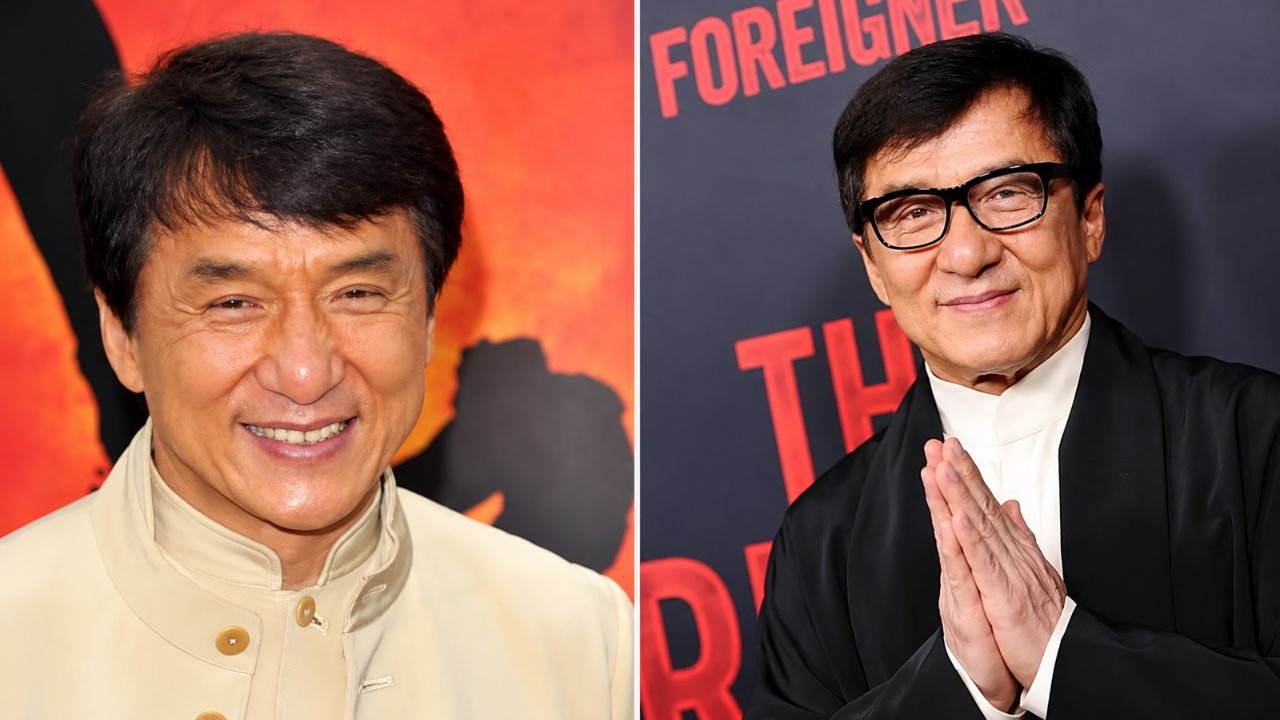
Jackie Chan is one of the most recognizable names in international cinema, known for combining martial arts, comedy, daring stunts, and expressive physical performances. His career began when he was still a child and eventually developed into a decades-long journey through Hong Kong cinema, Hollywood, television, music, and film production. Unlike many action stars, Chan became known for performing many of his own dangerous sequences and turning everyday objects, locations, and accidents into part of his screen style. His influence has reached audiences across Asia, Europe, and the United States, making his career much larger than a traditional martial arts film story.
Jackie Chan’s Early Life and Family Background
Jackie Chan was born Chan Kong-sang on April 7, 1954, in Hong Kong. His parents were Charles and Lee-Lee Chan, and his family later spent time in Australia before Chan returned to Hong Kong for specialized training. His childhood was shaped by discipline and performance rather than a conventional academic path. These early experiences eventually became the foundation for the unusual combination of acting, acrobatics, singing, and martial arts that defined his career.
Training at the China Drama Academy
At the age of seven, Chan entered the China Drama Academy, where he underwent intensive training in traditional Chinese performing arts. His education included martial arts, acrobatics, acting, singing, and stage performance, with demanding daily routines that required considerable physical discipline. He spent roughly a decade developing these skills, learning techniques that would later become central to his movie performances. The training also connected him with other young performers who would become important figures in Hong Kong cinema.
Chan became associated with the Seven Little Fortunes, a group of performers trained at the academy. The group included future filmmakers and action stars such as Sammo Hung and Yuen Biao. Their shared background helped create professional relationships that continued throughout the Hong Kong film industry. For Chan, this period was particularly important because it taught him how to combine physical movement with timing, expression, and entertainment.
Jackie Chan’s First Years in Film
Chan entered the film industry while he was still a child. His early appearances gave him experience in front of cameras long before he became an international star. He gradually moved from child performances into stunt work and supporting roles, learning the practical side of filmmaking along the way. This early exposure meant that he understood action scenes from both the performer’s and production perspectives.
Working as a Stuntman
During the early 1970s, Chan worked as a stunt performer in Hong Kong cinema and appeared in productions associated with Bruce Lee. His stunt work gave him an opportunity to demonstrate his physical abilities while also learning how dangerous action sequences were planned and filmed. Rather than simply relying on martial arts technique, he developed an interest in movement, timing, falls, props, and camera positioning. These experiences became particularly valuable when he later began designing his own action sequences.
Chan’s early career was not an immediate success story. He appeared in numerous productions while trying to establish himself as a leading performer, and some of his early projects did not make him a major star. His eventual breakthrough came when filmmakers recognized that his physical skills could be combined with a distinctive sense of humor. That combination would become one of the most important characteristics of his career.
The Rise of Jackie Chan in Hong Kong Cinema
The late 1970s marked a major change in Chan’s career. Films such as Snake in the Eagle’s Shadow and Drunken Master gave him opportunities to move beyond conventional martial arts performances. Instead of presenting a completely serious fighter, these movies allowed him to use comedy, improvisation, exaggerated reactions, and unusual movement. Audiences responded to the fresh style, helping establish Chan as a leading figure in Hong Kong action cinema.
The Style That Made His Films Different
One of the defining features of Chan’s work is the way action and comedy operate together. His characters often appear to be ordinary people who find themselves in increasingly dangerous situations rather than invincible warriors who dominate every opponent. The humor frequently comes from the environment, the character’s mistakes, and creative uses of objects around him. This approach made his action sequences accessible to viewers who might not normally follow martial arts films.
His choreography also emphasized rhythm and visual storytelling. A chair, ladder, table, pole, kitchen utensil, or piece of furniture could become part of a fight sequence. Instead of treating the surroundings as background scenery, Chan often made them an active part of the action. This helped create a style that was instantly recognizable even when audiences did not know the name of the film.
Police Story and a New Era of Action Cinema
Police Story became one of the most important films in Chan’s career. Released in 1985, it combined police drama, comedy, martial arts, large-scale action, and elaborate stunt sequences. Chan played police officer Chan Ka-Kui, a character whose personality allowed the film to balance humor with serious action. The success of the film helped strengthen his position as one of Hong Kong’s leading action performers.
Building the Jackie Chan Stunt Team
Chan eventually developed his own group of stunt performers, commonly known as the Jackie Chan Stunt Team. This gave him greater control over the design and execution of complicated action scenes. The team worked on sequences that often required careful coordination between performers, cameras, vehicles, props, and locations. This collaborative approach became an important part of the visual identity associated with his movies.
Some of Chan’s stunts became famous because of the physical risks involved. His action scenes frequently required precise timing, and mistakes could result in serious injuries. Rather than using action solely as spectacle, Chan often structured his sequences around a clear progression, allowing audiences to understand what was happening even when the choreography became extremely fast.
Jackie Chan Movies That Defined His Career
The filmography of Jackie Chan covers Hong Kong productions, American studio films, international co-productions, animated projects, and more dramatic roles. His career cannot easily be reduced to one genre because he has worked as an actor, stunt performer, director, producer, writer, and voice actor. Some movies established his reputation in Asia, while others introduced his style to Western audiences.
Several films are particularly important when looking at the development of his career:
- Snake in the Eagle’s Shadow helped establish his comedy-driven martial arts style.
- Drunken Master became one of his signature early successes.
- Project A demonstrated his ambitious approach to physical comedy and stunts.
- Police Story became one of his most influential action films.
- Armour of God expanded his adventure-oriented style.
- Rumble in the Bronx helped introduce him to a much wider American audience.
- Rush Hour turned him into a major Hollywood action-comedy star.
- Shanghai Noon combined Western adventure with martial arts comedy.
- The Karate Kid showed a quieter side of his acting.
- The Foreigner demonstrated his ability to work in a darker action-drama setting.
From Hong Kong to Hollywood
Chan made several attempts to establish himself in the American film industry before achieving lasting success. Early Hollywood projects did not immediately produce the breakthrough that studios hoped for. He eventually returned his attention to Hong Kong filmmaking, where he had greater creative control and a stronger connection with local audiences. That experience allowed him to refine the style that would later make him successful internationally.
Rumble in the Bronx was an important step in his American rise during the 1990s. The movie exposed more American viewers to his combination of physical comedy and elaborate action. The success helped create the conditions for his major Hollywood breakthrough a few years later. His career demonstrates that international recognition came after years of experimentation rather than appearing overnight.
Rush Hour and Jackie Chan’s Hollywood Success
Rush Hour, released in 1998, paired Chan with comedian Chris Tucker. The contrast between their personalities became a major part of the film’s appeal, with Chan providing physical action and Tucker delivering rapid-fire comedy. The movie performed strongly and established Chan as a major Hollywood star. Two successful sequels followed, expanding the franchise and his American audience.
Other Major Hollywood Projects
After Rush Hour, Chan appeared in several large studio productions. Shanghai Noon and Shanghai Knights allowed him to combine martial arts with Western settings and buddy-comedy elements. The Tuxedo explored another comedic action formula, while The Karate Kid gave him an opportunity to play a more restrained mentor figure.
His Hollywood career also included voice work and family-oriented entertainment. He became the voice of Master Monkey in the Kung Fu Panda series, bringing his association with martial arts into animated cinema. He also voiced Splinter in Teenage Mutant Ninja Turtles: Mutant Mayhem. These roles introduced his voice and personality to audiences who might not have watched his earlier live-action films.
Jackie Chan Adventures and Television
Jackie Chan Adventures was another major part of his international popularity. The animated series premiered in 2000 and ran for five seasons, presenting a fictionalized version of Chan as an adventurer dealing with magical and supernatural threats. Although the animated character was fictional, the program used Chan’s public image as its central inspiration. Chan himself appeared in live-action segments connected to the series.
The show helped extend his popularity beyond traditional movie audiences. Younger viewers encountered his name through television animation rather than martial arts cinema. It also demonstrated how his image could work across different forms of entertainment without depending entirely on live-action stunt performances.
Jackie Chan’s Work Behind the Camera
Chan has not limited himself to acting. His career includes directing, producing, writing, and stunt coordination, giving him substantial involvement in the filmmaking process. His experience performing dangerous sequences helped him understand how action scenes needed to be planned and structured. This broader role in production contributed to the distinctive style of many of his projects.
His production activities also expanded his business interests within the entertainment industry. JCE Movies Limited was among the companies associated with his later film work. Through production and other business activities, Chan developed interests that extended beyond collecting acting salaries. This broader career is important when considering both his professional legacy and his estimated wealth.
Jackie Chan as a Stunt Performer
Stunt work remains one of the most recognizable parts of Chan’s public image. He became famous for performing physically demanding sequences himself, including falls, jumps, fights, vehicle stunts, and other dangerous movements. His approach was different from many modern action productions that rely heavily on digital effects or extensive doubles. Chan’s performances often depended on practical choreography and careful timing.
His commitment to physical performance also resulted in numerous injuries during his career. However, the article should not turn every injury into a separate story because the broader point is more significant: his willingness to physically participate in difficult sequences became part of his filmmaking identity. His approach earned recognition beyond individual movies, including Guinness World Records connected with his stunt and filmmaking achievements.
Jackie Chan’s Music Career
Acting and stunt work are not the only creative fields associated with Chan. He has also worked as a singer and released music in several languages. His musical training connects partly to the performance education he received as a young student. Over the years, music became another way for him to connect with audiences outside the traditional action-film format.
His songs have included work connected with his movies and public performances. This side of his career is less discussed than his action films, but it demonstrates the breadth of his entertainment career. Chan has therefore spent decades moving between acting, physical performance, music, production, and other forms of entertainment.
Jackie Chan’s Wife and Family
Jackie Chan married Taiwanese actress Joan Lin in 1982. The couple has one son, Jaycee Chan, who later developed his own career in acting and music. Their family life has received considerable public attention because Chan’s fame has extended far beyond the film industry. Despite that attention, many details of their private lives are not appropriate to treat as entertainment speculation.
Jackie Chan and Jaycee Chan
Jaycee Chan followed his father into the entertainment industry but developed his own career rather than simply reproducing his father’s film persona. He has worked as an actor and musician and has appeared in Chinese-language productions. His career has occasionally attracted media attention for reasons unrelated to his father’s films. When discussing the relationship between the two, it is more useful to focus on their separate professional paths than to assume that Jackie Chan’s career automatically determined his son’s.
Jackie Chan’s Daughter
Chan also has a daughter, Etta Ng, from his relationship with former Miss Asia contestant Elaine Ng. Information about this part of the family has frequently appeared in entertainment media, but reports about their personal relationship should be handled carefully. Publicly available accounts describe a complicated family situation, and not every claim repeated online has equal reliability. A responsible biography should distinguish established facts from speculation.
Jackie Chan’s Net Worth and Business Career
Celebrity Net Worth currently estimates Jackie Chan’s net worth at around $400 million. This figure is an estimate rather than an audited public statement, so it should not be treated as an exact measurement of his personal wealth. His long career in film provides one major source of income, but his financial profile has also been connected with producing, business ventures, endorsements, and entertainment-related companies. His decades of international popularity have created multiple opportunities beyond traditional acting fees.
Chan has been associated with production companies and other commercial ventures throughout his career. He has also had interests connected with cinemas and consumer businesses in China. These activities help explain why his financial profile is more complicated than simply calculating the salaries he earned from individual movies.
Where His Wealth Comes From
The main areas associated with his financial success include:
- Acting in Hong Kong, Hollywood, and international productions
- Film production and related entertainment companies
- Directing and creative production work
- Commercial endorsements and partnerships
- Business interests outside individual movie salaries
- Long-term value from internationally recognized franchises
Because private investments and contracts are not fully public, estimates should always be treated cautiously. The important point is that Chan has built wealth over several decades through multiple professional activities rather than relying on a single source of income.
Jackie Chan’s Awards and Honorary Oscar
Chan’s contribution to cinema has received recognition from major institutions. He received an Honorary Academy Award in 2016 for his extraordinary contributions to film. The award recognized his decades of work as a performer, filmmaker, and international ambassador for action cinema.
He has also received a star on the Hollywood Walk of Fame and numerous other honors throughout his career. His recognition is significant because it reflects more than box-office success. Chan’s influence can be seen in the way action-comedy performers approach choreography, physical humor, and practical stunts.
Guinness World Records and Career Achievements
Chan’s filmmaking achievements have also been recognized through Guinness World Records. His records include distinctions connected with the number of credits he received on a single movie and his extensive stunt work. These records reflect how many different responsibilities he has sometimes taken on within a production.
This is particularly notable because modern filmmaking often separates acting, stunt coordination, directing, producing, and other departments. Chan’s career has frequently crossed those boundaries. His willingness to participate in multiple parts of a production became one of the defining characteristics of his professional identity.
Recent Jackie Chan Movies and Projects
Chan has continued appearing in films well into his seventies. His recent work includes The Karate Kid: Legends and The Shadow’s Edge, while current film databases also list newer projects such as Panda Plan 2: The Magical Tribe and Unexpected Family. Because release schedules and production statuses can change, upcoming projects should be checked against current official announcements before publication.
The continued demand for his work shows that his name remains commercially valuable decades after his first major successes. His recent roles also demonstrate that he has not abandoned action cinema, even though his career now spans many different types of projects. The combination of nostalgia and new material allows his work to reach both longtime fans and younger audiences.
How Old Is Jackie Chan?
Jackie Chan was born on April 7, 1954. As of October 2026, he is 72 years old, making his continued involvement in demanding film productions particularly notable. His career has already lasted for more than six decades, beginning with childhood appearances and developing through Hong Kong cinema, Hollywood, television, animation, and international productions.
His age also provides useful context for understanding his legacy. Many performers become associated with one period of cinema, but Chan has remained recognizable across several generations. His ability to adapt to changing audiences has been one of the strongest reasons for his longevity.
Why Jackie Chan Remains Influential
Chan’s importance comes from more than the number of movies he has made. He helped demonstrate that action scenes could be funny, character-driven, and visually creative at the same time. His approach influenced performers and filmmakers around the world, particularly those interested in practical stunts and physical comedy.
His influence is also connected with the accessibility of his characters. Many of his protagonists are not portrayed as unbeatable heroes from the beginning. They stumble, make mistakes, improvise, and use whatever is available around them to survive. That combination of vulnerability and skill helped audiences connect with his characters in a way that pure martial arts spectacle sometimes could not.
Frequently Asked Questions About Jackie Chan
1. How old is Jackie Chan?
Jackie Chan was born on April 7, 1954, and turned 72 in April 2026. He began performing as a child and has remained active in international cinema for more than six decades. His career includes acting, stunt work, directing, producing, writing, music, and voice acting.
2. What is Jackie Chan best known for?
Jackie Chan is best known for combining martial arts, physical comedy, practical stunts, and inventive action choreography. Films such as Drunken Master, Police Story, Rush Hour, and the Shanghai Noon series helped establish his international reputation. His willingness to perform demanding physical sequences became one of his defining characteristics.
3. What is Jackie Chan’s estimated net worth?
Celebrity Net Worth estimates Jackie Chan’s wealth at approximately $400 million. This is a public estimate rather than an independently audited figure. His earnings have come from a long film career as well as production, business activities, endorsements, and other entertainment work.
4. Who is Jackie Chan’s wife?
Jackie Chan’s wife is Joan Lin, a Taiwanese actress whom he married in 1982. They have a son, Jaycee Chan. Their family has generally attracted considerable media attention because of Chan’s international celebrity status.
5. What are some of Jackie Chan’s most famous movies?
Some of his best-known films include Drunken Master, Project A, Police Story, Armour of God, Rumble in the Bronx, Rush Hour, Shanghai Noon, Shanghai Knights, The Karate Kid, and The Foreigner. His filmography also includes animated projects such as Kung Fu Panda and Teenage Mutant Ninja Turtles: Mutant Mayhem.
Conclusion
Jackie Chan’s career is the story of a performer who continually expanded what an action star could do. From rigorous training at the China Drama Academy to childhood film appearances, stunt work, Hong Kong blockbusters, Hollywood franchises, animation, music, directing, and producing, his professional journey has covered an extraordinary range of entertainment. His success was built gradually through physical discipline, creativity, persistence, and a style that blended action with humor.
Even at 72, Chan remains connected with new film projects while his older movies continue to introduce his work to new audiences. His influence is particularly clear in the popularity of practical action, physical comedy, and stunt-driven filmmaking. Rather than being remembered only for individual movies, he has become a lasting figure in international cinema whose career helped connect Hong Kong filmmaking with audiences around the world.