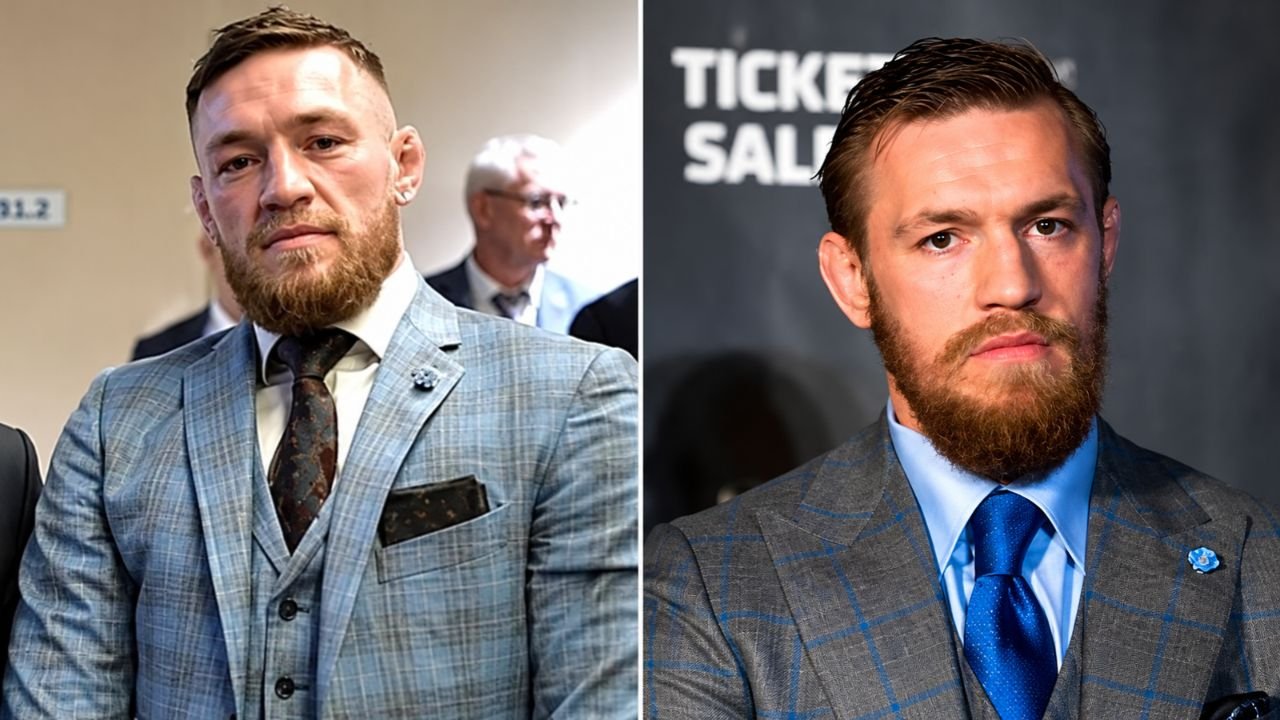
Conor McGregor is one of the most recognizable names in mixed martial arts and one of the fighters who changed how UFC stars are promoted outside the cage. Born in Dublin, Ireland, he went from learning boxing as a teenager and working as a plumbing apprentice to becoming a two-division UFC champion and a major international sports personality. His career has included spectacular knockouts, championship victories, controversial moments, serious injuries, business ventures and a professional boxing match against Floyd Mayweather Jr. The story of conor mcgregor is therefore much bigger than his fight record because his career has developed across sport, entertainment, business and popular culture.
Conor McGregor Early Life and Family Background
Conor Anthony McGregor was born on July 14, 1988, in Crumlin, Dublin, Ireland, and grew up in a working-class environment where football and boxing were familiar parts of his childhood. He played football when he was young, but combat sports eventually became his main interest. At the age of 12, he started boxing at Crumlin Boxing Club, where he learned the fundamentals that later became an important part of his MMA style. His early experience in boxing helped him develop confidence, movement and an understanding of distance before he eventually moved toward mixed martial arts.
McGregor’s decision to pursue combat sports was not simply about becoming famous or making money. Boxing gave him a way to develop confidence and defend himself when he was younger, and the discipline of training gradually became a central part of his life. He later became interested in MMA and began training at a time when the sport was still developing rapidly in Ireland. His childhood influences included famous fighters and entertainers, and he became particularly interested in fighters who combined technical ability with strong personalities.
From Plumbing Apprentice to Professional Fighter
Before becoming a professional fighter, McGregor spent time working as a plumbing apprentice. His career could easily have followed a completely different path because plumbing offered him a conventional occupation while professional MMA was still an uncertain career choice. Eventually, he decided that he wanted to dedicate himself to fighting rather than continue working in the trade. That decision became one of the defining turning points in his life.
McGregor’s relationship with fellow Irish fighter Tom Egan also played a role in his early development in MMA. The two trained together, and McGregor continued developing his striking while learning the grappling and submission aspects required for mixed martial arts. His early years were not filled with instant success, and he experienced defeats that forced him to improve. Those setbacks became useful lessons as he built the skills that eventually took him onto the European MMA scene.
Conor McGregor’s Early MMA Career
Conor McGregor made his professional MMA debut in March 2008 and began building his reputation through regional competitions. His early professional record included both victories and losses, which made his development different from the perfect rise sometimes presented in simplified biographies. He suffered submission defeats against Artemij Sitenkov and Joseph Duffy, but those setbacks did not stop his progression. Instead, he continued training and gradually became one of Ireland’s most promising young MMA fighters.
A major change came when McGregor established himself in Cage Warriors, one of Europe’s best-known MMA promotions. He won the Cage Warriors featherweight championship and later captured the lightweight championship as well. Holding titles in two divisions made him stand out before he even entered the UFC, and his performances attracted attention beyond Ireland. His success in Europe helped establish the foundation for the much larger career that followed.
How Conor McGregor Reached the UFC
McGregor joined the UFC in 2013 after building a strong reputation in European MMA. His arrival was surrounded by considerable interest because his fighting style was aggressive and his confidence made him stand out from many other prospects. He made his UFC debut against Marcus Brimage on April 6, 2013, and won by first-round knockout. The performance immediately showed UFC audiences that McGregor possessed both dangerous striking and the personality needed to attract attention.
His early UFC victories came quickly and helped him move through the featherweight division. McGregor was particularly effective at creating pressure with his movement and left hand while using feints to make opponents react before he attacked. His ability to predict what an opponent would do became an important part of his reputation as a precise striker. He was not simply trying to win fights; he was also building a public identity around confidence, prediction and dramatic finishes.
The First Conor McGregor vs Max Holloway Fight
The first fight between conor mcgregor and Max Holloway took place in August 2013. McGregor won by unanimous decision, but the contest turned out to be more significant than the result initially suggested. McGregor suffered an ACL injury during the fight, and the damage became apparent after the bout. He required surgery and faced a lengthy recovery period at a stage when his UFC career was still beginning.
The first Holloway fight became particularly interesting years later because the two fighters followed very different paths before eventually meeting again. McGregor moved toward championship opportunities and global fame, while Holloway became one of the leading featherweights of his generation. Their second meeting in 2026 therefore carried a long history behind it. The contrast between their first fight and their later rematch became one of the most interesting parts of McGregor’s career story.
The Rise Toward UFC Gold
McGregor’s rise through the UFC featherweight division became increasingly rapid after his early victories. His confidence grew with each win, and his ability to promote fights made him one of the UFC’s most talked-about fighters. He repeatedly predicted how opponents would lose and then attempted to make those predictions happen inside the Octagon. This combination of skill, confidence and promotion made his fights major events rather than ordinary matchups.
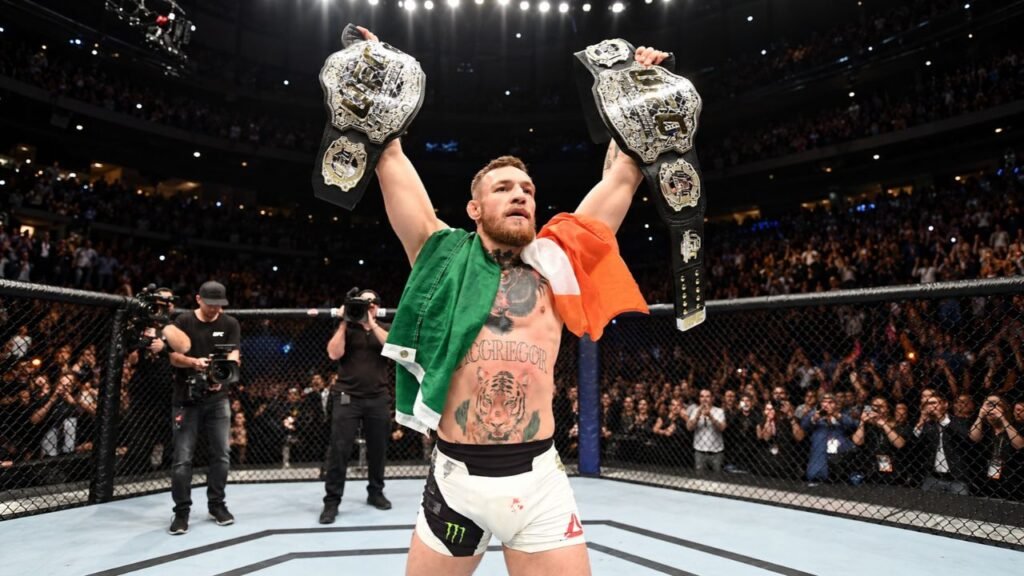
His biggest breakthrough came against José Aldo at UFC 194 in December 2015. Aldo entered the fight as the long-reigning featherweight champion, but McGregor ended the contest with a knockout after only 13 seconds. The victory gave McGregor the UFC featherweight championship and turned one of the sport’s biggest promotional rivalries into one of its most famous finishes. The speed of the knockout became one of the defining moments of his career.
Becoming a Two-Division UFC Champion
After winning the featherweight championship, McGregor set his sights on the lightweight division. He faced Eddie Alvarez at UFC 205 in November 2016, with the lightweight championship on the line. McGregor dominated the contest and stopped Alvarez by second-round TKO, becoming the first fighter in UFC history to hold two UFC championships simultaneously. The achievement confirmed that his success was not limited to one weight class.
The Eddie Alvarez victory was also a turning point in the commercial side of McGregor’s career. By this stage, he was no longer simply a successful UFC fighter from Ireland. He had become one of the promotion’s biggest attractions, with audiences following both his fights and his personality. His ability to sell events helped establish the modern image of the superstar MMA fighter who could become a global celebrity outside the sport.
Conor McGregor and Nate Diaz
One of the most memorable rivalries of McGregor’s career came against Nate Diaz. Their first fight took place at UFC 196 in March 2016 after Diaz stepped into the matchup on relatively short notice. McGregor started strongly but eventually struggled with Diaz’s pressure and grappling, losing by submission. The defeat was a major surprise because McGregor had entered the contest with enormous confidence.
The two fighters met again later in 2016, and McGregor won the rematch by majority decision. The second fight demonstrated that he could adjust his strategy after a loss and compete effectively in a different tactical environment. The rivalry became one of the most commercially successful chapters of his UFC career. It also showed that McGregor’s popularity could survive a defeat and even become stronger when the story of a rematch was involved.
Conor McGregor vs Khabib Nurmagomedov
McGregor’s rivalry with Khabib Nurmagomedov became one of the most intense stories in UFC history. Their UFC 229 fight took place in October 2018, with Nurmagomedov defending the lightweight championship. McGregor had returned to the UFC after a long period away from MMA, and the event attracted enormous attention because of the personal hostility surrounding the matchup.
Nurmagomedov defeated McGregor by fourth-round submission after controlling significant portions of the fight with wrestling and ground control. The result gave McGregor another important loss and demonstrated how difficult elite grappling could be against his striking-focused style. The event became one of the biggest MMA pay-per-view events ever and remains an important part of discussions about McGregor’s career. The rivalry also continued to influence the public perception of both fighters long after the contest ended.
Conor McGregor’s Professional Boxing Match
In 2017, McGregor moved outside MMA and entered professional boxing for a fight against Floyd Mayweather Jr. The event attracted worldwide attention because Mayweather was one of boxing’s most accomplished defensive fighters while McGregor had never previously competed in a professional boxing match. The fight was marketed as a major crossover event between two different combat-sports worlds.
Mayweather eventually stopped McGregor in the tenth round. Although McGregor lost, the event became one of the biggest commercial combat-sports spectacles of the period. The experience also expanded McGregor’s profile beyond UFC and MMA audiences. His boxing match remains an important part of any discussion about his career earnings, celebrity status and willingness to take unusual opportunities.
Conor McGregor’s Fight Record
The current professional MMA record of conor mcgregor is 22 wins and 7 losses, with no draws. His victories have largely come through striking, with 19 wins by knockout or technical knockout, one by submission and two by decision. That finishing rate is one of the main reasons he became known for producing dramatic fights. His professional boxing record is separate from his MMA record because his bout with Floyd Mayweather took place under boxing rules.
Some of the most important fights on McGregor’s record include:
- Marcus Brimage: first UFC victory by knockout
- Max Holloway: unanimous decision victory in their first meeting
- Dustin Poirier: knockout victory in their first UFC meeting
- Chad Mendes: TKO victory
- José Aldo: 13-second knockout for the featherweight title
- Nate Diaz: submission loss followed by a decision victory in the rematch
- Eddie Alvarez: TKO victory for the lightweight championship
- Khabib Nurmagomedov: submission loss
- Donald Cerrone: TKO victory
- Dustin Poirier: two later defeats in the trilogy
- Max Holloway: injury-related TKO loss in their 2026 rematch
His record shows both the spectacular highs and difficult setbacks of his career. The knockout victories against Aldo and Alvarez remain particularly important because both involved championship success. His losses to Diaz, Nurmagomedov and Poirier also demonstrate that his career was not an uninterrupted run of victories. Looking at the complete record gives a more accurate picture than focusing only on his most famous wins.
Conor McGregor Injury History
Injuries have played a major role in McGregor’s career, especially during the later stages. His first fight with Max Holloway in 2013 resulted in an ACL injury that required surgery. At that stage, the injury interrupted the momentum he was building in the UFC, although he eventually returned and continued his rise. It became an early example of how physical setbacks could affect his career.
The most serious interruption came in July 2021 during his third fight with Dustin Poirier. McGregor suffered a severe leg injury during the contest, and the fight was stopped. The injury kept him away from competition for several years and changed the timeline of his career. His absence became one of the most discussed subjects in MMA because fans repeatedly waited for an official return.
Conor McGregor’s Return Against Max Holloway
After more than five years away from the Octagon, McGregor returned against Max Holloway at UFC 329 in July 2026. The fight carried an unusual amount of history because the two had already met in 2013, when McGregor won despite suffering an ACL injury. Their rematch therefore brought together two fighters whose careers had developed dramatically since their first encounter.
The 2026 contest ended after only 69 seconds. McGregor suffered a knee injury after an awkward landing, and Holloway was awarded a TKO victory because McGregor could not continue. The result was not a conventional knockout in which Holloway rendered McGregor unconscious, so describing it simply as a knockout would be inaccurate. The injury became the main story of the fight and raised fresh questions about McGregor’s future.
Conor McGregor Next Fight and Future Plans
Following the 2026 injury, McGregor announced plans for surgery and rehabilitation. There has been discussion of a possible return in 2027, but a specific next fight should not be treated as officially confirmed unless UFC announces it. His recovery will be a major factor in determining whether he can compete again at the highest level. After several long periods away from competition, the physical demands of another comeback will be closely watched.
The keyword conor mcgregor next fight attracts considerable interest because fans want to know whether he will fight again and who his opponent could be. At this point, it is more accurate to discuss his recovery and stated ambitions than to present an unconfirmed opponent as fact. McGregor has repeatedly expressed his desire to compete again, but professional fighting requires medical clearance and a suitable training period. His future therefore depends on both his physical recovery and the plans of the UFC.
Conor McGregor Age and Height
Conor McGregor was born on July 14, 1988, making him 38 years old as of October 2026. His age is particularly relevant because he has spent many years competing at the highest level of professional combat sports. The physical demands of MMA become more significant as fighters get older, especially after repeated injuries and long periods away from competition. McGregor’s future performances will therefore be judged partly against his previous championship years.
The UFC lists McGregor at 5 feet 9 inches tall with a 74-inch reach. His long reach relative to his height has helped him use distance effectively as a striker. His southpaw stance also creates difficult angles for orthodox opponents, particularly when he uses his left hand as a counter or finishing weapon. His physical dimensions are therefore more than simple statistics because they connect directly to the way he fights.
Conor McGregor and Dee Devlin
Dee Devlin has been an important person in McGregor’s life since before he became an international sports celebrity. The couple met in Dublin in 2008, before McGregor had achieved UFC fame or accumulated the wealth associated with his later career. Their relationship continued through his early professional years, including the period when he left plumbing to pursue MMA full time. Devlin has remained closely connected to his personal and professional life.
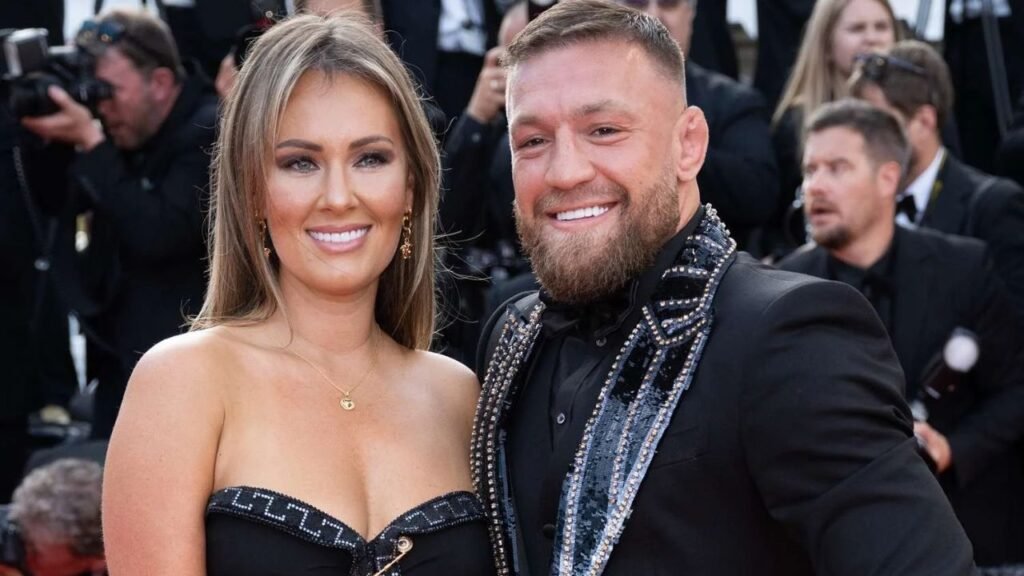
McGregor and Devlin married in December 2025 after many years together. Their family includes four children: Conor Jr., Croía, Rían and Mack. Devlin has also been involved with aspects of McGregor’s business and career activities, making her more than a background figure in his biography. Their long relationship provides an important part of the story because she was present during both the uncertain early years and the period of international success.
Conor McGregor’s Business Career
McGregor’s career outside fighting has become a major part of his public identity. He has been involved with alcohol brands, sports products, hospitality businesses and training-related ventures. Proper No. Twelve became one of the most recognizable commercial projects associated with his name, while The Black Forge Inn connected his brand to hospitality in Dublin. Other ventures have included Forged Irish Stout and fitness-related projects.
His business career demonstrates how McGregor turned his sports fame into a wider commercial identity. He has used his name, social-media audience and public personality to promote products and businesses beyond MMA. This strategy has helped make his financial story different from that of many fighters who rely primarily on fight purses. When discussing conor mcgregor net worth, it is therefore necessary to consider business interests and commercial deals rather than looking only at his UFC earnings.
Conor McGregor Net Worth and Career Earnings
Exact figures for conor mcgregor net worth vary depending on the source and the assets included in the calculation. His wealth has come from several different areas, including UFC fight purses, pay-per-view revenue, sponsorships, commercial partnerships and business ventures. His 2017 fight with Mayweather was especially important because it generated substantial income and placed McGregor among the highest-earning athletes in the world during that period. His later businesses added another source of wealth that was independent of fighting.
It is difficult to give one precise current figure because private investments and business valuations can change. A responsible biography should therefore avoid presenting an unsupported net-worth number as a confirmed fact. Instead, his financial growth can be understood through the different stages of his career, from regional MMA competitions to UFC championships, the Mayweather boxing event and international business ventures. That progression explains why McGregor’s financial profile is considerably larger than his UFC salary history alone would suggest.
Conor McGregor’s Acting and Entertainment Career
McGregor has also moved into film and entertainment. One of his most recognizable acting appearances came in the 2024 film Road House, where he played the character Knox alongside Jake Gyllenhaal. His involvement in the movie introduced him to audiences who may not regularly watch MMA. He has also appeared in documentaries, television projects, video games and other entertainment productions.
His entertainment work reflects the wider evolution of his public image. McGregor is no longer known only as a fighter who appears inside the Octagon on UFC events. His personality and recognizable appearance have made him suitable for documentaries, advertising campaigns and film roles. His screen career is still secondary to his combat-sports legacy, but it adds another dimension to his profile.
Why Conor McGregor Became So Famous
McGregor’s popularity cannot be explained by his fighting ability alone. His style of promotion was unusually confident, and he became known for making precise predictions about how fights would end. He also understood how to create narratives around opponents, championships and personal rivalries. This allowed individual fights to attract people who might not normally follow MMA.
Several factors contributed to his global popularity:
- Exceptional knockout ability
- Strong left-hand striking
- Confident and recognizable personality
- Effective fight promotion
- Irish identity and loyal fan base
- Major UFC championship victories
- High-profile rivalries
- Crossover boxing match with Floyd Mayweather
- Extensive business activities
- Strong presence in popular culture
McGregor also arrived at a time when social media was becoming increasingly important to sports promotion. He used interviews, press conferences and social platforms to keep himself at the center of public discussion. His ability to remain part of the conversation between fights helped him develop a following that extended well beyond traditional MMA fans.
The Legacy of Conor McGregor
McGregor’s legacy is complicated because his career contains both extraordinary achievements and significant setbacks. He became the first UFC fighter to hold two championships simultaneously, produced one of the fastest title-fight knockouts in UFC history and helped turn MMA fighters into mainstream sports celebrities. At the same time, injuries, defeats and long periods away from competition changed the trajectory of his career. His story is therefore not simply about becoming a champion; it is about how quickly success can rise and how difficult it can be to maintain it.
His influence on UFC promotion is particularly significant. Fighters before McGregor had become famous, but he demonstrated how an athlete could build a personal brand around fighting, business and entertainment at the same time. His approach influenced the way fans discuss fighters and how major UFC events are promoted. Regardless of how the final years of his fighting career develop, his impact on MMA’s commercial culture is likely to remain part of his legacy.
Frequently Asked Questions About Conor McGregor
How old is Conor McGregor?
Conor McGregor is 38 years old as of October 2026. He was born on July 14, 1988, in Dublin, Ireland. He began boxing at the age of 12 before eventually moving into mixed martial arts. His professional MMA career began in 2008.
What is Conor McGregor’s UFC record?
McGregor’s professional MMA record is 22 wins and 7 losses with no draws. His victories include 19 knockout or technical knockout wins, one submission victory and two decision wins. His career includes UFC championships in both the featherweight and lightweight divisions.
What happened in Conor McGregor vs Max Holloway 2?
McGregor and Max Holloway fought for the second time at UFC 329 in July 2026. The contest ended after 69 seconds when McGregor suffered a knee injury after an awkward landing. Holloway was awarded a TKO victory because McGregor could not continue. It was a very different result from their first meeting in 2013, which McGregor won by unanimous decision.
Who is Conor McGregor’s wife?
Conor McGregor’s wife is Dee Devlin. They met in Dublin in 2008 and remained together throughout McGregor’s rise from a young regional fighter to a global UFC star. They married in December 2025 and have four children together.
What is Conor McGregor’s height?
The UFC lists Conor McGregor at 5 feet 9 inches tall, or approximately 175 centimeters. His listed reach is 74 inches, which is approximately 188 centimeters. He fights from a southpaw stance and has built much of his striking style around controlling distance and creating angles for his left hand.
Conclusion
Conor McGregor’s story is one of the most unusual careers in modern combat sports. He began as a young boxer in Dublin, worked as a plumbing apprentice, moved into professional MMA and eventually became a two-division UFC champion. His victories over José Aldo and Eddie Alvarez established his place in UFC history, while his rivalries with Nate Diaz, Khabib Nurmagomedov, Dustin Poirier and Max Holloway created some of the sport’s most recognizable moments. His boxing match with Floyd Mayweather and his later business and entertainment ventures expanded his fame far beyond the Octagon.
The later part of McGregor’s career has been shaped heavily by injuries, defeats and long periods away from competition. His 2026 return against Max Holloway ended quickly because of another knee injury, leaving his future uncertain. Whether he returns to the UFC again or eventually moves away from professional fighting, his influence on MMA promotion, fighter branding and combat-sports entertainment is already firmly established. Conor McGregor remains a major figure because his career combined athletic achievement, controversy, ambition, business and entertainment in a way few fighters before him had managed to do.