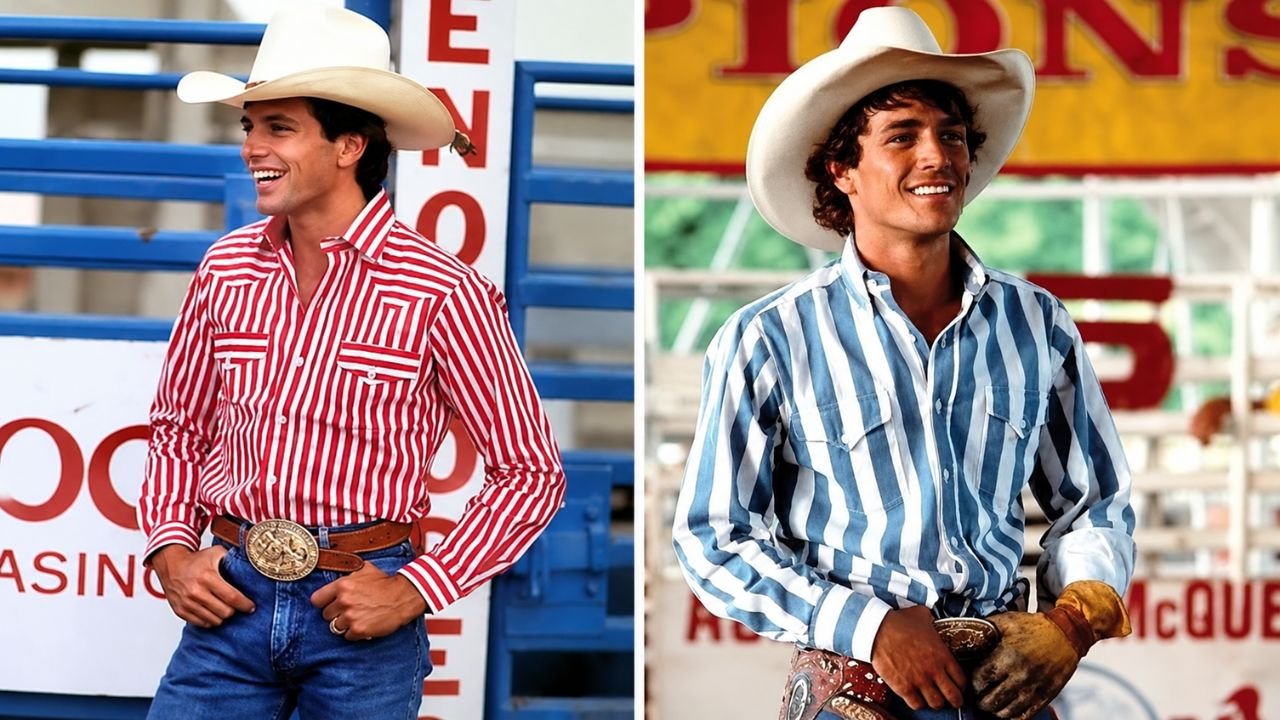
Lane Frost became one of the most recognized names in professional bull riding during a career that lasted only a few years. Born into a rodeo family, he began riding at a young age and progressed from youth competitions to the professional circuit, eventually becoming the 1987 PRCA World Champion Bull Rider. His career included major victories, five consecutive National Finals Rodeo qualifications and the famous Challenge of the Champions series against Red Rock. Lane Frost died at only 25 years old after completing an eight-second ride at Cheyenne Frontier Days in 1989, but his influence on rodeo continued long after his death.
Lane Frost’s Early Life and Rodeo Family
Lane Clyde Frost was born on October 12, 1963, in La Junta, Colorado. His father, Clyde Frost, was a rodeo competitor who competed in bareback and saddle bronc riding, so Lane grew up in an environment where rodeo was already part of family life. His mother, Elsie, supported his ambitions while understanding the dangers involved in bull riding. The family eventually moved to Oklahoma, where Lane continued developing his skills and competing in youth rodeo events. His older sister Robin and younger brother Cody also grew up within the same family environment.
Lane’s interest in riding appeared when he was still very young. He began riding dairy calves at around five or six years old, and by the age of 10 he was already competing in Little Buckaroos Rodeos. His early competitions were not limited to bull riding, because he also took part in bareback riding and calf roping. He even participated in wrestling during junior high school, giving him another outlet for developing strength and athletic ability. These early experiences helped establish the competitive approach that later became central to his professional career.
His First Rodeo Achievements
Lane’s youth career developed quickly as he gained experience against other young competitors. He won the Oklahoma Youth Rodeo Association bull riding championship in 1980, 1981 and 1982, showing that his success was not based on a single outstanding season. In 1981, he also won the National High School Bull Riding Championship. The following year, he won the bull riding championship at the first Youth National Finals in Fort Worth.
His progress attracted attention from experienced people in rodeo, including his father and legendary bull rider Freckles Brown. Brown became one of Lane’s mentors and was an important influence during his development. Lane learned not only how to stay on a bull but also how to approach the sport with discipline and respect. By the time he finished high school, he had already built a reputation as a serious young bull rider.
Lane Frost’s Rise to Professional Rodeo
Lane graduated from high school in 1982 and soon moved into professional rodeo. He earned his PRCA card at 19, beginning a professional career that would quickly place him among the leading bull riders of his generation. He competed across the country and became a regular presence at major rodeo events. His combination of balance, timing and determination helped him handle bulls that were difficult for even experienced riders. Within a short period, his name became increasingly familiar to rodeo fans.
His professional career included several important achievements. Lane qualified for the National Finals Rodeo five consecutive times from 1984 through 1988, demonstrating remarkable consistency at the highest level of professional rodeo. In 1986, he won the NFR bull riding average title. The following year became the most important competitive season of his career when he won the PRCA World Championship in bull riding.
Major Career Achievements
Some of the most important accomplishments in Lane’s professional career include:
- 1983 Prairie Circuit Bull Riding Champion
- 1984 first National Finals Rodeo qualification
- 1986 NFR Bull Riding Average Champion
- 1987 PRCA World Champion Bull Rider
- 1987 and 1988 Pendleton Round-Up titles
- 1988 RAM Circuit Finals Bull Riding Champion
- 1988 Calgary Stampede Challenge Cup bronze medal
- Five consecutive NFR qualifications from 1984 through 1988
These results show why Lane was already considered an accomplished professional before his death. His career was not built only around the dramatic circumstances of his final rodeo. He had already established himself through repeated championship performances and appearances at major professional events.
Lane Frost’s 1987 World Championship
The 1987 season became the defining competitive year of Lane’s career. At 24 years old, he won the PRCA World Championship in bull riding after years of competing at the highest level. Winning the title confirmed his position among the leading bull riders in professional rodeo. It also fulfilled a major ambition that had developed during his childhood.
The championship came during a period when professional bull riding was becoming increasingly competitive and visible. Lane’s success helped establish him as one of the sport’s young stars, and his reputation continued to grow through the following season. Rather than slowing down after winning the world title, he continued taking on difficult competitions. His 1988 season included one of the most famous bull-riding matchups of his career.
Lane Frost and Red Rock
Red Rock was a legendary bucking bull who had developed a reputation for being extremely difficult to ride. Before Lane Frost faced him in the Challenge of the Champions, hundreds of attempts had been made to complete a successful eight-second ride on the bull. Sources commonly cite 309 unsuccessful attempts by other riders before Lane’s series against Red Rock.
The Challenge of the Champions was created as a special matchup between two champions from the previous year’s PRCA competition. Red Rock had been named the 1987 PRCA Bucking Bull of the Year, while Lane had won the 1987 PRCA World Championship in bull riding. Their seven-ride series gave Lane an unusual opportunity to demonstrate his ability against one of rodeo’s most respected bulls.
The Challenge of the Champions
Lane eventually completed qualifying rides on Red Rock in four of the seven matchups. The final result was a 4–3 victory in the series, giving Lane a memorable place in rodeo history. The achievement is particularly notable because Red Rock had already defeated so many experienced riders. Lane’s success against the bull became one of the most frequently remembered parts of his career.
It is also important to distinguish Red Rock from the bull involved in Lane’s death. Red Rock did not kill Lane Frost. The bull involved in his final ride was named Takin’ Care of Business. Keeping these two stories separate prevents one of the most common factual mistakes in articles about Lane’s life.
Lane Frost and His Wife Kellie Kyle
Lane Frost married Kellie Kyle, a barrel racer from Quanah, Texas, who also came from a rodeo background. The two met through the rodeo circuit while they were young and developed a relationship around their shared connection to the sport. Kellie understood the demands of rodeo because she competed herself and had grown up around the lifestyle. Their relationship therefore developed within a community where travel, competition and family connections were all closely connected.
Lane and Kellie’s marriage later became part of the story told about his life, especially after his death. Their relationship was not without difficulties, and accounts of their marriage describe a period of separation before they reconciled. They were also discussing plans for their future, including the possibility of establishing a ranch. Kellie’s own rodeo background is worth remembering because she was not simply a spectator who became connected to Lane through marriage.
Kellie Kyle’s Own Rodeo Background
Kellie grew up in Quanah, Texas, and her father, Ted Kyle, was involved in rodeo. Historical records also identify Kellie Kyle competing in goat tying as a junior. She was known as a barrel racer and had her own connection to competitive rodeo before becoming Lane’s wife. After Lane’s death, she eventually married Mike Macy in 1993 and became known as Kellie Macy.
Her later life is covered in more detail in the separate Kellie Kyle article, but her relationship with Lane remains an important part of both biographies. For readers searching for Lane Frost wife, Kellie Kyle is the central answer. Her story also demonstrates that Lane’s personal life involved people who understood rodeo from personal experience rather than outsiders to the sport.
Lane Frost’s Final Rodeo at Cheyenne Frontier Days
The final chapter of Lane’s career took place at Cheyenne Frontier Days in Wyoming on July 30, 1989. At the time, he was only 25 years old and was still competing as a professional bull rider. He drew a bull named Takin’ Care of Business for his ride. Lane successfully stayed aboard for the required eight seconds and received a score of 85 points.
What happened immediately afterward changed rodeo history. After Lane dismounted, the bull turned and struck him in the back with its horn. The impact caused severe internal injuries, including damage to a major artery. Lane initially managed to get back on his feet and signal for help, but he collapsed shortly afterward and died from his injuries.
How Did Lane Frost Die?
The question of how did Lane Frost die remains one of the most searched parts of his story. Lane died after being struck by Takin’ Care of Business shortly after completing his eight-second ride at Cheyenne Frontier Days. The bull’s horn caused severe internal injuries, and the damage proved fatal. He was 25 years old when he died on July 30, 1989.
The circumstances are sometimes misunderstood because Lane had already completed the ride successfully. His 85-point score shows that the accident happened after he had dismounted rather than because he was unable to complete the required eight seconds. This distinction is important when explaining his final ride accurately. The event demonstrated how dangerous professional bull riding remained even after a successful performance had been completed.
What Bull Killed Lane Frost?
The bull that fatally injured Lane Frost was Takin’ Care of Business. This was not Red Rock, the famous bull Lane had successfully ridden during the Challenge of the Champions. Takin’ Care of Business struck Lane after he completed his final eight-second ride at Cheyenne Frontier Days. The accident resulted in injuries that caused his death at the age of 25.
The difference between these two bulls is worth emphasizing because Red Rock played such a major role in Lane’s career. Red Rock represented one of his most memorable competitive achievements, while Takin’ Care of Business was involved in the accident that ended his life. Separating those events makes the timeline much easier to understand.
When Did Lane Frost Die?
Lane Frost died on July 30, 1989, during the Cheyenne Frontier Days rodeo in Cheyenne, Wyoming. He was 25 years old. His death came only a few years after he had reached the top of professional bull riding, making the loss particularly significant to the rodeo community. His funeral was held on August 2, 1989, at First Baptist Church in Atoka, Oklahoma.
Approximately 3,500 people reportedly attended the funeral, reflecting the level of respect Lane had earned during his short career. He was buried at Mount Olivet Cemetery in Hugo, Oklahoma. His grave is located near the burial place of Freckles Brown, the legendary bull rider who had been one of Lane’s mentors. The location also reflects the connection between Lane’s early development and the people who influenced his career.
Tuff Hedeman’s Tribute to Lane Frost
Tuff Hedeman was one of Lane’s closest friends and traveling partners in professional rodeo. Their friendship became particularly significant after Lane’s death because Hedeman continued competing at the highest level while carrying Lane’s memory with him. In 1989, Hedeman won the PRCA World Championship in bull riding. During his final NFR ride that year, he stayed on the bull for an additional eight seconds as a tribute to Lane.
The gesture became one of the most remembered tributes in professional rodeo. Hedeman’s later career also kept Lane’s name connected to the sport. The two men had shared the challenges of professional competition, and Hedeman became one of the people who helped preserve Lane’s story for later generations.
How Lane Frost’s Death Influenced Bull Riding Safety
Lane’s death also became connected to changes in bull riding safety. His friend and traveling partner Cody Lambert later developed a protective vest for bull riders. The equipment was designed to provide additional protection to the chest and internal organs during impacts with bulls.
The Professional Bull Riders organization eventually made protective vests mandatory in 1996. Protective equipment subsequently became a standard part of professional bull riding. Lane’s death was not the only factor in the development of safety equipment, but his accident became part of the broader history of efforts to reduce serious injuries in the sport.
Changes Associated With Bull Riding Safety
The evolution of protective equipment brought several changes to the sport:
- Protective vests became standard equipment for professional riders.
- Riders received additional protection around the chest and torso.
- Safety became a larger part of professional bull riding discussions.
- Equipment continued to be developed as riders and organizations learned more about impact injuries.
These changes provide another way to understand Lane’s legacy. His name is remembered not only because of his championships but also because the circumstances surrounding his death became part of the continuing conversation about rider safety.
Lane Frost’s Lasting Legacy in Rodeo
Lane Frost was inducted into the ProRodeo Hall of Fame in 1990 and later became part of the National Rodeo Hall of Fame. His achievements continue to be recognized through rodeo institutions, awards and historical collections. The Lane Frost/Brent Thurman Award was established in 1996 and is presented to the bull rider with the highest-scoring single ride at the PBR World Finals.
His family has also preserved items connected with his career. Memorabilia associated with Lane includes his hat, boots, buckles and rope. These objects provide a physical connection to a career that lasted only a short time. They also help preserve the personal side of a rider who became an important figure in professional rodeo.
Lane Frost Brand, Hats and Merchandise
Lane’s name has continued beyond rodeo records through the Lane Frost Brand, which is operated by his family. The brand offers Western clothing, accessories and other products connected with Lane’s name and cowboy heritage. Its merchandise includes several hat styles, making searches for Lane Frost hat and Lane Frost hats part of the broader interest surrounding his legacy.
The brand’s products reflect how Lane’s name has become associated with a wider Western identity. His image continues to appear on clothing and accessories decades after his death. For people searching for Lane Frost merchandise, the brand provides a direct connection to his family and the legacy they continue to maintain.
What About Lane Frost Cologne?
Lane Frost cologne appears as a separate product-related search rather than an important part of his biography. It should not be presented as though fragrance was connected to Lane’s career or personal life unless a specific legitimate product can be verified. The stronger connection between Lane Frost and merchandise is through the family-operated brand and its Western clothing and hat collections. Keeping that distinction clear prevents commercial searches from being mixed into historical facts.
Lane Frost and the Movie 8 Seconds
Lane’s story reached a much wider audience through the 1994 movie 8 Seconds. Luke Perry portrayed Lane Frost, while Cynthia Geary played Kellie Frost and Stephen Baldwin portrayed Tuff Hedeman. The movie focused on Lane’s rodeo career, relationships and the events surrounding his death.
The film helped introduce Lane’s story to people who had never followed professional rodeo. However, it is a dramatized biographical movie rather than a documentary, so not every scene should be treated as a precise historical record. Some events were compressed or altered for storytelling purposes. Anyone researching Lane Frost should therefore distinguish between the real-life record and the version presented in 8 Seconds.
Why 8 Seconds Remains Connected to Lane Frost
The film became an important part of Lane’s popular legacy because it introduced his life to a mainstream movie audience. Luke Perry’s performance also became closely associated with the public image of Lane. The movie brought renewed attention to Kellie Kyle, Tuff Hedeman and other people who had been part of Lane’s real life. It remains one of the most recognizable cultural references connected with his name.
Lane Frost in Music and Popular Culture
Lane’s story has also appeared in music and other forms of popular culture. Songs and music videos have referenced him, his death and the world of professional bull riding. Garth Brooks’ “The Dance” has frequently been associated with Lane Frost because of its connection to the film and its emotional themes. Other artists have also used Lane or the story of his career as inspiration.
His story has remained recognizable because it combines athletic achievement, personal relationships, danger and an unusually short career. That combination has allowed Lane’s name to remain familiar outside the professional rodeo world. His story has been retold in documentaries, films, music and rodeo histories. Each version reaches a different audience while keeping his basic legacy alive.
Lane: Life, Legend, Legacy
A later documentary titled Lane: Life, Legend, Legacy brought Lane’s story back into focus through interviews with people who knew him personally. The project included people such as his parents, Kellie Macy, Tuff Hedeman and Cody Lambert. Rather than relying only on old footage and historical records, the documentary allowed people connected to Lane to discuss their own memories.
The documentary is useful because it adds perspectives that are difficult to capture through statistics alone. Lane’s championships explain his athletic achievements, but interviews with family members and friends help explain the person behind the public reputation. The project also demonstrates that interest in Lane Frost has continued long after the release of 8 Seconds.
Why Lane Frost Remains Important to Rodeo History
Lane Frost’s career was short, but the combination of his achievements and circumstances made his story unusually enduring. He became a world champion at 24, competed in five consecutive NFRs and defeated one of the most famous bucking bulls in the sport. His death at 25 transformed him from a rising champion into a lasting symbol of professional bull riding.
His legacy also extends through the people who knew him. Kellie Kyle continued her life within the rodeo community, Tuff Hedeman carried Lane’s memory through his own career and Cody Lambert became associated with safety developments in bull riding. The Lane Frost Brand and the preservation of his memorabilia have kept his name connected to the Western community. These different parts of his legacy explain why people continue searching for Lane Frost decades after his final ride.
Frequently Asked Questions About Lane Frost
Who was Lane Frost?
Lane Frost was an American professional bull rider who became the 1987 PRCA World Champion Bull Rider. He qualified for the National Finals Rodeo five consecutive times and became famous for his successful rides against difficult bulls, including Red Rock. His professional career ended with his death at Cheyenne Frontier Days in 1989.
How did Lane Frost die?
Lane Frost died after being struck by a bull shortly after completing an eight-second ride at Cheyenne Frontier Days on July 30, 1989. The bull struck him in the back with its horn, causing severe internal injuries. Lane briefly stood and signaled for help before collapsing.
What bull killed Lane Frost?
The bull that fatally injured Lane Frost was named Takin’ Care of Business. Lane had just completed an 85-point ride on the bull before the accident occurred. Red Rock, another famous bull associated with Lane’s career, was not responsible for his death.
Who was Lane Frost’s wife?
Lane Frost’s wife was Kellie Kyle, a barrel racer from Quanah, Texas. The two met through the rodeo community and married while Lane was building his professional career. Kellie later married Mike Macy after Lane’s death and became known as Kellie Macy.
When did Lane Frost die?
Lane Frost died on July 30, 1989, at Cheyenne Frontier Days in Cheyenne, Wyoming. He was 25 years old. His death became one of the most remembered events in professional bull riding and later became part of the story portrayed in the movie 8 Seconds.
Conclusion
Lane Frost’s life was short, but his accomplishments established him as one of the most memorable bull riders in rodeo history. From riding calves as a child to winning the 1987 PRCA World Championship, he reached the highest level of professional competition at a remarkably young age. His victories over difficult bulls such as Red Rock showed the skill and determination that made him a champion, while his final ride on Takin’ Care of Business became one of the most remembered moments in rodeo history. His death on July 30, 1989, ended a promising career, but it did not end his influence on the sport.
Today, Lane Frost remains connected to rodeo through his family, the Lane Frost Brand, professional awards, documentaries, memorabilia and the continued interest in his story. His relationship with Kellie Kyle, friendship with Tuff Hedeman and connection with figures such as Cody Lambert all form important parts of his history. The movie 8 Seconds introduced his story to a much wider audience, while later documentary work has added perspectives from people who knew him personally. For all these reasons, Lane Frost continues to be remembered not simply as a bull rider who died young, but as a world champion whose career and legacy became an enduring part of professional rodeo.