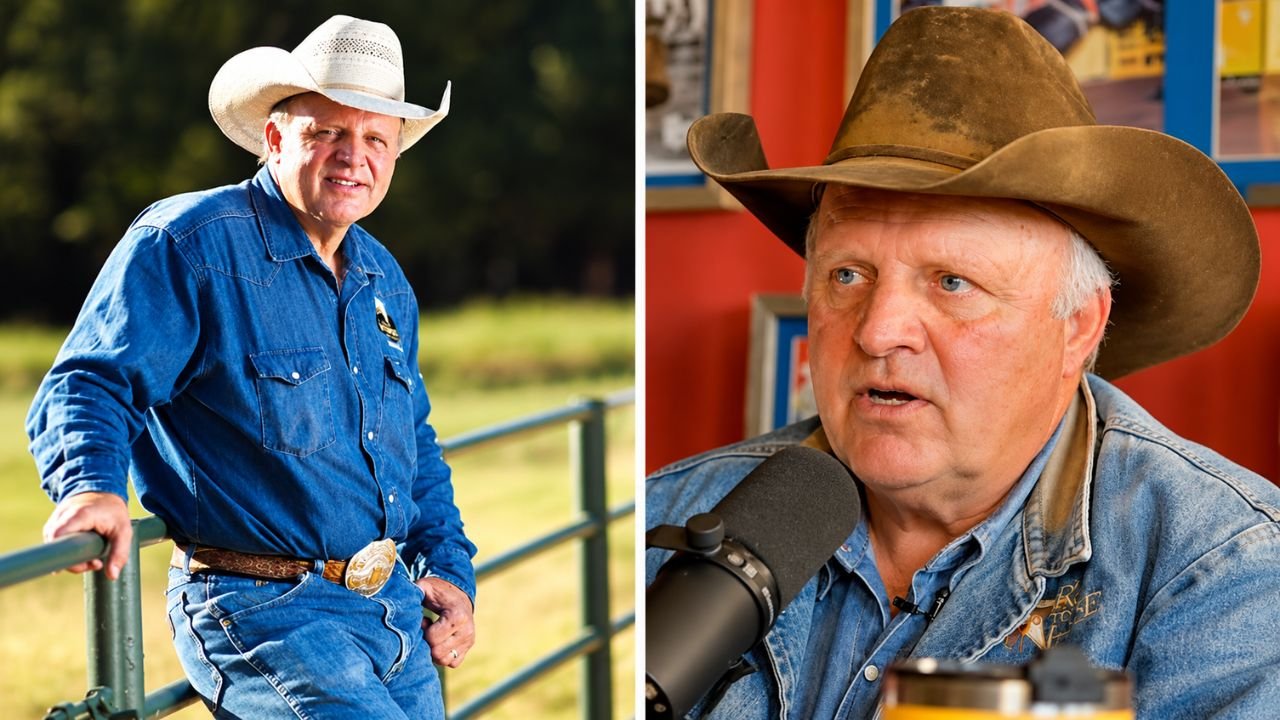
Cody Lambert is a name closely associated with professional bull riding, but his career reaches far beyond what happened inside a rodeo arena. Born into a family connected to horses and competition, Lambert developed into an accomplished all-around rodeo competitor before becoming one of the founders of Professional Bull Riders. His career later expanded into livestock management, judging, equipment development, mentoring and coaching. For many rodeo fans, his name is also connected with Lane Frost, Tuff Hedeman and the group of young cowboys who traveled together during one of professional rodeo’s memorable eras.
What makes Cody Lambert’s story particularly interesting is the number of roles he has held in the sport. He competed in several rodeo events, qualified for the National Finals Rodeo, helped establish PBR, won one of the organization’s early major events and later spent decades helping select the bulls used in elite competition. His work with protective equipment also became an important part of bull-riding history. From his early years in New Mexico to his work with the Texas Rattlers, Lambert’s career shows how a competitor can remain involved in rodeo long after leaving competition behind.
Cody Lambert’s Early Life and Rodeo Family
Cody Lambert was born on December 2, 1961, in Artesia, New Mexico, according to biographical information from the National Cowboy & Western Heritage Museum. Rodeo and horses were already part of his family environment because his father, Cliff Lambert, was a racehorse trainer and former jockey. Cliff had achieved recognition as a jockey and won the first All American Futurity at Ruidoso Downs in 1959 aboard Galobar. Growing up around horses and competition gave Cody an early connection to the western sporting world.
Lambert’s family included several people with connections to horses and competition. His brothers included Casey Lambert, who became a jockey, as well as Chuck Lambert, while his sister was Cheyann. Rather than entering a completely unfamiliar world when he began competing, Cody was surrounded by people who understood the demands of riding and competition. That background helped shape the discipline and competitive attitude that later became important throughout his professional career.
There is some variation among online sources regarding Lambert’s birthplace, with IMDb listing El Paso, Texas, while the National Cowboy & Western Heritage Museum identifies Artesia, New Mexico. For a detailed biography, the museum’s information is the stronger historical reference for the birth location. His December 2, 1961 birth date is consistent across several biographical sources. When discussing his early life, it is therefore better to use the better-documented information rather than repeating conflicting details without explanation.
Cody Lambert’s Start in Rodeo
Cody Lambert did not limit himself to one rodeo discipline when he was young. During his high school years, he competed in bareback riding, saddle bronc riding, bull riding, steer wrestling, team roping and calf roping. His participation in several events demonstrated that his abilities extended well beyond bull riding. He qualified for the National High School Finals in saddle bronc riding three times, bull riding once and steer wrestling once.
His early competitive record continued to develop when he entered college rodeo. Lambert attended Sul Ross State University, where he competed at a high level against other young cowboys. In 1982, he became the NIRA Men’s All-Around Champion, an achievement that reflected his ability across multiple events. His college career helped establish him as a versatile competitor rather than someone whose identity was based entirely on bull riding.
The 1982-83 season was another important point in his development. Sul Ross won the national team championship during that period, while Lambert competed in almost every event at the NIRA Finals. He placed in every event except bareback riding, showing the breadth of his rodeo ability. Those years provided an important foundation for the professional career that followed.
Cody Lambert’s Rise to Professional Rodeo
Lambert joined the Professional Rodeo Cowboys Association in 1980 and quickly established himself among the sport’s rising competitors. One of the most notable parts of his early professional career was how quickly he reached the National Finals Rodeo. He qualified for his first NFR in 1981 after attending only 29 rodeos during that season. At just 19 years old, he had already reached several major finals competitions.
His NFR career eventually included both bull riding and saddle bronc riding. That is an important detail because Lambert was not simply a bull rider who later became involved with PBR. His competitive experience covered different areas of rodeo and gave him an unusually broad understanding of the sport.
His major NFR qualifications included:
- Saddle bronc riding in 1981, 1990 and 1991
- Bull riding in 1985, 1986, 1988, 1989, 1991, 1992 and 1993
- PBR World Finals in 1994, 1995 and 1996
- NIRA Men’s All-Around Championship in 1982
- Multiple regional and Texas rodeo championships
His 1991 season was particularly notable because he qualified for the NFR in both bull riding and saddle bronc riding. Competing successfully in two demanding events at the highest level demonstrated the versatility that had been visible since his youth. Lambert’s professional record eventually became the foundation for his later roles in judging, livestock selection and coaching.
Cody Lambert and the Rodeo Wolfpack
During the 1980s, Cody Lambert became part of a close group of young professional cowboys that included Lane Frost, Tuff Hedeman, Jim Sharp and, later, Ty Murray. The group traveled together while competing on the rodeo circuit and became known as the Wolfpack. Their friendships developed while they were competing, traveling and dealing with the pressures that came with professional rodeo.
The connection between Cody Lambert and Lane Frost is especially important because both men became major figures in rodeo history. Lambert was not simply someone who became associated with Frost after his death. He was part of Frost’s professional circle and traveled with him during the years when Frost was establishing himself as a world-class bull rider.
Tuff Hedeman is another important connection in this story. Lambert, Hedeman and Frost were part of the same competitive generation, and their relationships continued beyond individual rodeo performances. This group of cowboys has remained part of the history surrounding Lane Frost because of their friendship, professional rivalry and shared experiences on the road.
Cody Lambert and Lane Frost
Cody Lambert’s relationship with Lane Frost is one of the most frequently discussed parts of his biography. The two competed during the same period and traveled together with other prominent cowboys. Their connection became even more significant after Frost’s death at Cheyenne Frontier Days in 1989. Lambert was present at the rodeo during the tragic incident that ended Frost’s life.
Lane Frost completed his eight-second ride on Takin’ Care of Business on July 30, 1989. After dismounting, he was struck by the bull and suffered severe internal injuries. Frost briefly stood after the impact before collapsing and later died at the age of 25. Lambert’s presence during this period is one reason his name continues to appear in accounts of Frost’s final rodeo and the events that followed.
The story of Cody Lambert and Lane Frost should not be reduced to Frost’s death, however. Lambert already had his own established rodeo career, and his later work with PBR developed independently into a major contribution to the sport. The Frost connection is an important part of his life story, but it is only one chapter in a career that eventually extended across competition, administration, livestock management, safety and coaching.
Cody Lambert and the Protective Bull Riding Vest
One of Cody Lambert’s most significant contributions to bull riding came through protective equipment. Lambert became involved in developing a protective vest designed specifically for bull riders. The equipment was intended to provide protection against impacts and potential injuries from a bull’s horns and hooves while still allowing riders enough freedom of movement to compete.
The story is sometimes simplified online by saying that Lambert invented the vest directly because of Lane Frost’s death. His own account provides more background. Lambert has explained that his mother had encouraged him to look at protective equipment used by jockeys, and he became interested in whether similar protection could be adapted for bull riders. He eventually worked with a manufacturer for about a year to develop equipment suitable for the demands of bull riding.
The National Cowboy & Western Heritage Museum dates Lambert’s protective vest design to 1992. That timing is significant because it places the development after Frost’s death but also shows why it is inaccurate to describe the invention as an immediate response created overnight. Lambert had already been thinking about protective equipment, and his work became part of the broader evolution of safety in professional bull riding.
The protective vest became an important part of modern bull riding because riders needed equipment that could provide protection without interfering with the movements required to stay on a bull. Lambert’s experience as a rider gave him an understanding of what competitors needed from the equipment. His contribution is therefore an important part of the story of Cody Lambert beyond his achievements in competition.
Cody Lambert and the Founding of PBR
Professional Bull Riders became one of the defining developments in modern bull riding, and Cody Lambert was among its original founders. PBR was established in 1992 by a group of bull riders who wanted to create a professional organization focused specifically on bull riding. Lambert brought his experience as a competitor to the new organization.
His involvement with PBR did not stop at helping establish the organization. He also competed in the early years of its premier series and became part of its administration. This combination of competitor and organizer gave him a unique perspective on the development of the sport.
Lambert eventually held several different responsibilities within PBR. His career with the organization included competing, judging, helping manage livestock and working on issues related to rider safety. That progression explains why Cody Lambert remains associated with PBR even though his own competitive career ended years ago.
Cody Lambert Won an Early PBR Landmark Event
One of the lesser-known facts about Cody Lambert is that he won the first PBR-branded premier series event. The event took place at Cowtown Coliseum in Fort Worth in April 1993. Lambert and Troy Dunn were reportedly the only two riders to complete three qualified rides during the competition.
Lambert earned close to $12,000 from the event after paying a $1,000 entry fee. The victory came at an important point in PBR’s development, when the organization was establishing itself as a new force in professional bull riding. His win therefore represents more than another competition result in his career.
This achievement is particularly useful when writing about Cody Lambert because it demonstrates that he was not only an administrator or founder. He was still competing and succeeding while the new organization was taking shape. His early PBR career connected his experience as a professional cowboy with the development of the organization itself.
Cody Lambert as PBR Livestock Director
After his competitive career began winding down, Lambert moved into one of the most important behind-the-scenes roles in professional bull riding. He became PBR’s Director of Livestock and spent many years evaluating and selecting bulls for top-level competition. His knowledge of bulls, riders and rodeo competition made him well suited to the position.
The livestock director role carries considerable responsibility because the quality of the bulls is central to professional bull riding. Lambert’s work involved assessing animals and helping determine which bulls were suitable for major competitions. The decisions made in this role affected both the riders and the quality of the events watched by fans.
Lambert’s long career as livestock director also demonstrates how his involvement in the sport changed over time. He went from being the person trying to stay on the bull to becoming one of the people responsible for deciding which bulls would enter the arena. That transition is one of the most interesting aspects of his professional life.
Cody Lambert’s Work as a Mentor
Lambert’s influence has also extended to younger bull riders. His experience in several rodeo disciplines, professional competition and PBR administration gave him knowledge that could be passed on to riders coming through the sport. The National Cowboy & Western Heritage Museum has specifically noted his mentorship of riders including Jess Lockwood.
Mentoring became another way for Lambert to remain connected to competition after his own riding career ended. Instead of focusing only on his personal accomplishments, he became involved in helping younger athletes understand the demands of professional bull riding. His experience gave him perspective on both the physical and competitive sides of the sport.
This part of his career is important because it helps explain why Lambert remained relevant across multiple generations of bull riders. His career began before PBR existed, continued through the organization’s formation and later expanded into coaching. Few aspects of his career are limited to one era of rodeo.
Cody Lambert and the Texas Rattlers
Cody Lambert entered another stage of his career when he became head coach of the Texas Rattlers in the PBR Teams series. The team competition created a new opportunity for Lambert to use his experience in a coaching role. Instead of managing livestock or competing himself, he could focus on helping riders prepare and perform as part of a team.
The Texas Rattlers won the 2023 PBR Teams Championship with Lambert serving as head coach. His appointment also connected his long history with professional bull riding to the modern team-based version of the sport.
His coaching position is important when discussing Cody Lambert today because it shows that his career has continued to evolve. He has moved through almost every major role in professional bull riding, from rider and founder to livestock director and coach. That range is one of the main reasons his name remains relevant to rodeo fans.
Cody Lambert’s Wife and Family Life
Cody Lambert met LeAnne Lambert while traveling the rodeo circuit. LeAnne competed as a barrel racer, giving the couple a shared understanding of the lifestyle that came with professional rodeo. They married in May 1982 and later had a son named Riley.
Their family life eventually became connected with ranching as well as rodeo. The couple purchased their first tract of land in 1985 and later acquired their current property in Texas. Their ranch life has included cattle, horses and dogs, creating a lifestyle that remains closely connected to the western traditions that shaped Lambert’s career.
This side of Lambert’s life is worth including because it shows what happened after the years of constant competition. Rodeo was not simply a career he left behind when he stopped riding. Horses, cattle, ranching and the wider western lifestyle remained part of his everyday life.
Cody Lambert’s Texas Ranch Life
Lambert has maintained a ranch near Bowie, Texas, where he has also had an arena used by cowboys for training and other activities. The ranch provides a natural extension of his professional life because he can remain involved with horses, cattle and riders without needing to travel constantly as he did during his competitive years.
His ranch also reflects the practical side of his personality and career. Professional rodeo is often associated with large arenas and major events, but much of the western lifestyle exists away from the spotlight. Lambert’s life on the ranch provides a different picture of him than the one seen through PBR competitions and television coverage.
For readers searching for Cody Lambert today, his ranching life is therefore an important part of the story. It demonstrates how his connection to rodeo continued even as his role within the sport changed. His work as a coach and mentor also gives him reasons to remain connected to the next generation of competitors.
Cody Lambert in 8 Seconds
Cody Lambert also became part of the story of Lane Frost through the 1994 film 8 Seconds. The movie dramatized Frost’s life and career and included characters based on people from his real-life rodeo circle. Actor Red Mitchell portrayed Cody Lambert in the film.
The movie helped introduce Lane Frost’s story to a much wider audience, and Lambert’s inclusion connected him to the popular retelling of that era of professional rodeo. However, 8 Seconds should be understood as a dramatized biographical film rather than a complete historical record. Scenes and character interactions in a movie can be changed or condensed for storytelling purposes.
Lambert’s appearance in the film also shows how the relationships among Frost, Hedeman and other cowboys became part of popular culture. His real-life connection to Frost existed before the movie and continued through his later involvement in documentaries and rodeo history.
Cody Lambert in Lane: Life | Legend | Legacy
Lambert also appeared in later productions connected to Lane Frost. The documentary Lane: Life | Legend | Legacy includes people who knew and worked with Frost, including Lambert, Tuff Hedeman and members of Frost’s family.
Unlike a dramatized feature film, a documentary can provide room for firsthand recollections and historical context. Lambert’s involvement gives viewers another connection to the people who were part of Frost’s professional circle. His appearance also reflects the continuing interest in the life and legacy of Lane Frost decades after his death.
For a Cody Lambert biography, this connection is useful because it demonstrates that his relationship with Frost was not merely something reconstructed through later media. Lambert was part of the original rodeo community surrounding Frost and later became one of the people able to speak about that period.
Cody Lambert’s Hall of Fame Honors
Lambert’s career has received recognition from several major rodeo organizations. His honors reflect not only his achievements as a competitor but also his influence on the development of professional bull riding.
Some of his major recognitions include:
- PBR Ring of Honor in 1996
- Texas Cowboy Hall of Fame in 2002
- Texas Rodeo Cowboy Hall of Fame in 2012
- National Rodeo Hall of Fame in 2020
- Bull Riding Hall of Fame in 2023
The range of these honors reflects the different stages of his career. Some recognize his achievements as a cowboy, while others recognize his broader contribution to professional bull riding. His Hall of Fame record therefore makes sense when viewed alongside his work as a competitor, founder, livestock director, innovator and coach.
Cody Lambert Net Worth and Financial Career
Cody Lambert’s net worth is a subject that appears on several biography and entertainment websites, but there is no reliable public financial record establishing a precise figure. Estimates found online should therefore be treated carefully. His career has included professional rodeo earnings, PBR leadership, livestock management, coaching and other professional activities, but those details do not provide enough information to calculate a verified personal net worth.
A responsible biography should avoid presenting an estimated number as fact. Online net-worth articles can use assumptions or figures that are not supported by financial records. For readers interested in Cody Lambert’s finances, it is more useful to describe the different professional stages that contributed to his long career than to give an unsupported dollar amount.
Where Is Cody Lambert Today?
Cody Lambert remains connected to professional bull riding through his work with the Texas Rattlers and his continuing involvement in the sport. His role as a coach allows him to apply decades of experience to a new generation of competitors. He has also maintained his connection to ranch life in Texas.
His career has therefore come full circle in several ways. He started as a young competitor who participated in numerous rodeo events, became a professional cowboy and NFR qualifier, helped establish PBR, and later worked behind the scenes before returning to the arena in a coaching capacity. Few professional rodeo careers cover such a wide range of responsibilities.
The story of Cody Lambert is ultimately about much more than his connection to Lane Frost. Frost remains an important part of his history, particularly because of their friendship and shared rodeo years, but Lambert built his own legacy through competition, PBR, livestock management, safety equipment and coaching. His continued involvement in the sport has allowed that legacy to extend beyond the era in which he first became famous.
Frequently Asked Questions About Cody Lambert
1. Who is Cody Lambert?
Cody Lambert is a former professional rodeo competitor, PBR co-founder, livestock director, protective-equipment innovator and coach. He competed in several rodeo events before becoming deeply involved in the development of professional bull riding. He is also known for his connection with Lane Frost and Tuff Hedeman.
2. Was Cody Lambert friends with Lane Frost?
Yes, Cody Lambert and Lane Frost were part of the same professional rodeo circle and traveled together with other prominent cowboys. They were associated with the group often referred to as the Wolfpack. Lambert was also present at Cheyenne Frontier Days when Frost suffered the fatal accident in 1989.
3. Did Cody Lambert invent the bull riding protective vest?
Cody Lambert is credited with developing a protective vest specifically designed for bull riders, with the National Cowboy & Western Heritage Museum dating the design to 1992. His own account indicates that the idea developed partly from his interest in protective equipment used by jockeys. The development should not be described as simply an immediate invention caused by Lane Frost’s death.
4. Was Cody Lambert in the movie 8 Seconds?
Yes. Cody Lambert was portrayed by actor Red Mitchell in the 1994 film 8 Seconds, which dramatized the life of Lane Frost. The movie should be treated as a dramatized biography rather than a completely literal account of every historical event.
5. What does Cody Lambert do today?
Cody Lambert has continued his involvement in professional bull riding as a coach and other roles within the sport. He became head coach of the Texas Rattlers in the PBR Teams series and has also maintained a ranching lifestyle in Texas. His career continues to connect him with professional bull riding and younger competitors.
Conclusion
Cody Lambert’s career is one of the more unusual stories in professional rodeo because it has continued through several different generations of the sport. He began as an all-around young competitor, reached the National Finals Rodeo, competed alongside cowboys such as Lane Frost and Tuff Hedeman, and later became one of the founders of Professional Bull Riders. His work with protective equipment added another important contribution, while his long career as a PBR livestock director placed him behind many of the major competitions of the modern era.
His connection to Lane Frost remains an important part of his story, but it does not define the whole of his career. Lambert developed his own reputation through competition, PBR leadership, livestock management, mentoring and coaching. From the rodeo arenas of his youth to his work with the Texas Rattlers and his ranch life in Texas, Cody Lambert has remained closely connected to the sport that shaped his life.