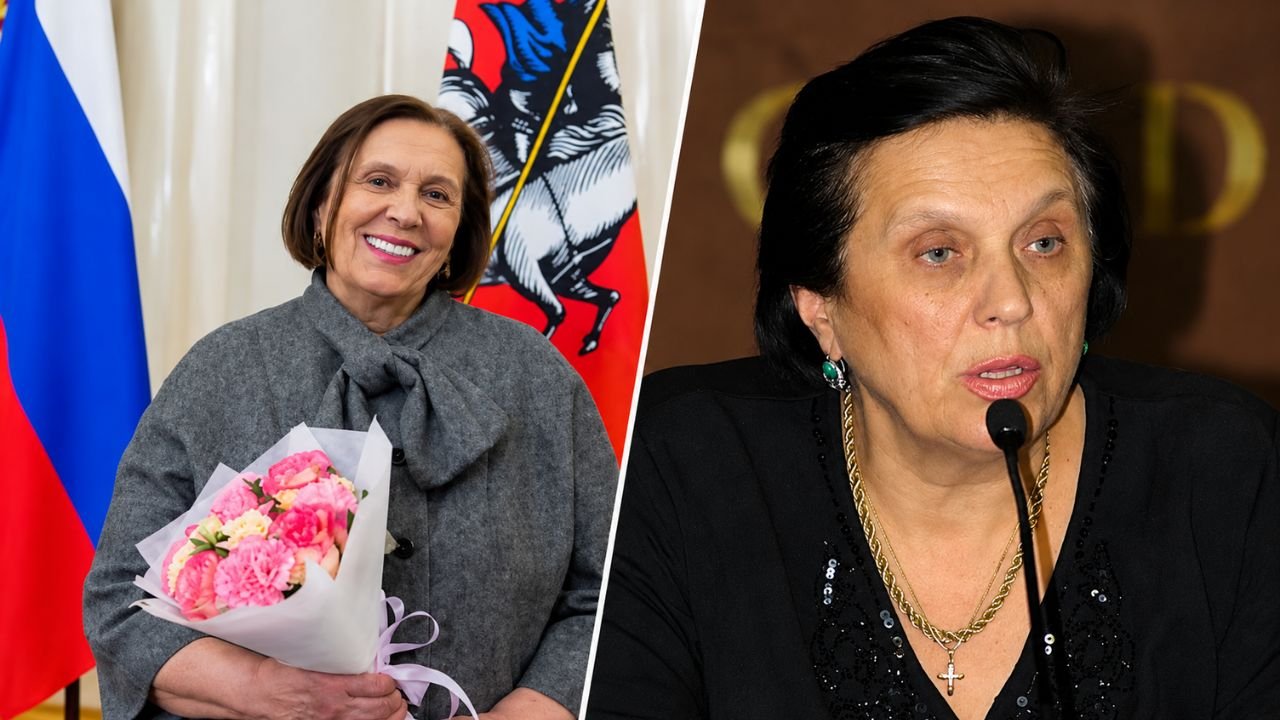
Tatyana Ovechkina is a former Soviet basketball star whose career is remembered for Olympic triumphs, international championships and an extraordinary connection to one of hockey’s biggest names. Born in Moscow in 1950, she became one of the leading point guards of Soviet women’s basketball and represented her country at the highest level. Her career included two Olympic gold medals, a World Championship title, six European Championship victories and two Universiade gold medals. Today, Tatyana Ovechkina is also widely known as the mother of hockey legend Alex Ovechkin, but her own achievements established her as an accomplished athlete long before her son became famous.
Who Is Tatyana Ovechkina?
Tatyana Ovechkina is a former Soviet basketball player who competed as a point guard for Dynamo Moscow and the Soviet national team. She was known for her ability to organize the offense, control the pace of games and contribute as both a scorer and playmaker. Her career developed during one of the strongest periods in Soviet women’s basketball, when the national team regularly competed for major international titles. Her achievements eventually made her one of the best-known female basketball players of her generation.
Tatyana Ovechkina was born Tatyana Nikolaevna Kabayeva on March 19, 1950, in Moscow, which was then part of the Soviet Union. She grew up in a working-class family and developed an interest in sport while still young. Although an early accident caused a serious injury to her leg, she eventually recovered and found her way into competitive basketball. Her determination during those early years became an important part of the story behind her later success.
Tatyana Ovechkina Age and Early Life
Tatyana Ovechkina is 76 years old as of 2026. She spent her childhood in Moscow, where sport was an important part of everyday life in her community. Basketball eventually became the activity that captured her attention, although her path toward elite competition was not straightforward. Her early experiences taught her persistence and helped shape the disciplined approach that later became important during her professional career.
One of the most remarkable details about Tatyana Ovechkina’s early life is the serious accident she experienced at the age of seven. She was walking home from school when she was struck by a car and suffered a severe injury to her right leg. Her recovery required approximately a year in hospital, and doctors initially placed restrictions on strenuous physical activity. Despite those difficulties, she gradually regained her strength and eventually returned to an active lifestyle.
How Basketball Became Her Passion
After recovering from her injury, Tatyana became increasingly interested in basketball. She watched older players and began developing her own physical strength and skills, determined to prove that her earlier injury would not prevent her from becoming an athlete. Her dedication was especially notable because she did not have the modern training resources available to athletes today. She relied heavily on determination and repeated practice to improve her physical abilities.
Her progress eventually brought her into the Dynamo Moscow sporting system. At only 16 years old, she was invited to join Dynamo Moscow’s women’s basketball team. The move marked the beginning of a career that would take her from a promising teenager to an Olympic champion and internationally respected basketball player.
Tatyana Ovechkina and Dynamo Moscow
Dynamo Moscow played a central role in Tatyana Ovechkina’s development as a basketball player. She joined the club in 1967 and quickly established herself among its important players. Her development was so rapid that she became captain at the age of 19, demonstrating the leadership qualities that coaches and teammates saw in her. She remained associated with Dynamo Moscow for many years and completed a significant portion of her playing career with the club.
Her role as a point guard required more than simply scoring points. She had to understand the movement of teammates, recognize defensive weaknesses and make quick decisions during games. These responsibilities helped prepare her for the Soviet national team, where the level of competition was considerably higher. Her club experience also gave her the confidence to compete against some of the strongest teams in European women’s basketball.
Tatyana Ovechkina and the Soviet National Team
Tatyana Ovechkina became a member of the Soviet women’s national basketball team in 1970. Her international career quickly developed into one of the most successful records of the period. She competed against leading basketball nations and became part of a Soviet team that dominated major international competitions.
Her major international achievements included:
- Two Olympic gold medals
- One World Championship gold medal
- Six European Championship gold medals
- Two Summer Universiade gold medals
- Long-term success with Dynamo Moscow
- Recognition as an outstanding point guard of her generation
Her European Championship victories came in 1970, 1972, 1974, 1976, 1978 and 1980. She also won the World Championship in 1975 and collected Universiade gold medals in 1973 and 1977. The consistency of these results shows why Tatyana Ovechkina became such an important figure in Soviet basketball.
Tatyana Ovechkina at the 1976 Montreal Olympics
The 1976 Montreal Olympics represented one of the most important moments in Tatyana Ovechkina’s career. The Soviet women’s basketball team won the gold medal, giving Ovechkina her first Olympic championship. She was not simply a reserve member of the squad, as her statistics showed a meaningful contribution during the tournament.
During the 1976 Olympic competition, she appeared in five games and averaged 12.8 points per game. She also averaged 4.2 assists and 5.0 rebounds per game, showing her ability to influence different areas of the game. Her field-goal percentage was also strong, reflecting her efficiency as an offensive player. The Olympic victory established the first major gold medal of what would become a remarkable international career.
Tatyana Ovechkina at the 1980 Moscow Olympics
Four years later, Tatyana Ovechkina returned to the Olympics for the 1980 Games in Moscow. The Soviet Union again won the women’s basketball tournament, allowing her to claim a second consecutive Olympic gold medal. Winning the same event at two successive Olympic Games was an exceptional achievement and placed her among the athletes who successfully defended an Olympic title.
Her statistical role in the 1980 tournament was different from her 1976 performance. She averaged 4.8 points and 2.4 assists per game across five games. While her scoring numbers were lower, her experience and ability to direct play remained valuable to the team. The Moscow victory completed her Olympic record with two appearances and two gold medals.
Tatyana Ovechkina Olympic Medals and Statistics
Tatyana Ovechkina’s Olympic record consists entirely of gold medals. She won gold at Montreal in 1976 and again at Moscow in 1980, with no Olympic silver or bronze medals recorded. Across her Olympic career, she played 10 games and averaged 8.8 points, 3.3 assists and 3.4 rebounds per game.
Her Olympic record can be summarized through several important figures:
- 2 Olympic appearances
- 2 Olympic gold medals
- 10 Olympic games
- 8.8 career Olympic points per game
- 3.3 career Olympic assists per game
- 3.4 career Olympic rebounds per game
- 12.8 points per game at the 1976 Olympics
These numbers provide only part of the picture because a point guard’s contribution cannot always be measured through scoring. Her ability to organize attacks, create opportunities and guide teammates was particularly important in an era when Soviet basketball was built around coordinated team play.
World and European Championship Success
The Olympic Games were not the only competitions where Tatyana Ovechkina achieved major success. In 1975, she helped the Soviet Union win the World Championship, adding a global title to her growing collection of international honors. The victory demonstrated that her success at the European level could also translate to the world stage.
Her European Championship record was even more extensive. She won six European titles between 1970 and 1980, creating a remarkable run across an entire decade. Those victories came in 1970, 1972, 1974, 1976, 1978 and 1980. She also won gold at the Summer Universiade in 1973 and 1977, giving her an impressive collection of international championships.
Tatyana Ovechkina Awards and Honors
Tatyana Ovechkina received important recognition for her achievements in Soviet sport. In 1976, the year of her first Olympic championship, she received the Order of the Badge of Honor. Four years later, following another Olympic victory, she was awarded the Order of Friendship of Peoples.
Her later recognition continued after her playing career. She was awarded the title of Honored Coach of Russia in 1998 after building a second career in basketball coaching. Her achievements as both a player and coach demonstrate that her influence on the sport did not end when she stopped competing internationally.
Tatyana Ovechkina as a Basketball Coach
After finishing her playing career, Tatyana Ovechkina remained connected to basketball through coaching. She eventually worked as head coach of the Dynamo Moscow women’s team, returning to the club that had played such an important role during her playing days.
Her coaching career produced another impressive list of accomplishments. Under her leadership, Dynamo Moscow won the Russian championship several times between 1998 and 2001. The team also reached the final of the EuroLeague during the 1999–2000 season. She stepped away from active coaching in 2003, bringing another important chapter of her basketball career to an end.
Tatyana Ovechkina and Alex Ovechkin
Tatyana Ovechkina is perhaps best known to modern sports fans as the mother of Alex Ovechkin. Her son became a professional ice hockey player and eventually one of the most recognized players in NHL history. Alex grew up in a sporting family because his father, Mikhail Ovechkin, also had a background in professional football.
Tatyana’s athletic career gave Alex an example of what was required to compete at the highest level. He grew up around competitive sport and saw firsthand the discipline needed to train, recover and perform under pressure. Although he chose hockey rather than basketball, the sporting environment created by his parents played an important role in his childhood.
Why Alex Ovechkin Wears Number 8
One of the most recognizable connections between Tatyana Ovechkina and her son is the number 8. Alex Ovechkin has worn No. 8 throughout his professional hockey career, while Tatyana also wore the same number during her basketball career.
For Alex, the number represents more than a familiar jersey number. It is a tribute to his mother and her accomplishments as an athlete. The connection has become an important part of the Ovechkin family story, linking Tatyana’s basketball career with Alex’s hockey career across two different generations.
Tatyana Ovechkina’s Family Life
Tatyana Ovechkina married Mikhail Ovechkin, who had a professional football background. The couple raised a family in Moscow, and their sporting backgrounds had a strong influence on their children. Their youngest son, Alexander, eventually became internationally famous through hockey.
Family remained an important part of Tatyana’s life even after her competitive career ended. Her relationship with Alex has received particular attention because of his remarkable hockey career. She has continued to follow his professional journey and has spoken about the importance of his enjoyment and happiness in sport rather than focusing only on records.
Tatyana Ovechkina’s Legacy in Basketball
The legacy of Tatyana Ovechkina should not be reduced to her relationship with Alex Ovechkin. She had already established herself as an elite athlete decades before her son’s NHL career began. Her two Olympic championships, World Championship title and six European titles provide a strong record that stands independently of her family connections.
Her career is also notable because it continued beyond playing. She moved into coaching and helped Dynamo Moscow achieve success in Russian women’s basketball. Her experience as a player, captain and coach allowed her to contribute to the sport from several different positions.
For many sports fans, Tatyana Ovechkina represents a remarkable example of sporting continuity. Her achievements belong to the history of Soviet basketball, while her son’s achievements created a separate legacy in professional hockey. The connection between their careers makes the Ovechkin family one of the more interesting sporting families associated with Moscow.
Frequently Asked Questions About Tatyana Ovechkina
Who is Tatyana Ovechkina?
Tatyana Ovechkina is a former Soviet basketball player who competed as a point guard. She represented the Soviet Union internationally and won two Olympic gold medals. She is also the mother of NHL star Alex Ovechkin.
How old is Tatyana Ovechkina?
Tatyana Ovechkina was born on March 19, 1950, in Moscow. She is 76 years old as of 2026. Her basketball career began during her teenage years and continued into adulthood.
How many Olympic gold medals did Tatyana Ovechkina win?
Tatyana Ovechkina won two Olympic gold medals. She was part of the Soviet women’s basketball team that won at the 1976 Montreal Olympics and again at the 1980 Moscow Olympics.
What did Tatyana Ovechkina achieve in basketball?
Tatyana Ovechkina won two Olympic gold medals, one World Championship title and six European Championship titles. She also won two Summer Universiade gold medals and enjoyed a long career with Dynamo Moscow.
Is Tatyana Ovechkina Alex Ovechkin’s mother?
Yes, Tatyana Ovechkina is Alex Ovechkin’s mother. She was an Olympic basketball champion before her son became a professional hockey star. Alex’s famous No. 8 is also connected to the number his mother wore during her basketball career.
Conclusion
Tatyana Ovechkina’s story is much bigger than her identity as Alex Ovechkin’s mother. She built her own reputation as an elite basketball player through years of dedication, international competition and remarkable consistency. Her two Olympic gold medals, World Championship victory, six European titles and Universiade success made her one of the standout Soviet basketball players of her era.
Her journey from recovering from a serious childhood leg injury to becoming an Olympic champion is also an important part of her biography. After competing, she continued contributing to basketball through coaching and helped Dynamo Moscow achieve further success. Today, her connection to Alex Ovechkin has introduced her achievements to a new generation of sports fans, but her own basketball career remains the foundation of Tatyana Ovechkina’s lasting legacy.