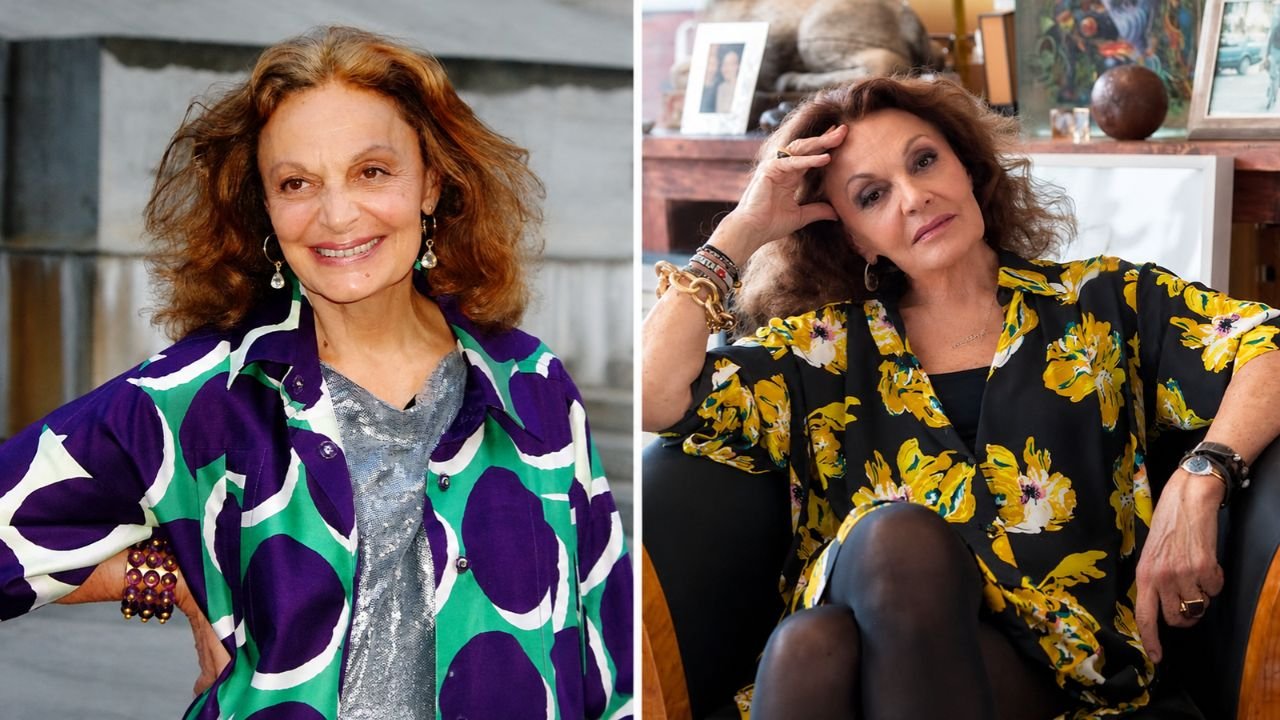
Diane von Furstenberg is one of the most recognizable names in modern fashion, known especially for creating the wrap dress that became an international symbol of style and independence. Born in Brussels, Belgium, in 1946, she built a career that went far beyond designing clothes and developed a fashion company with a distinctive identity. Her life includes an aristocratic marriage, an extraordinary rise in the fashion business, a period of decline, and a successful return to the industry. Today, diane von furstenberg remains closely connected with fashion, philanthropy, publishing and projects that support women.
Her story is not simply about the success of one famous dress. It is also about business instincts, reinvention and the ability to create a recognizable personal brand. From her early education and work in Europe to her move to New York, she gradually developed the experience that helped her establish her own company. Her career later expanded into books, fragrances, home furnishings, television shopping and charitable initiatives. The continued development of the DVF brand has kept her name relevant across several generations.
Early Life and Family Background
Diane Simone Michele Halfin was born on December 31, 1946, in Brussels, Belgium. Her mother, Lily, was a Holocaust survivor, and her experiences had a lasting influence on Diane’s understanding of resilience and personal strength. Diane grew up in Europe and received an education that exposed her to different cultures and environments. Her early years helped shape the independent outlook that later became an important part of her public identity.
Her education included time at boarding schools and studies in different European locations before she attended the University of Geneva. She studied economics there, giving her an academic background that was different from the traditional path associated with fashion designers. Before becoming a household name, she gained practical experience in the fashion industry. These experiences helped her understand fabrics, production and the commercial side of clothing.
Education and First Experiences in Fashion
Before establishing her own label, diane von furstenberg gained experience in Paris and Italy. In Paris, she worked as an assistant to fashion photographer’s agent Albert Koski. This gave her exposure to the fashion industry and the way clothing was presented and promoted. She later worked at an Italian textile factory owned by Angelo Ferretti, where she learned more about fabrics, construction and production.
The Italian experience became particularly important to her future career. She developed an understanding of silk jersey and became interested in creating clothing that was comfortable while still looking elegant. Her early experiments included separate tops and skirts that could be wrapped around the body. The idea eventually developed into the dress that would make her internationally famous.
Marriage to Prince Egon von Fürstenberg
Diane met Prince Egon von Fürstenberg when she was a young woman, and they married in 1969. Their marriage placed her within European aristocratic circles and brought considerable public attention. They had two children, Alexander and Tatiana, but Diane continued developing her own professional identity rather than relying entirely on her husband’s position. Her decision to build an independent career became an important part of her personal story.
The marriage ended after several years, although Diane continued using the Fürstenberg surname throughout her professional life. She later married American media executive Barry Diller in 2001. Her personal relationships attracted media attention, but her career remained the central focus of her public life. Her ability to establish herself independently became one of the recurring themes associated with her biography.
Moving to New York and Building a Fashion Career
After spending her early years in Europe, diane von furstenberg moved to New York and began developing her own fashion business. She arrived in a city that was becoming increasingly important to the international fashion industry. Rather than waiting for a major fashion house to give her an opportunity, she began producing clothing under her own name. She used her understanding of fabrics and her knowledge of European fashion to develop a style that could appeal to American women.
Her early business required personal determination and careful attention to the market. She reportedly began the business with an investment of around $30,000 and focused on practical jersey garments. Her designs eventually attracted the attention of influential fashion editor Diana Vreeland. That recognition helped place her work on the New York fashion calendar and gave the young designer greater visibility.
The Creation of the Famous Wrap Dress
The wrap dress became the defining achievement of diane von furstenberg’s early career. She introduced the design in 1974 after experimenting with jersey garments that could wrap around the body. The construction was simple compared with many structured dresses of the period, but it created a distinctive silhouette that could be adjusted to fit different bodies.
The dress appealed to women because it combined style with practicality. It could be put on quickly, traveled well and worked for both professional and social occasions. The design also offered a sense of freedom because women did not need complicated fastenings or rigid construction to achieve a polished appearance. Its simplicity became one of its greatest strengths.
Why the Wrap Dress Became a Fashion Icon
The success of the wrap dress grew rapidly during the 1970s. According to the Diane von Furstenberg brand’s own biography, more than one million wrap dresses had been sold by 1976. Vogue has also documented the extraordinary scale of production during the height of its popularity. The design became closely associated with the changing role of women and the growing demand for clothing that could work across different parts of everyday life.
Several characteristics helped the wrap dress stand apart from other clothing of its time:
- The wrap construction made it adjustable and easy to wear.
- Jersey fabric provided comfort and flexibility.
- The design could be produced in many colors and patterns.
- It worked for professional, social and casual settings.
- The silhouette became strongly associated with female independence.
- The design could be updated without losing its recognizable identity.
The popularity of the dress transformed diane von furstenberg from a young designer into an international fashion name. Her face and name became almost as recognizable as the garment itself. The dress also established a business model in which the designer’s personal identity became closely connected to the brand. That relationship between designer and label would remain central to DVF for decades.
Expansion Beyond the Original Dress
The success of the wrap dress gave diane von furstenberg the opportunity to build a broader lifestyle business. Her company eventually moved beyond clothing and explored products in beauty, fragrance, home furnishings and publishing. She understood that her name could represent an entire lifestyle rather than only one type of dress. This helped make the DVF identity more recognizable in different consumer markets.
Her business ventures included several notable areas:
- Clothing and accessories
- Fragrances and beauty products
- Home furnishings
- Books and publishing
- Television shopping
- Licensing partnerships
In 1979, she introduced a home-furnishings collection called Diane von Furstenberg Style for Living through Sears. Her expansion showed that she was interested in building a broader commercial identity rather than depending entirely on fashion collections. The business also demonstrated how a designer’s name could become a consumer brand across multiple categories.
The Difficult Period of the 1980s
The extraordinary success of the 1970s did not last indefinitely. The fashion market became increasingly crowded, and the widespread production of wrap dresses eventually reduced some of their exclusivity. By the middle of the 1980s, Diane had largely stepped away from the fashion business. Instead of remaining in New York and trying to force the original model to continue, she moved to Paris and explored another professional direction.
In 1985, she founded Salvy, a French-language publishing house. This period demonstrated that her interests were not limited to clothing. She also remained involved in design projects and continued developing her professional identity outside the fashion company that had made her famous. Her willingness to change direction became an important part of her later comeback.
Diane von Furstenberg and the QVC Comeback
One of the most interesting chapters in diane von furstenberg’s career came through television shopping. In the early 1990s, she entered the home-shopping business and presented products through QVC. In 1992, she reportedly sold approximately $1.2 million worth of her Silk Assets collection in only two hours.
The QVC result gave her renewed confidence in the commercial appeal of her designs. It also showed that there was still a market for her name and fashion philosophy despite the difficulties of the previous decade. The experience encouraged her to return more seriously to the fashion industry. Her comeback was therefore not simply a nostalgic return to the past but a response to evidence that customers still wanted the DVF identity.
The 1997 Return of the DVF Brand
Diane relaunched her fashion company in 1997 and brought the wrap dress back into focus. The timing was significant because the original design had already become part of fashion history, but a new generation of women was discovering it. The relaunch eventually helped restore the company’s position in the fashion market.
The second chapter of the brand was different from its first. Instead of depending entirely on the explosive popularity of one product, the company developed a wider range of clothing and accessories. The wrap dress remained central, but it became part of a larger design language. This approach helped transform DVF from a famous 1970s label into a fashion brand with continuing relevance.
Diane von Furstenberg as a Fashion Business Leader
The career of diane von furstenberg demonstrates that being a successful designer requires more than creating attractive clothing. She developed a strong personal identity around her name and used storytelling, recognizable prints and a consistent design philosophy to distinguish the brand. Her own public image became part of the company’s appeal.
She also became involved in the wider fashion industry through the Council of Fashion Designers of America. She served as CFDA president from 2006 until 2019. During this period, she supported initiatives designed to help emerging American designers and strengthen the country’s fashion industry.
Awards and Major Honors
Diane’s influence has been recognized by fashion organizations, cultural institutions and governments. Her honors extend beyond the success of the wrap dress and reflect her work as a designer, business leader and philanthropist.
Some notable honors include:
- CFDA Lifetime Achievement Award
- Glamour Women of the Year recognition
- TIME 100 recognition
- National Women’s Hall of Fame induction
- French Legion of Honour
- Belgian Order of the Crown
- Swarovski Award for Positive Change
- Ruth Bader Ginsburg Woman of Leadership Award
These honors show the breadth of her career. She has been recognized not only for fashion design but also for leadership, philanthropy and contributions to society. Her public reputation therefore extends well beyond the fashion industry.
Diane von Furstenberg’s Philanthropic Work
Philanthropy became an increasingly important part of diane von furstenberg’s public life. In 2010, the DVF Awards were established with the Diller-von Furstenberg Family Foundation. The awards recognize women who demonstrate leadership, courage and commitment to helping others.
The program has supported women working in different fields and provides grants to organizations connected with their work. This reflects Diane’s long-standing interest in supporting women who create change in their communities. Rather than treating philanthropy as a separate activity, she has incorporated it into the broader identity associated with her name.
Supporting New York City and Cultural Projects
Diane has also been connected with several major projects in New York City. The Diller-von Furstenberg Family Foundation played an important role in supporting the restoration of the High Line and the development of Little Island. These projects helped transform parts of New York’s waterfront into public spaces used by residents and visitors.
She has also been involved with fundraising connected to the Statue of Liberty Museum. Her philanthropic activities demonstrate an interest in public spaces, culture and historic institutions. These projects add another dimension to her legacy because they are not limited to fashion or commercial success.
Books Written by Diane von Furstenberg
Writing has been another way for diane von furstenberg to communicate her experiences and ideas. Her books combine autobiography, personal philosophy and advice about confidence and independence. They provide a different perspective on the person behind the fashion label.
Her notable books include:
- Diane: A Signature Life
- The Woman I Wanted to Be
- Own It: The Secret to Life
- Book of Beauty: How to Become a More Attractive, Confident, and Sensual Woman
The Woman I Wanted to Be is particularly relevant to her biography because it reflects on her childhood, career, relationships and personal development. The book has also been translated into several languages, helping her story reach an international audience.
Diane von Furstenberg: Woman in Charge Documentary
Her life and career were explored in the documentary Diane von Furstenberg: Woman in Charge. The film premiered at the Tribeca Film Festival in 2024 and brought together different aspects of her personal and professional history.
The documentary provides an opportunity to see her career as more than a sequence of fashion successes. It examines her childhood, relationships, business experiences and philosophy about independence. For readers researching diane von furstenberg, the documentary is also useful because it places her fashion career within the wider context of her life.
Diane von Furstenberg Family and Children
Diane has two children from her marriage to Prince Egon von Fürstenberg, Alexander and Tatiana. Family has remained an important part of her personal story, although she has maintained a strong professional identity throughout her life. Her daughter Tatiana has also been involved in creative and fashion-related activities.
Her family background has frequently appeared in media coverage because of her marriage to a European prince and her later marriage to Barry Diller. However, reducing her biography to her relationships would overlook the work that established her international reputation. Her career was built through her own designs, business decisions and public leadership.
What Is Diane von Furstenberg Doing in 2026?
The DVF brand remains active in 2026 and continues to develop its collections for a modern fashion audience. One of the biggest developments is the arrival of Henry Zankov as the brand’s artistic director. Zankov had previously worked with DVF and later took responsibility for guiding the company’s creative direction.
In September 2026, the brand returned to the New York Fashion Week runway after nearly a decade away. The presentation took place on the High Line, creating a strong connection between the fashion company and one of the major public projects associated with the Diller-von Furstenberg family foundation.
The 2026 collection showed that DVF is continuing to evolve while retaining recognizable elements of its identity. Wrap dresses, bold prints, jersey, strong silhouettes and expressive patterns remain part of the brand’s vocabulary. At the same time, the involvement of a new artistic director signals a new phase for the company.
The Future of the DVF Brand
The future of the brand is likely to depend on balancing its history with modern fashion expectations. The wrap dress remains one of the most recognizable products in fashion, but a contemporary company cannot rely on a single historic design. DVF now offers clothing, accessories and different versions of the wrap silhouette while continuing to experiment with new collections.
Henry Zankov’s involvement provides a new creative perspective while Diane remains closely associated with the brand’s identity. This allows the company to preserve its heritage without treating the past as its only source of relevance. The continued use of the DVF name shows how successfully diane von furstenberg turned her personal identity into a lasting fashion legacy.
Diane von Furstenberg Net Worth
Diane von Furstenberg’s wealth is frequently discussed online, but there is no single authoritative public figure that can be treated as her exact current net worth. Estimates published by different websites vary considerably, and many do not provide enough financial evidence to verify their numbers. Her business ownership, investments, licensing arrangements and other financial interests also make an exact calculation difficult.
For this reason, it is better to discuss her financial success through documented achievements rather than presenting an uncertain number as fact. Her company became a major international fashion brand, her wrap dress sold on a massive scale, and she built businesses beyond clothing. Those achievements demonstrate the commercial impact of her career without relying on an unverified net-worth estimate.
Why Diane von Furstenberg Remains Influential
The lasting influence of diane von furstenberg comes from the combination of design, business and personal identity. The wrap dress became a fashion classic, but the story did not end when its first wave of popularity faded. Diane rebuilt her company after a difficult period and demonstrated that an established designer could successfully reconnect with a new generation.
Her influence also extends into philanthropy and support for women. Through the DVF Awards and other initiatives, she has used her platform to recognize women working to create positive change. Her involvement with cultural and public projects has further expanded the meaning of her legacy.
Frequently Asked Questions
1. Who is Diane von Furstenberg?
Diane von Furstenberg is a Belgian-born American fashion designer, author and philanthropist. She became internationally famous after introducing her iconic wrap dress in 1974. Her career later expanded into business, publishing, philanthropy and lifestyle products. She remains closely associated with the DVF fashion brand.
2. What is Diane von Furstenberg famous for?
Diane von Furstenberg is best known for creating the wrap dress. Introduced in 1974, the dress became one of the most recognizable fashion designs of the 20th century. Its comfortable jersey fabric and adjustable wrap construction helped make it popular with women around the world. The design continues to be an important part of the DVF brand.
3. Who was Diane von Furstenberg’s husband?
Diane was married to Prince Egon von Fürstenberg from 1969 until their relationship eventually ended and they later divorced. They had two children, Alexander and Tatiana. In 2001, she married American media executive Barry Diller. Both relationships have been part of her public biography, but her independent fashion career remains the defining feature of her professional life.
4. Does Diane von Furstenberg still have a fashion brand?
Yes. The DVF brand remains active and continues to produce clothing and accessories. The wrap dress remains one of its signature designs, while newer collections expand into other silhouettes, fabrics and styles. In 2026, Henry Zankov became the brand’s artistic director and DVF returned to the New York Fashion Week runway.
5. What is Diane von Furstenberg’s legacy?
Diane von Furstenberg’s legacy includes the creation of the iconic wrap dress, the development of an international fashion company and her work supporting women through philanthropy. She also contributed to cultural and public projects in New York City. Her ability to recover from a major business downturn and rebuild her fashion brand is an important part of her story. Her name remains connected with independence, confidence and modern women’s fashion.
Conclusion
Diane von Furstenberg’s life is a story of creativity, ambition and reinvention. She transformed an innovative jersey dress into an international fashion phenomenon, built a major company, experienced a difficult period, and eventually returned to the industry with a renewed vision. Her work with the CFDA, books, philanthropy and cultural projects shows that her influence reaches far beyond clothing.
The most remarkable part of diane von furstenberg’s career may be her ability to remain relevant while allowing her work to change with the times. The original wrap dress established her place in fashion history, while her later business and philanthropic work expanded that legacy. With DVF continuing into a new creative chapter in 2026, her name remains an important part of the fashion world and a lasting example of how a designer can turn a personal vision into an enduring global brand.
Discover more fascinating biographies, careers, and life stories of famous personalities in our Celebrity Biography section.